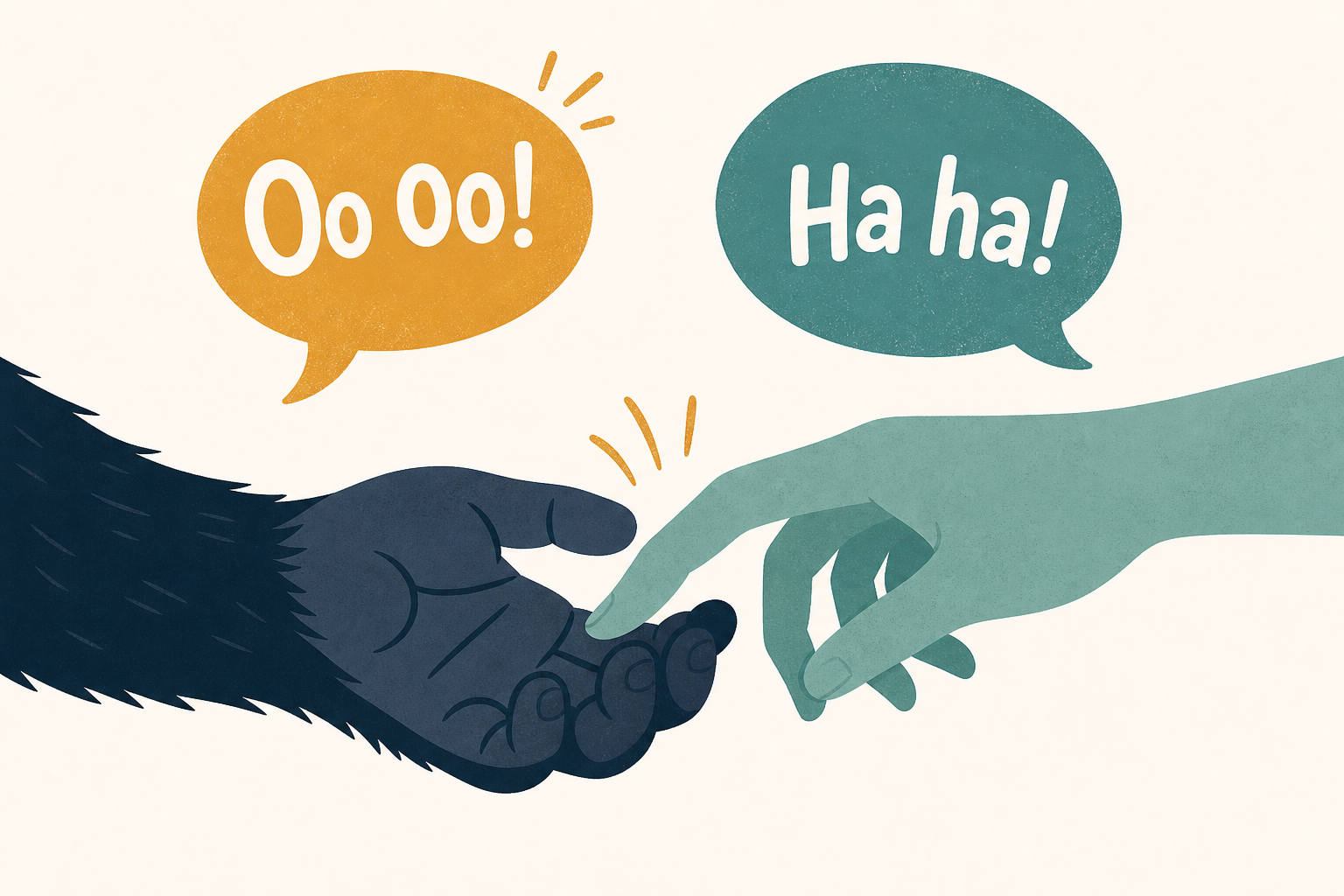
AI Generated Image
Oo oo, ha ha: why humans and great apes giggle alike when tickled
Nature • • general
Key Points:
- A study published in Communications Biology found that tickling chimpanzees, gorillas, and human children produces laughter with similar rhythmic patterns, characterized by evenly spaced intervals between successive laughing sounds.
- Researchers suggest this consistent laughter rhythm indicates advanced vocal motor control in great apes and humans, potentially inherited from a common ancestor dating back 15 million years.
- The study analyzed 140 laughter sequences from juvenile great apes (orangutans, gorillas, bonobos, chimpanzees) and human children, revealing that laughter during tickling is more rhythmically consistent than laughter during social play, which is more variable due to physical movement.
- These findings contribute to understanding the evolutionary development of vocal flexibility in primates and challenge previous assumptions about the limited vocal control of great apes.


