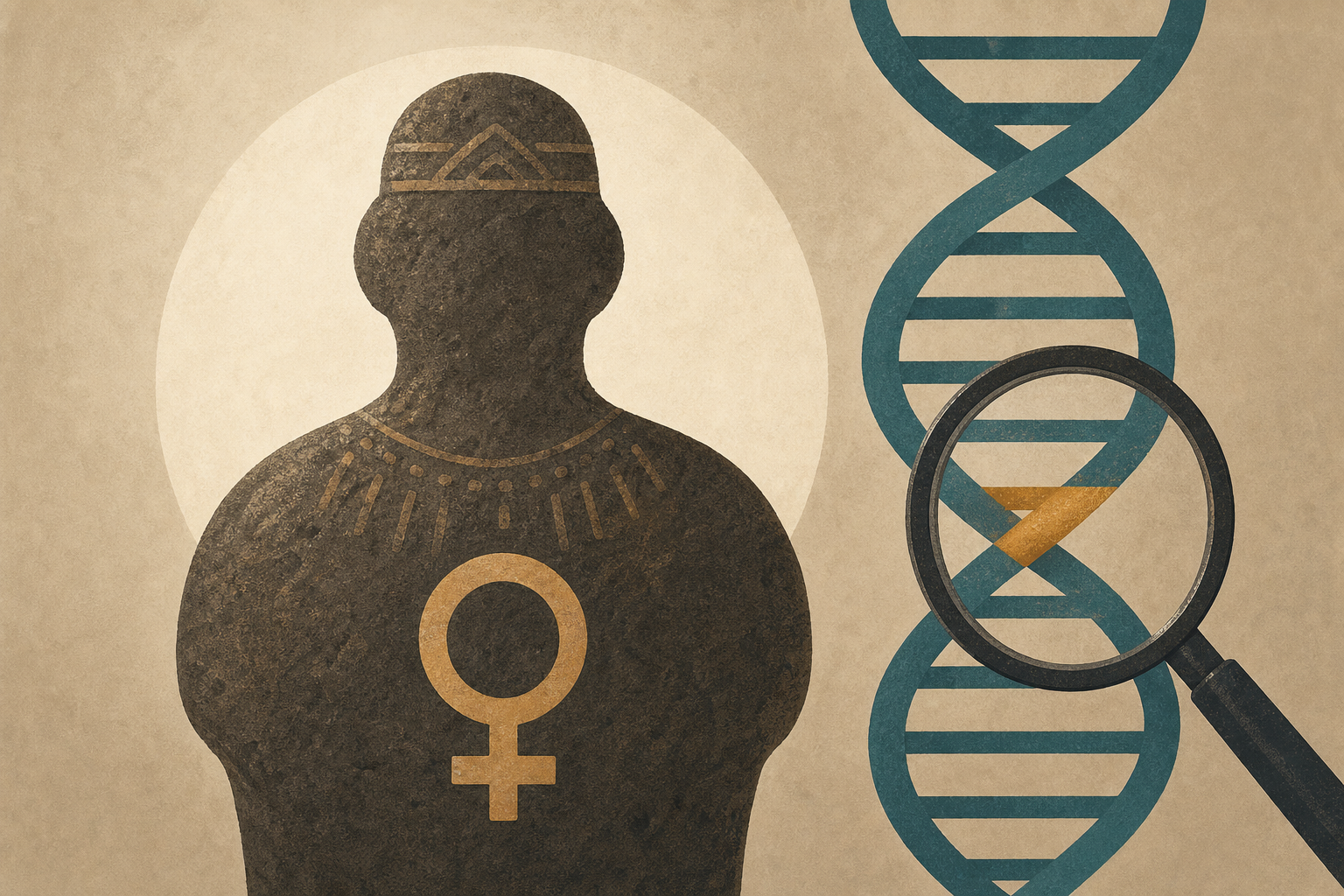
AI Generated Image
Oops! Ancient Bronze Age shaman long assumed to be a man was actually a woman, DNA reveals
Live Science • • world
Key Points:
- A nearly 4,000-year-old Early Bronze Age metalworker and shaman buried near Stonehenge, long assumed to be male, has been identified as female through new ancient DNA analysis by the Francis Crick Institute.
- The burial, discovered in 1801 at Upton Lovell, contained rich metalworking tools and ritual objects, previously attributed to a male figure, challenging longstanding gender stereotypes about leadership and craftsmanship in that era.
- The female individual was robust, around 5 feet 4 inches tall, and showed physical evidence of repetitive metalworking, such as arthritis in her right wrist, supporting her role as a skilled goldsmith and spiritual specialist.
- This finding aligns with other recent discoveries where elite ancient burials initially thought to be male were revealed to be female, prompting a reevaluation of women's roles in early societies.
- Museum curator Lisa Brown emphasized that this discovery rewrites the narrative of Bronze Age society by placing women at the forefront of craftsmanship and ritual leadership.


