AI Generated Image
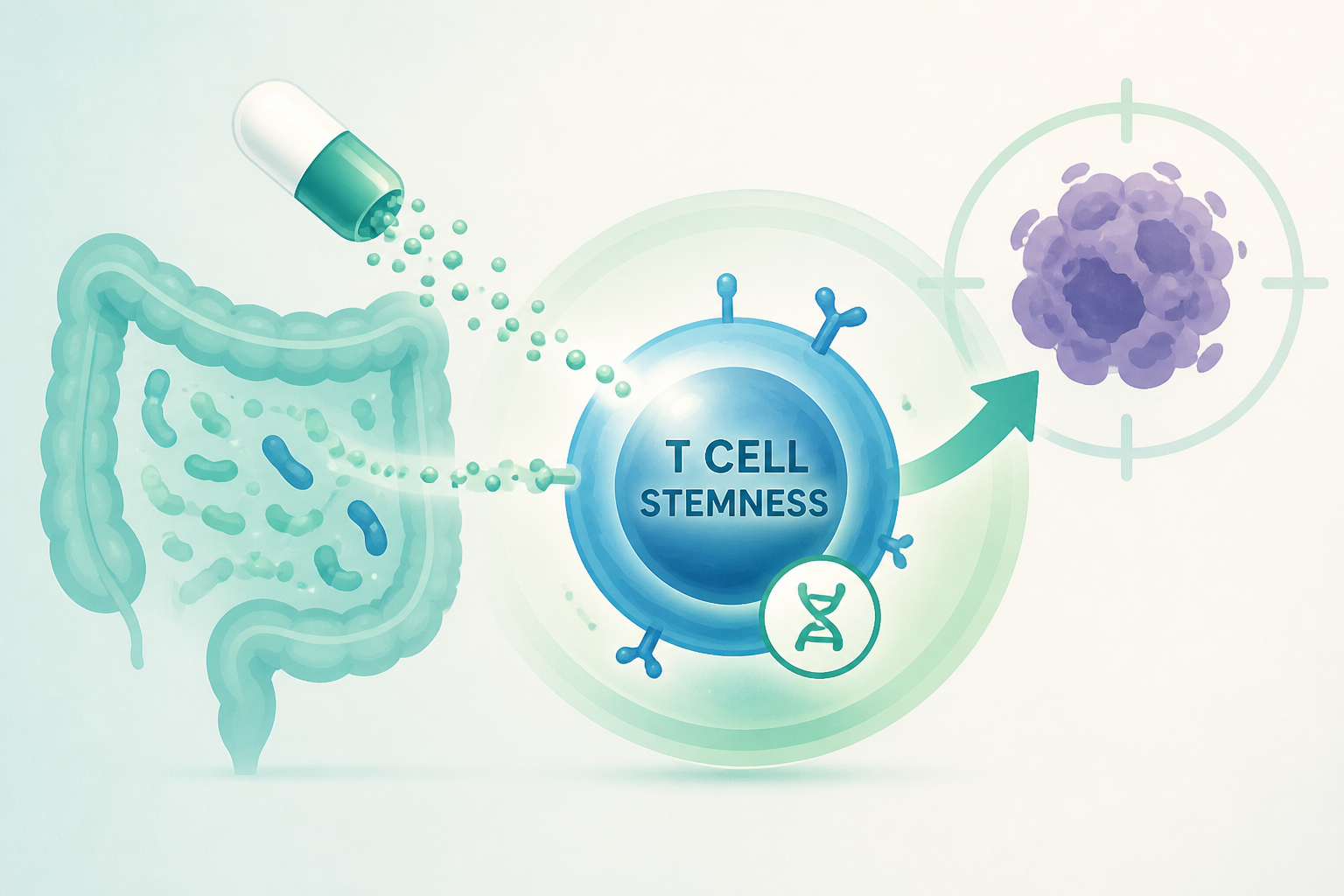
Oral nano-delivery of a gut microbial metabolite enhances T cell stemness for cancer immunotherapy
Nature • • health
Key Points:
- Researchers identified 3,4-dihydroxybenzoic acid (DHB), a gut microbial metabolite, as a key compound that promotes the generation of stem-like memory CD8+ T cells by suppressing glycolysis, enhancing antitumour immunity and improving responses to immune checkpoint blockade (ICB) therapy in multiple mouse tumor models.
- To overcome DHB's poor oral bioavailability and rapid clearance, the team developed an oral nano-emulsion prodrug formulation (Prodrug 201) that significantly increased DHB's plasma half-life and bioavailability, resulting in enhanced antitumour efficacy when combined with anti-PD-1 therapy across various cancer models, including colorectal, melanoma, and breast cancer.
- The combination of Prodrug 201 with α-PD-1 therapy expanded antigen-specific stem-like CD8+ T cells systemically and within tumor microenvironments, increased infiltration of effector immune cells, reduced immunosuppressive cells, and induced durable protective antitumour immune memory without significant toxicity.
- Mechanistically, DHB forms adducts with intracellular glutathione, leading to metabolic reprogramming of CD8+ T cells by inhibiting the Akt-mTORC1-Myc pathway and glycolysis, thereby sustaining stem-like T cell function and preventing exhaustion through epigenetic remodeling.
- Additionally, DHB treatment enhanced the efficacy of adoptive T cell therapy by promoting the expansion and persistence of long-lived, stem-like CD8+ T cells, suggesting translational potential for improving systemic cancer immunotherapy using microbial metabolite-based therapeutics.


