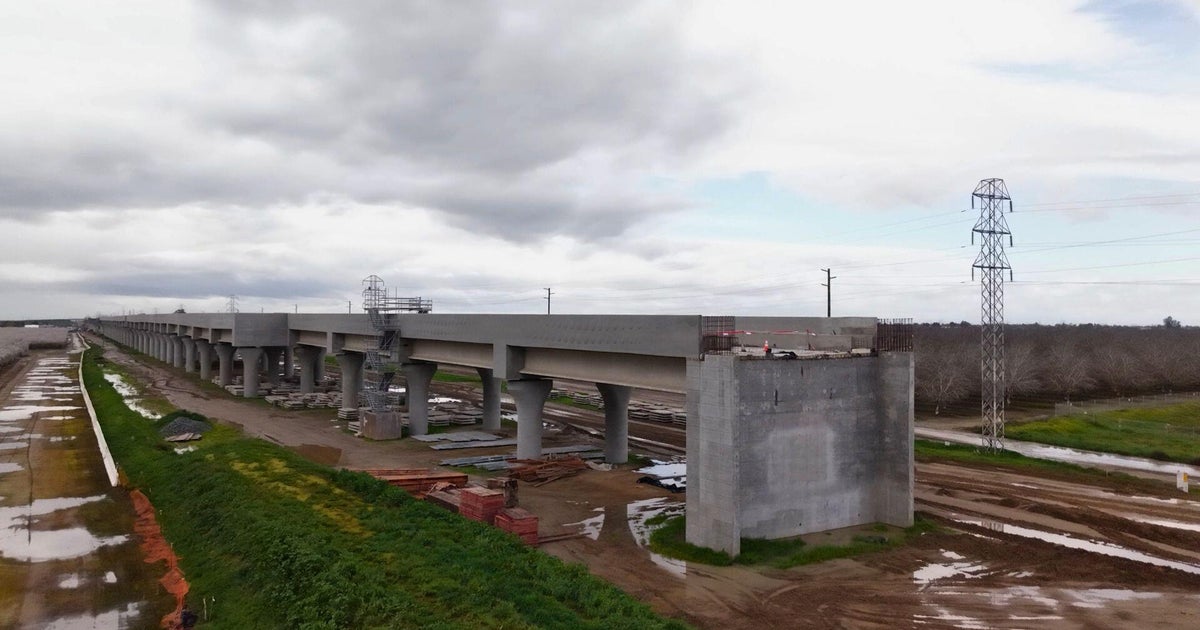
Other countries have 200 mph passenger trains. Why has high-speed rail not tracked here?
CBS News • • nation
Key Points:
- California’s high-speed rail project, initially approved in 2008 with a $33 billion budget and a 2020 completion goal, has faced massive delays, cost overruns, and now plans only to connect Bakersfield and Merced by 2033, far short of the original Los Angeles to San Francisco route.
- Challenges include complex land negotiations, stringent environmental regulations, high labor and construction costs, and insufficient initial funding, leading to bipartisan criticism and a significant scaling back of ambitions under Governor Gavin Newsom.
- Private company Brightline West aims to succeed where public efforts have struggled by building a high-speed rail line between Los Angeles and Las Vegas, leveraging highway medians for right-of-way and targeting 2029 for service start, though financial viability concerns remain.
- The overall U.S. high-speed rail landscape lags behind many countries due to fragmented political will, funding gaps, and cultural reliance on car travel, with experts emphasizing that successful projects require strong public investment and national commitment.
- Despite ongoing challenges, California’s rail authority remains optimistic about securing the estimated $126 billion needed to complete the full route, but acknowledges that federal funding and private investment will be critical to bridging the massive financial shortfall.


.png?format=webp&w=120&h=80)


