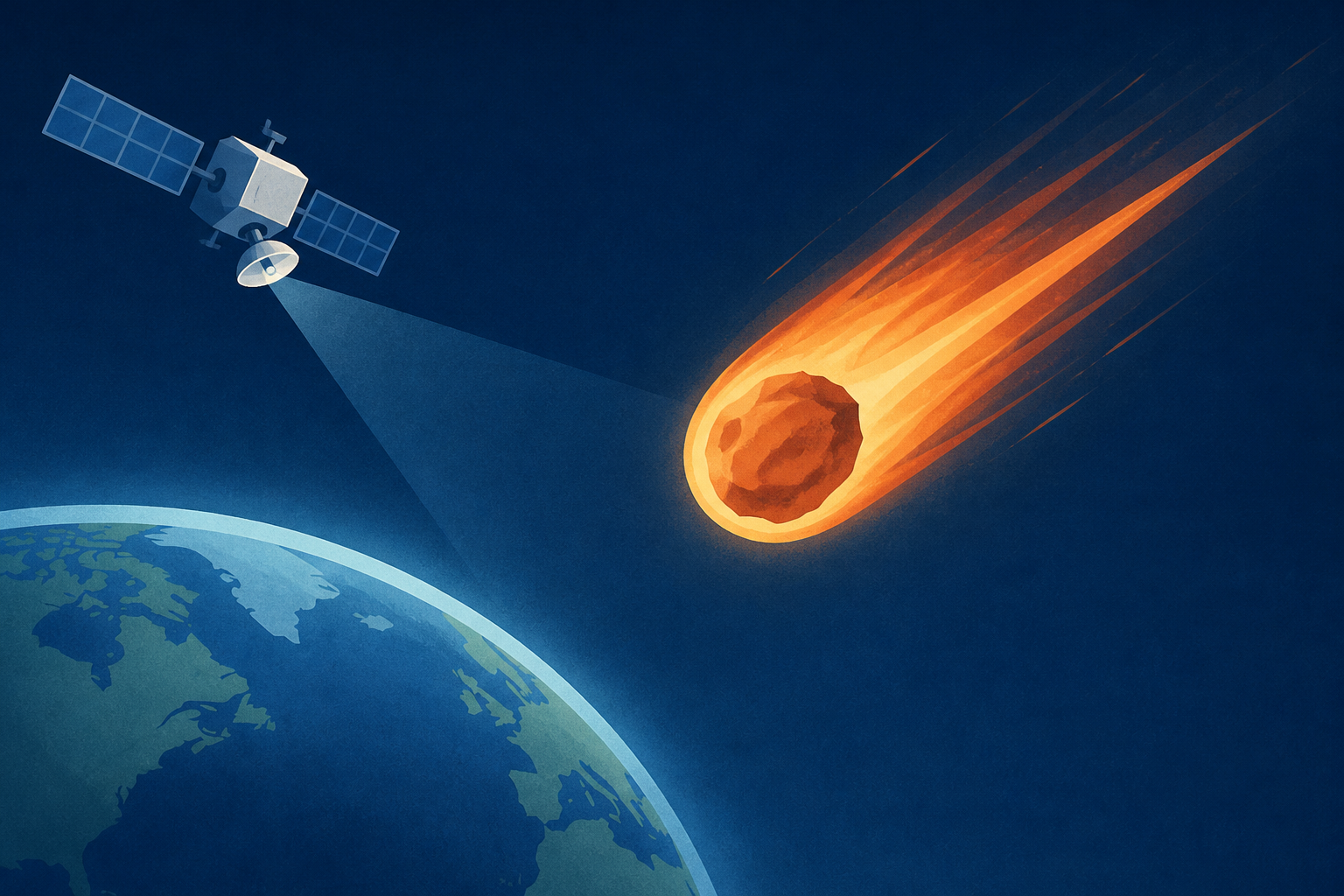
AI Image
Planetary defense: Satellites are watching fireballs to help keep Earth safe from space rocks
Space • • science
Key Points:
- On April 1, 2026, a meteor (bolide) exploded high above the South Atlantic near Argentina, detected by U.S. military and civilian satellites, including NOAA's GOES-E and Europe's Meteosat lightning imagers, highlighting the value of multi-sensor data for studying such events.
- An April 24, 2025 fireball over Alaska was extensively recorded by seismic, infrasound, radar, and optical sensors, demonstrating how civil and scientific networks can reconstruct atmospheric entries even without U.S. government sensor data.
- A May 20, 2023 meteor over Queensland, Australia, produced a powerful explosion equivalent to a 7.1-kiloton bomb, ranking among NASA's most energetic events since 1988 and underscoring the importance of space-based sensors in tracking these occurrences.
- Experts emphasize that combining diverse observation methods—space-based sensors, seismic, infrasound, optical, and radar—provides complementary data crucial for understanding meteor trajectories, fragmentation, energy release, and potential ground impact.
- Such multi-faceted monitoring enhances planetary defense by improving event characterization, validating models, and preventing misinterpretations of natural meteoric events as hostile acts, thereby aiding both scientific understanding and global security.


