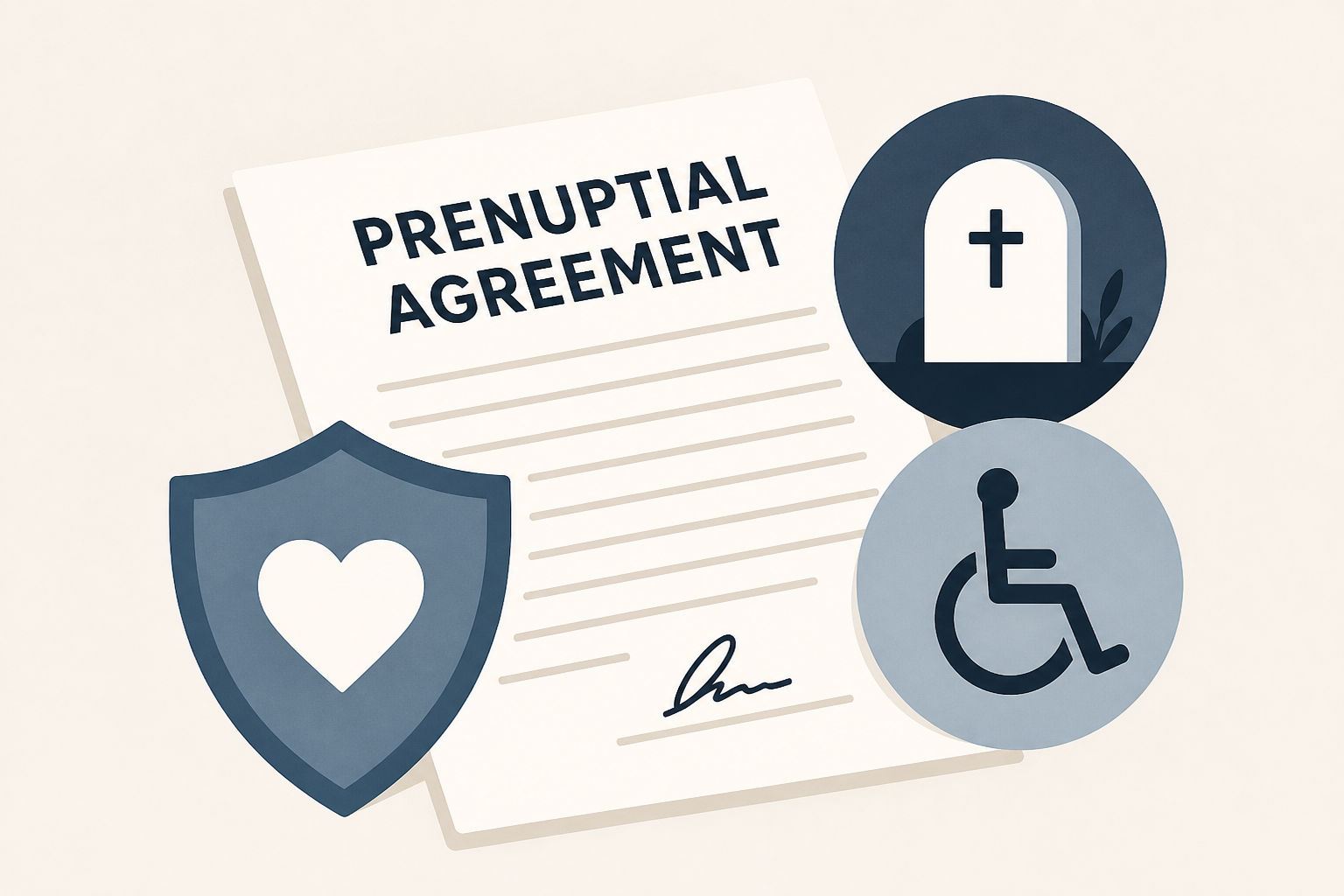
AI Generated Image
Prenups are evolving to cover death and incapacity
USA Today • • general
Key Points:
- Prenuptial agreements have become mainstream, with 53% of engaged or married Americans under 45 having signed one, an 11-point increase from 2022, reflecting their growing acceptance beyond just divorce protection.
- Lawyers note prenups are increasingly used as estate planning tools to address asset distribution upon death or incapacity, helping couples override state laws that might otherwise allocate assets contrary to their wishes.
- State laws like homestead rights, elective shares, and family allowances can grant surviving spouses automatic claims on estates, but prenups can waive these rights to protect intended beneficiaries such as children from previous marriages.
- Despite the expanded role of prenups, traditional estate planning documents like wills and powers of attorney remain essential, as prenups do not replace these instruments nor cover guardianship or estate administration.
- Experts emphasize the importance of regularly updating prenups alongside other estate documents to reflect changes in laws, finances, and family dynamics, avoiding conflicts and ensuring plans remain effective over time.


