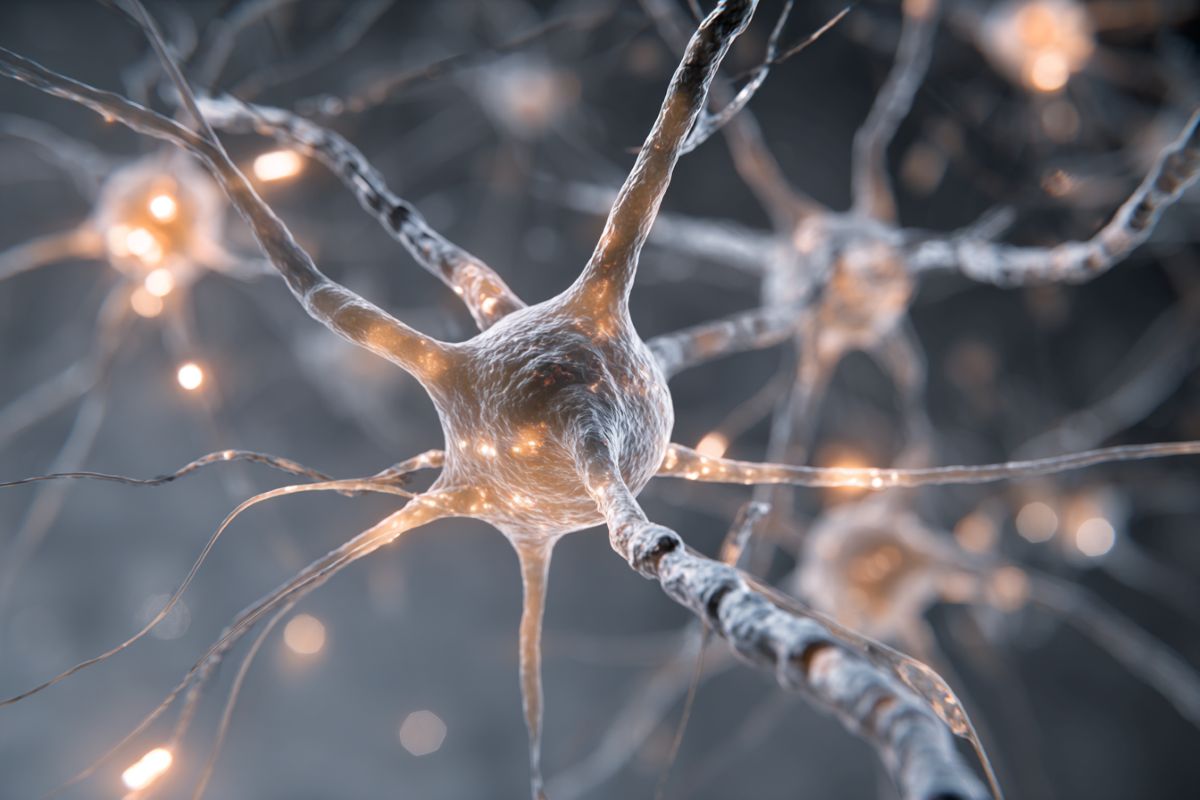
Printable Artificial Neurons That "Talk" to Living Brain Cells
Neuroscience News • • science
Key Points:
- Northwestern University engineers have developed flexible, low-cost artificial neurons printed using nanoscale materials that generate electrical signals realistic enough to activate living mouse brain cells, demonstrating direct communication with biological neurons.
- These printed neurons mimic the brain’s energy efficiency and complex signaling patterns, potentially enabling advanced neuroprosthetics and brain-like computing systems that consume far less power than current AI data centers.
- Unlike traditional rigid silicon chips, the artificial neurons are heterogeneous, dynamic, and three-dimensional, closely replicating the brain’s soft and adaptable neural networks.
- The additive printing process is environmentally friendly and reduces waste by depositing material only where needed, addressing the growing energy and cooling demands of large-scale AI hardware.
- The study, published in Nature Nanotechnology, was supported by the National Science Foundation and involved collaboration with neurobiology experts to validate the biological compatibility and functionality of the artificial neurons.


