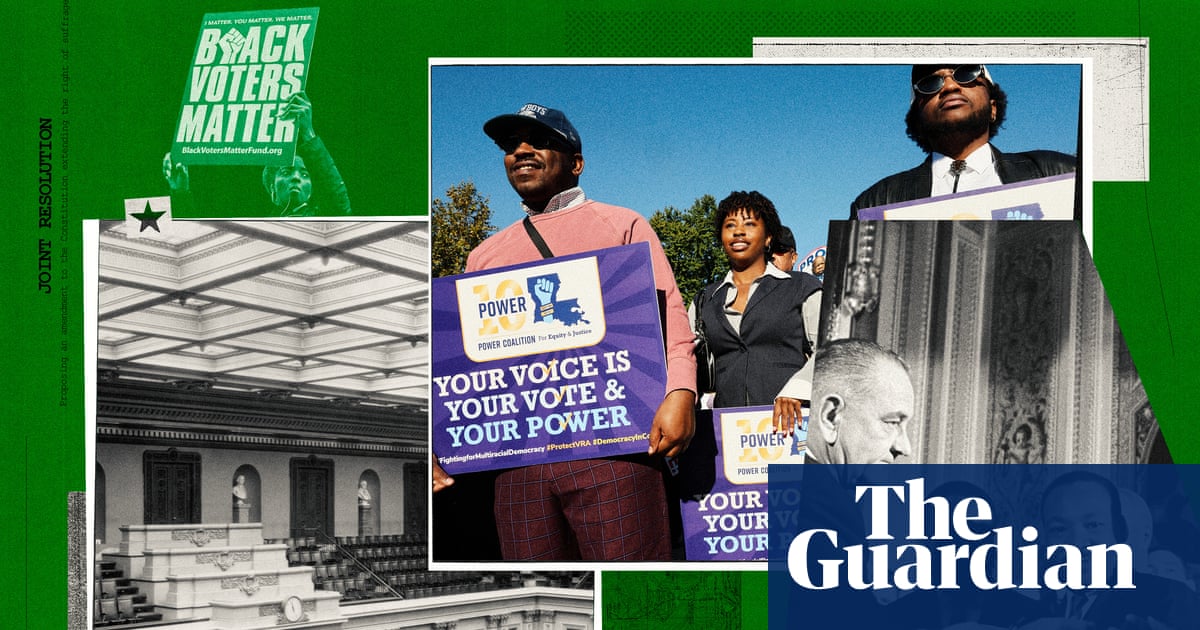
Push for state-level voting rights acts renewed after supreme court ruling
The Guardian • • nation
Key Points:
- The US Supreme Court ruling in Louisiana v. Callais effectively dismantled Section 2 of the federal Voting Rights Act, weakening protections for minority voters and prompting renewed efforts to pass state-level voting rights acts.
- Nine states currently have their own voting rights statutes, with 11 others introducing similar bills, aiming to prohibit voter suppression, vote dilution, and intimidation, and often requiring pre-clearance of voting changes.
- Advocates, including the NAACP Legal Defense Fund, view state voting rights acts as crucial alternatives to the now-weakened federal protections, though these state laws face challenges, especially in Republican-dominated southern states.
- Legal experts warn the Callais decision could lead to increased constitutional challenges against state voting rights acts, as the ruling questions race-conscious election legislation beyond the federal law.
- Despite uncertainties, state courts have upheld these laws in some cases, and experts encourage states to continue using their authority to protect voters from discrimination through various legal and race-neutral means.


