AI Image
RamanOmics decodes the spatial vibrational-molecular architecture of senescence in aging and repair
Nature • • health
Key Points:
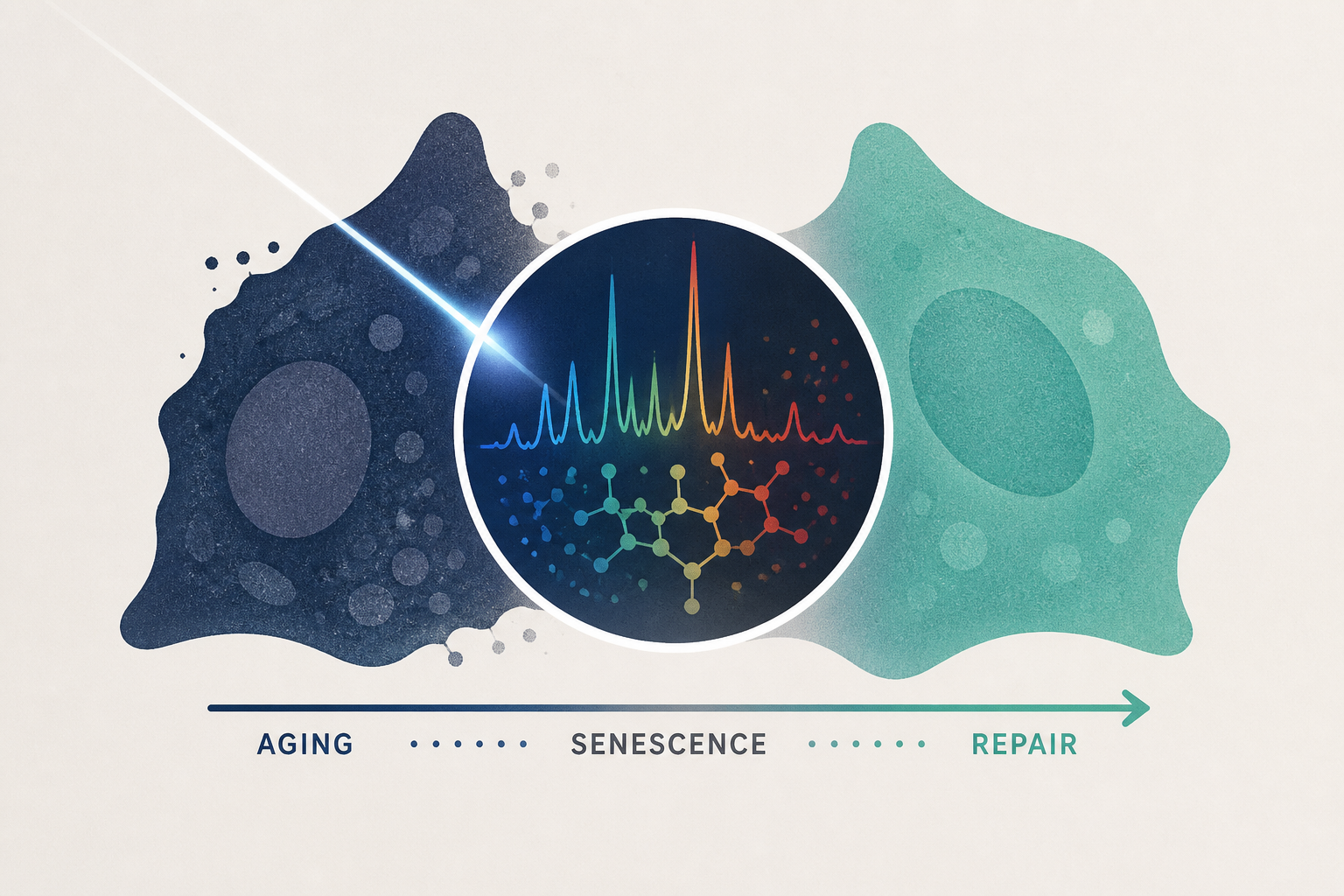
- Researchers developed RamanOmics, a multimodal platform integrating hyperspectral Raman imaging with spatial transcriptomics and single-nucleus RNA sequencing (snRNA-seq) to characterize aging and senescence at single-cell resolution in mouse lung and skin tissues.
- Aging signatures differ between tissues: lung aging involves immune activation, inflammation, and vascular remodeling with reduced epithelial renewal, while skin aging shows metabolic decline, impaired ion homeostasis, and preserved epithelial programs.
- Senescent cells marked by p21 expression exhibit distinct transcriptional and biochemical profiles that shift from reparative states in young tissues to chronic dysfunctional states in old tissues, involving altered lipid metabolism, extracellular matrix remodeling, and DNA repair deficits.
- Raman imaging identified biochemical fingerprints of senescence, notably increased lipid-associated peaks and decreased saccharide- and protein-associated signals, which, combined with transcriptomic data, improved senescent cell classification accuracy through machine learning models.
- Validation in a mouse skin wound-healing model confirmed co-activation of senescence markers with epidermal differentiation genes and lipid remodeling signatures, demonstrating the platform’s utility for studying senescence dynamics in physiological and pathological contexts.


