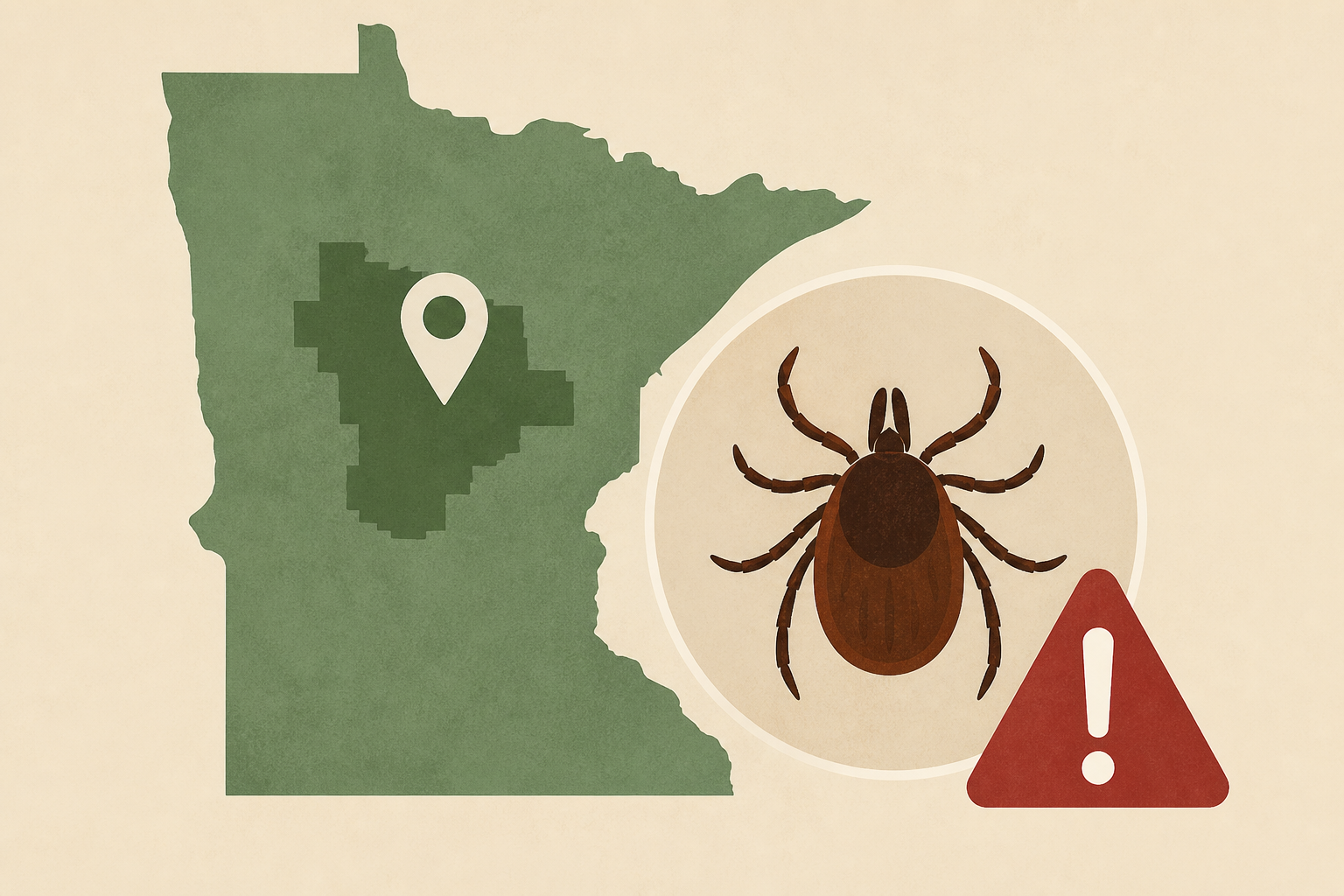
AI Generated Image
Rare tick disease poses a danger in north-central Minnesota
Pioneer Press • • health
Key Points:
- Tick populations are expanding northward in Minnesota, leading to increased emergency room visits for tick bites, with deer ticks carrying Lyme disease and the Powassan virus, which has no treatment and can cause permanent neurological damage.
- From 2008 to 2022, north-central Minnesota counties, especially around Gull Lake, reported the highest Powassan cases, with 14 cases recorded in 2024, highlighting the area's significant risk during peak tick season from late May to mid-July.
- Powassan virus is difficult to diagnose and is found in a small percentage of ticks, but it can cause severe central nervous system damage and long-lasting cognitive impairments in survivors.
- The family of Jeffrey Johannsen, who died from Powassan virus complications in 2023, emphasizes the importance of preventive measures such as wearing protective clothing and using EPA-approved repellents like Permethrin to reduce tick exposure.
- Johannsen was a skilled builder and caretaker of his family's Gull Lake property, and his passing has left his family working to maintain the property and raise awareness about the dangers of tick-borne diseases.


