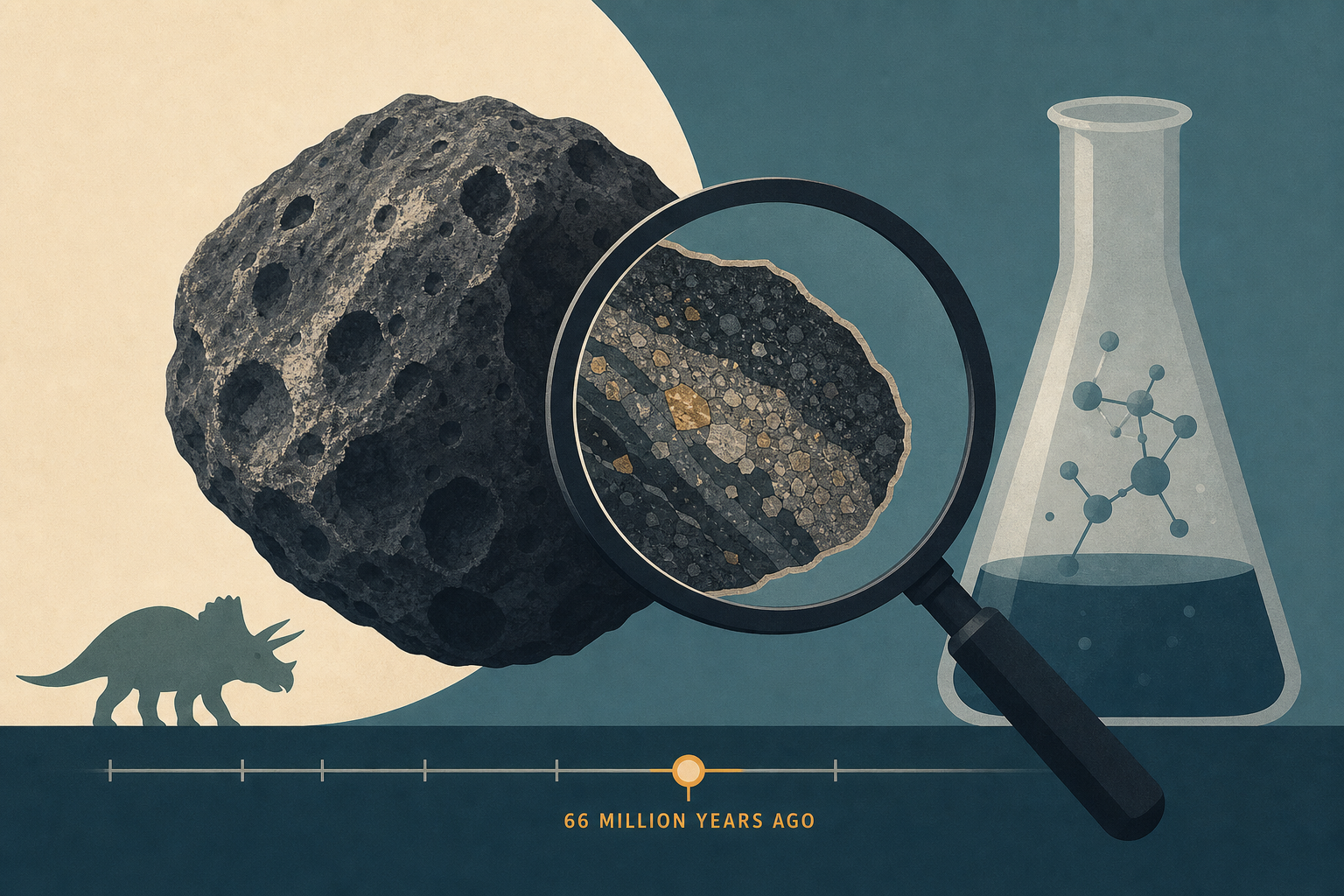
AI Generated Image
Researchers just uncovered more about the asteroid that killed the dinosaurs 66 million years ago
The Independent • • science
Key Points:
- Researchers have identified the meteorite class responsible for the dinosaur extinction 66 million years ago as a rare carbon monoxide-rich chondrite, which constitutes only about 5% of meteorites found on Earth.
- The Chicxulub asteroid impact, which created a massive crater in present-day Yucatán Peninsula, dispersed fine debris into the atmosphere, likely causing the mass extinction rather than sulfur content in the meteorite.
- The meteorite likely originated from the outer asteroid belt near Jupiter or the distant solar system, highlighting the rarity and distant origin of the impactor.
- While the impact was catastrophic, killing species within thousands of kilometers through thermal radiation and supersonic winds, other factors such as climate change and volcanic activity may also have contributed to the extinction event.
- The findings reinforce the understanding of the Chicxulub impact's role in the mass extinction but do not alter the established theory of how the event unfolded.


