AI Generated Image
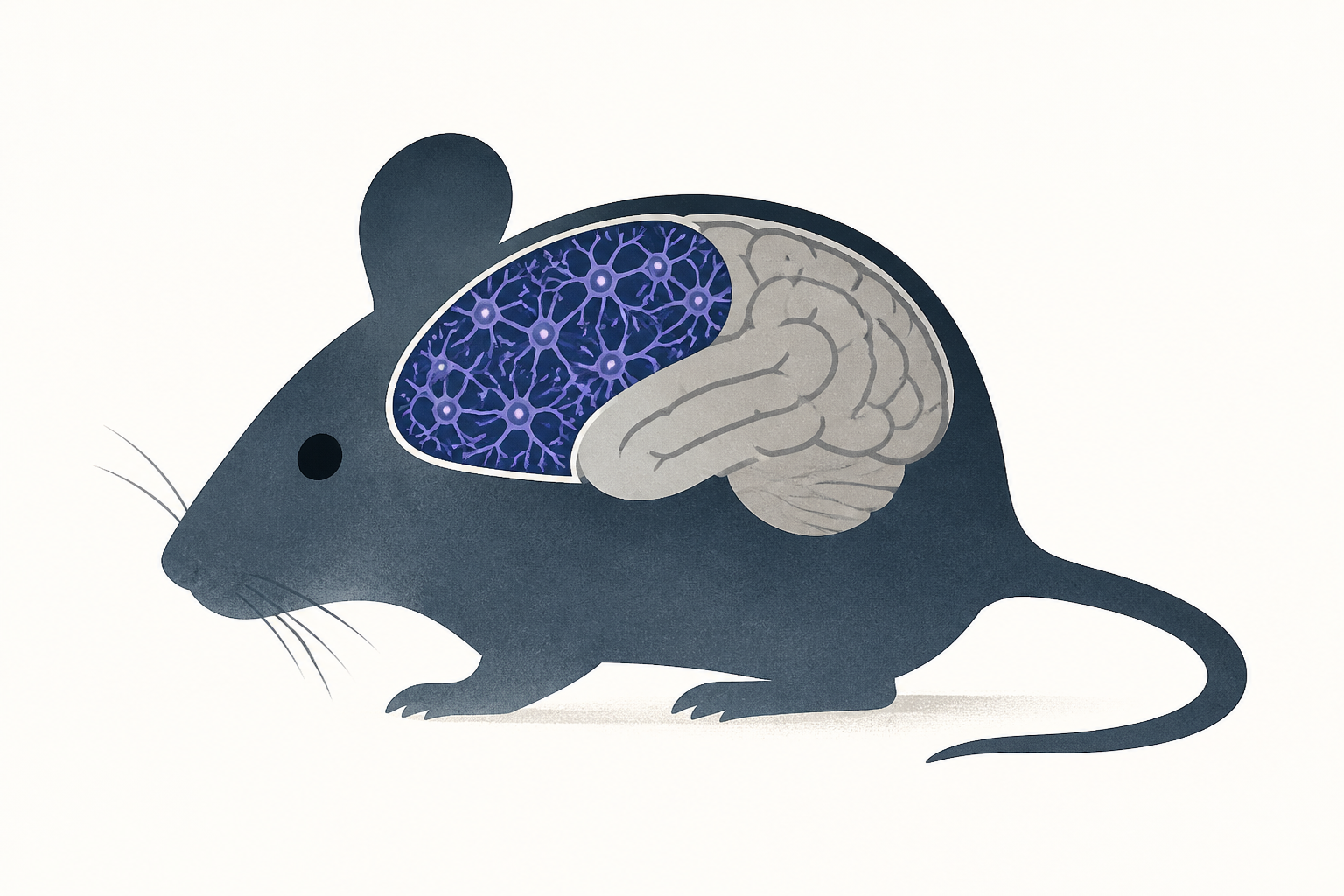
Researchers swap in human brain cells for a mouse's cortex
Ars Technica • • general
Key Points:
- Stanford researchers developed a novel approach by genetically deleting the mouse cortex and implanting human brain organoid cells in its place, creating a partially humanized mouse brain model.
- The implanted human organoids successfully integrated in over 85% of cases, contributing to 92% of cortical cells and forming major neuron types, but lacked the full layered structure of a normal cortex.
- Mice with the humanized cortex showed intermediate behavioral and cognitive abilities compared to normal mice and cortex-free mice, indicating some functional improvement but incomplete recovery.
- Despite promising integration, the model currently lacks detailed anatomical and developmental characterization, limiting its immediate use for studying complex human neural diseases.
- Further research is needed to determine whether these disorganized human-mouse brain hybrids can effectively model human brain functions and diseases such as ALS.


