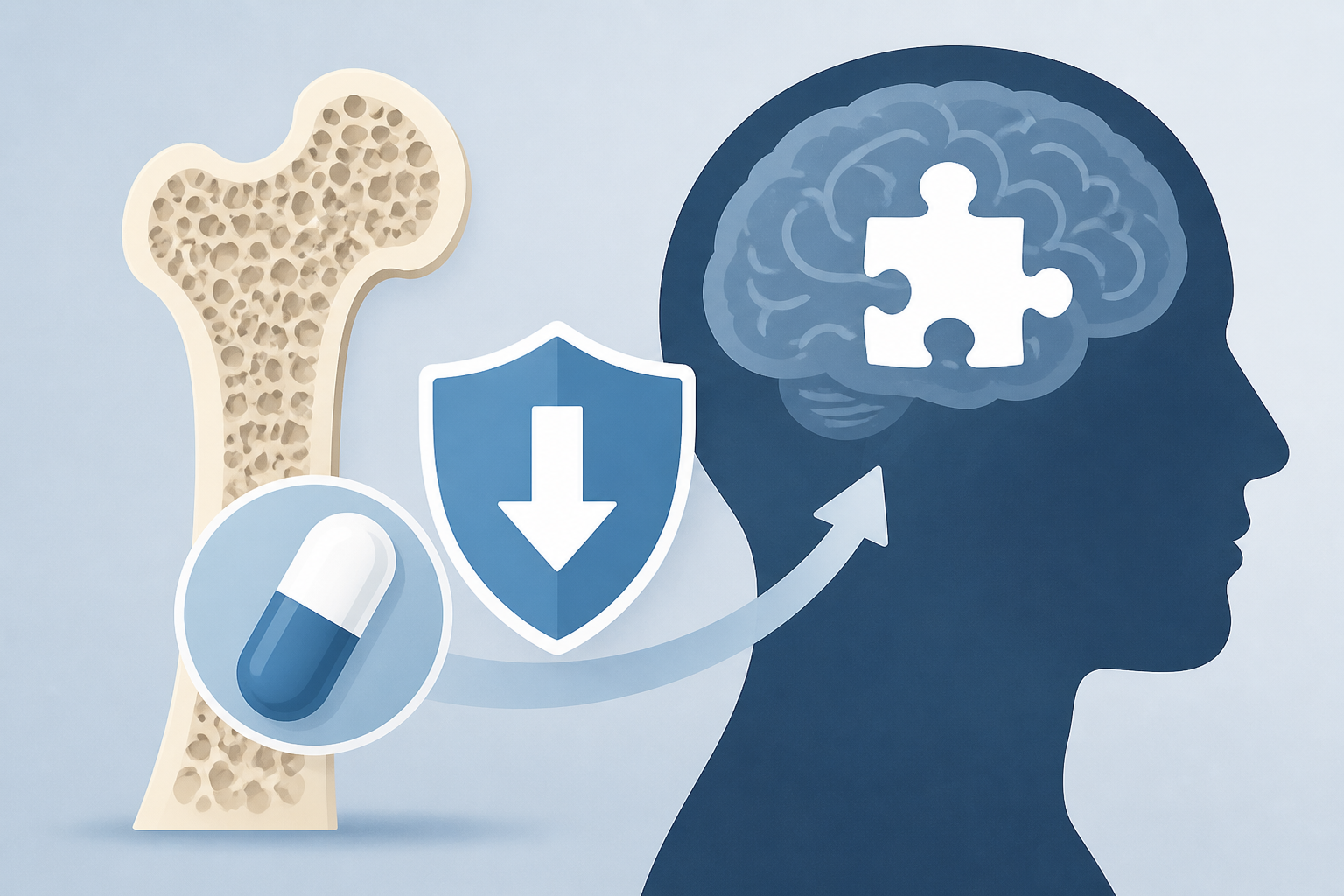
AI Generated Image
Osteoporosis drugs linked to lower Alzheimer's disease and dementia risk
Fox News • • health
Key Points:
- A large observational study of 121,492 adults aged 60 or older found that nitrogen-containing bisphosphonates (NBPs), commonly used osteoporosis drugs, were linked to a 16% lower risk of Alzheimer's disease and related dementias compared to those not taking osteoporosis medications.
- The risk reduction was 24% when compared to individuals taking other types of osteoporosis drugs, suggesting a potentially stronger protective effect of NBPs such as alendronate, ibandronate, risedronate, and zoledronate.
- The study, conducted in a Chinese population with recent osteoporosis diagnosis or serious fractures, highlights a possible bone-brain axis linking bone health to cognitive decline, but causality has not been established.
- Limitations include lack of baseline cognitive testing, absence of data on osteoporosis severity, and potential confounding factors like education and social isolation; therefore, the findings do not yet support prescribing NBPs solely for dementia prevention.
- Researchers emphasize the need for clinical trials to confirm these observational results and to explore whether the benefits vary by gender or apply to broader populations.


