AI Generated Image
Role of methanesulfonic acid in atmospheric particle nucleation and growth
Nature • • science
Key Points:
- Dimethylsulfide (DMS) from marine phytoplankton produces sulfuric acid (SA) and methanesulfonic acid (MSA) upon oxidation, with MSA having a higher yield below 10 °C.
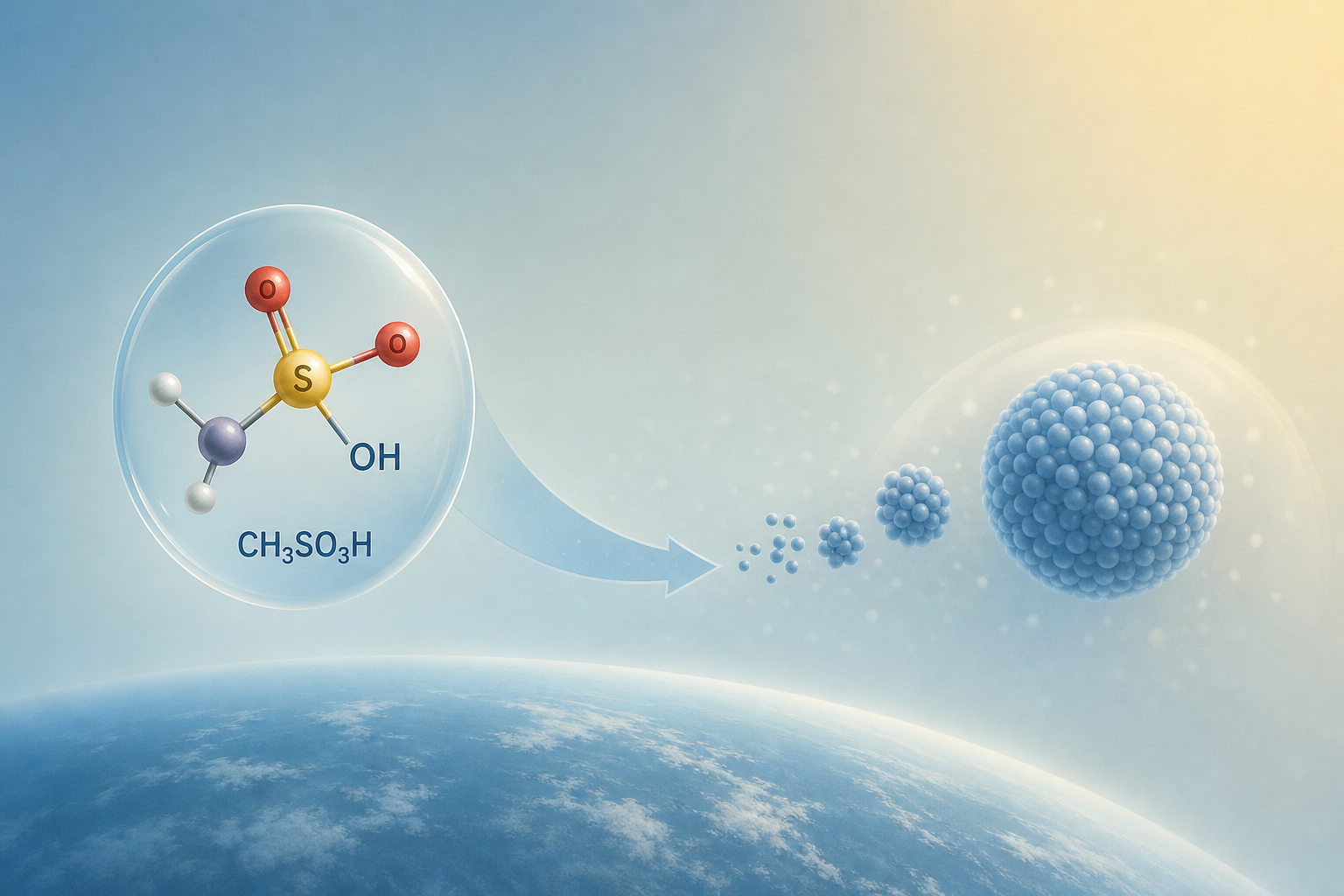
- Experiments at the CERN CLOUD chamber reveal that MSA nucleates with ammonia (NH3) below −10 °C at rates comparable to SA-NH3, and the two acids nucleate synergistically to form multi-acid clusters.
- MSA significantly drives particle growth at low NH3 levels below 9 °C and above 40% relative humidity, potentially accelerating nucleation rates up to tenfold and growth rates up to twofold compared to SA-NH3 alone.
- Global model simulations suggest MSA enhances cloud condensation nuclei (CCN) concentrations, particularly in polar and cool marine regions, indicating its important role in biogenic particle formation.
- The study highlights that MSA's impact on particle nucleation and growth is currently unaccounted for in global climate models, suggesting a need to incorporate it for better climate predictions.


