AI Image
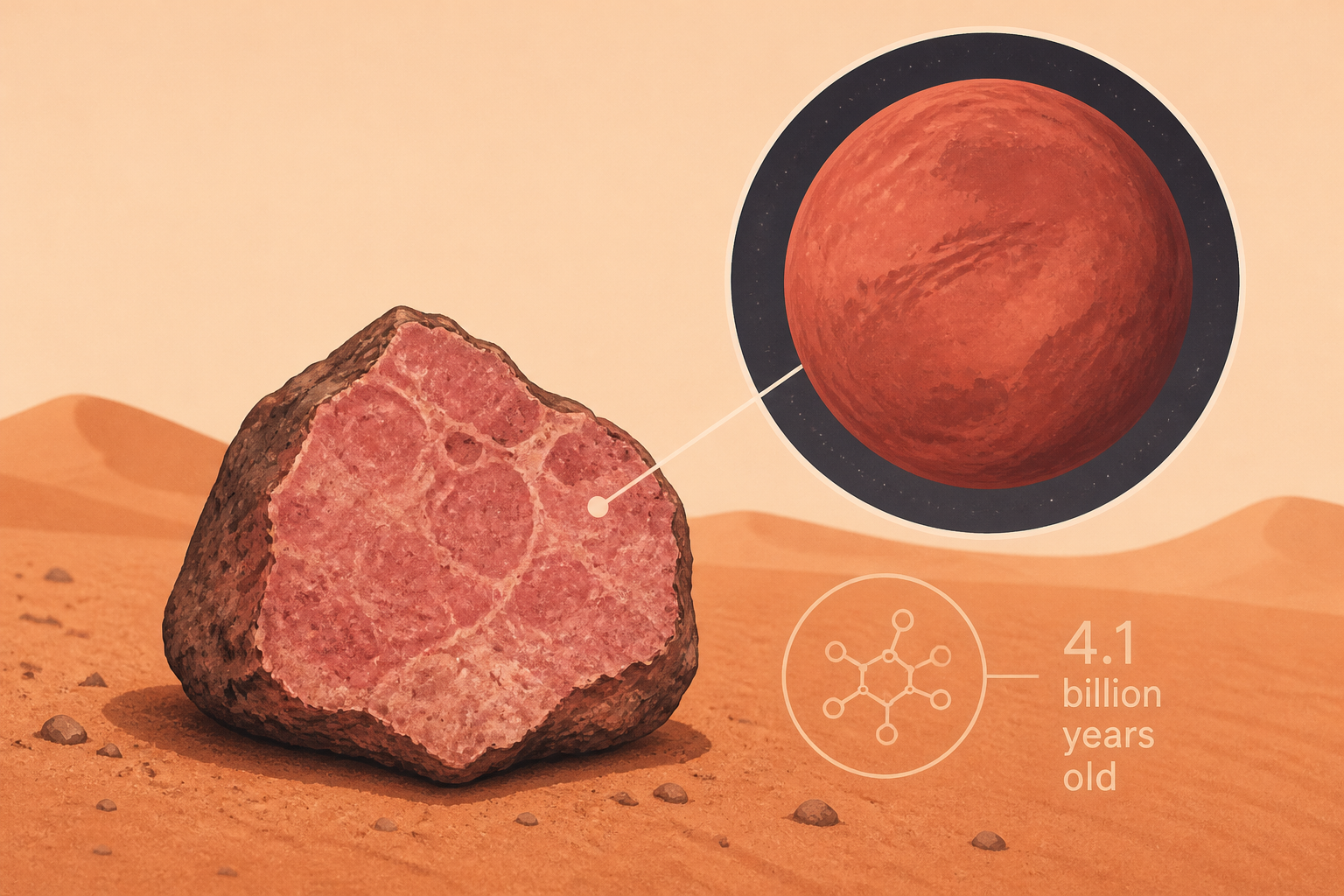
Rose-colored meteorite found in the Sahara Desert turns out to be 4.1 billion-year-old piece of Mars
CBS News • • science
Key Points:
- A rose-colored meteorite named Teghaza 001, found in Mali in 2022, has been identified by NASA as a 4.1-billion-year-old piece of Mars, making it one of the three oldest Martian meteorites discovered on Earth.
- The meteorite's chemical and mineral composition, including volcanic minerals and zircon crystals, matches data from Mars' southern highlands collected by NASA's Mars Reconnaissance Orbiter.
- Age-dating and mineral analysis revealed that the rock was altered by Martian water about 4.1 billion years ago, suggesting a more dynamic early water cycle on Mars than previously thought.
- Researchers describe Teghaza 001 as a "Rosetta Stone for Mars" because it provides a rare snapshot of Mars' crust formation, interactions between water and rock, and possibly atmospheric changes during water loss.
- Scientists plan further studies on the meteorite to deepen understanding of Mars' early geological and environmental history, as current research has only begun to explore its potential.


