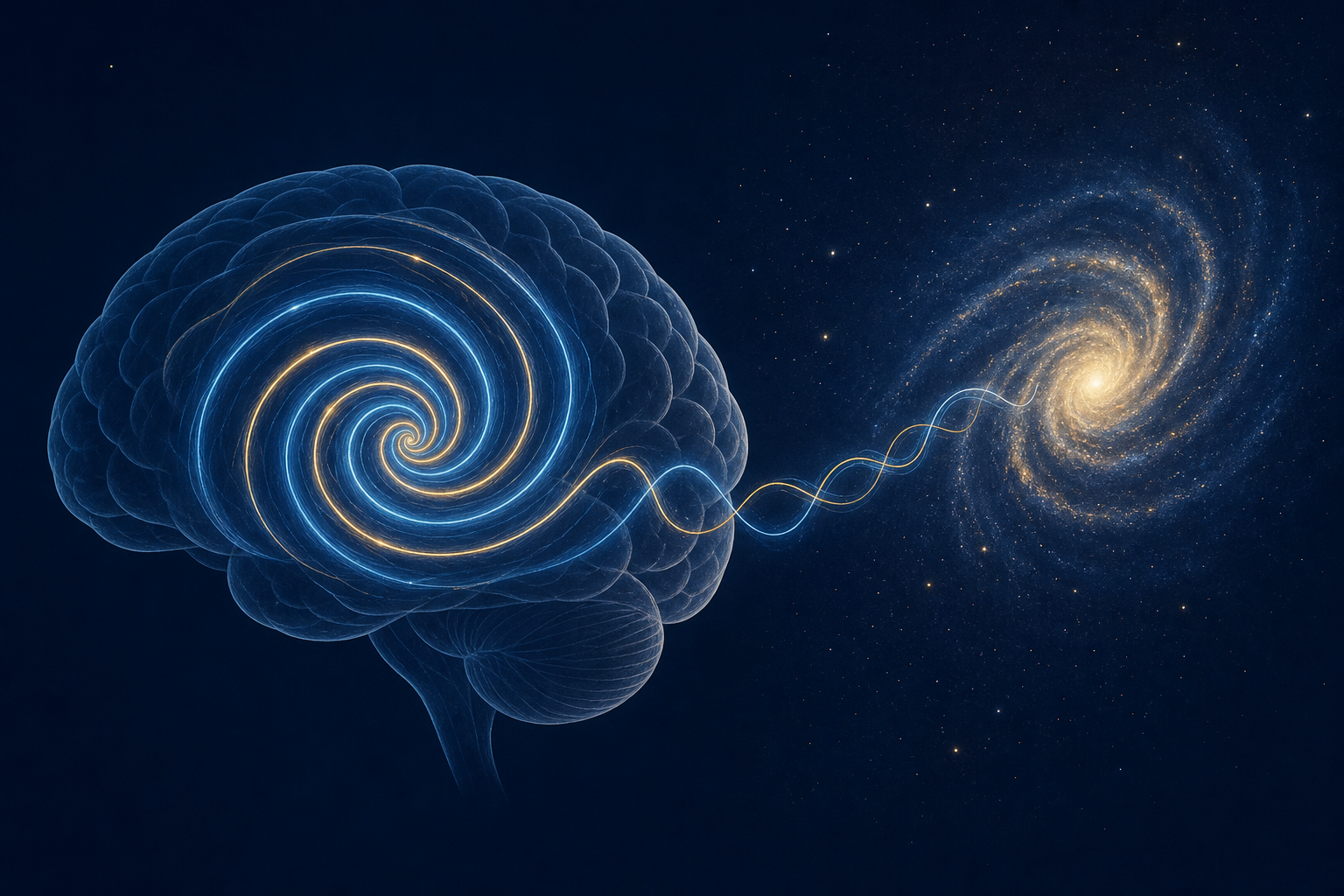
AI Generated Image
Rotating Spiral Brain Waves Act as a Space
Neuroscience News • • science
Key Points:
- Researchers discovered a new class of brain waves in mice that rotate in spiral patterns across the sensory cortex, driven by a unique circular arrangement of neurons resembling a "merry-go-round."
- These vortex-like waves synchronize activity across both hemispheres, linking sensory and motor cortices as well as deep subcortical structures like the thalamus and midbrain, potentially coordinating sensation, prediction, and voluntary movement.
- Experiments showed that sensory stimuli, such as a puff of air to a mouse’s whiskers, evoke these rotating waves, which vary with the animal’s arousal and task performance, indicating a role in behaviorally relevant neural processing.
- The researchers propose that these rotating waves function as a spatiotemporal neural clock, sequencing sensory inputs and motor outputs to help predict sensory sequences and reinforce motor skills.
- While the findings are currently based on mouse models, further research is needed to determine if similar rotating wave dynamics exist and play comparable roles in human brain function.


