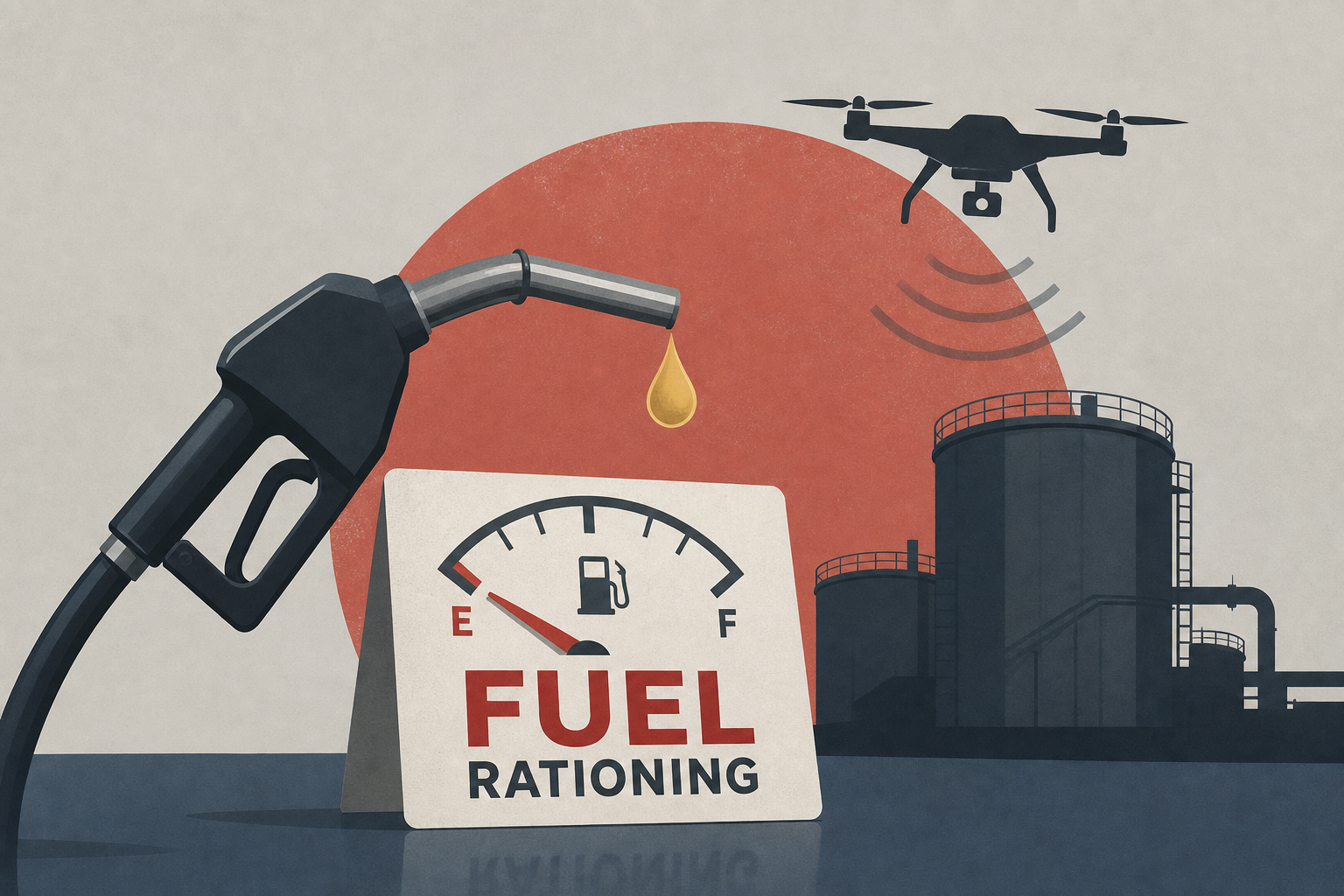
AI Generated Image
Russia Imposes Fuel Rationing in Moscow After Repeated Ukrainian Drone Attacks on Oil Infrastructure
UNITED24 Media • • world
Key Points:
- Ukraine's drone strikes on Russian oil infrastructure have significantly reduced Russia's domestic refining capacity, causing gasoline shortages even in Moscow, with at least 40 successful attacks since early 2023.
- The Gazprom Neft Moscow Refinery, supplying up to 40% of the capital's fuel, halted operations after drone strikes disabled its primary and secondary distillation units, contributing to a 600,000 barrels per day loss in refining capacity.
- Russia's total refining volume has dropped below 4 million barrels per day, a 21-year low, leading to fuel shortages, price increases, and sales restrictions in Moscow and surrounding regions.
- In response, the Russian government has lowered environmental standards for gasoline, considered regulatory changes to redirect fuel supplies to critical sectors, and started importing gasoline from Asia, marking a major shift from its usual export role.
- Despite these measures, ongoing attacks on key refineries and limited assistance from neighboring countries raise concerns about the long-term sustainability of Russia's fuel supply and refining infrastructure.


