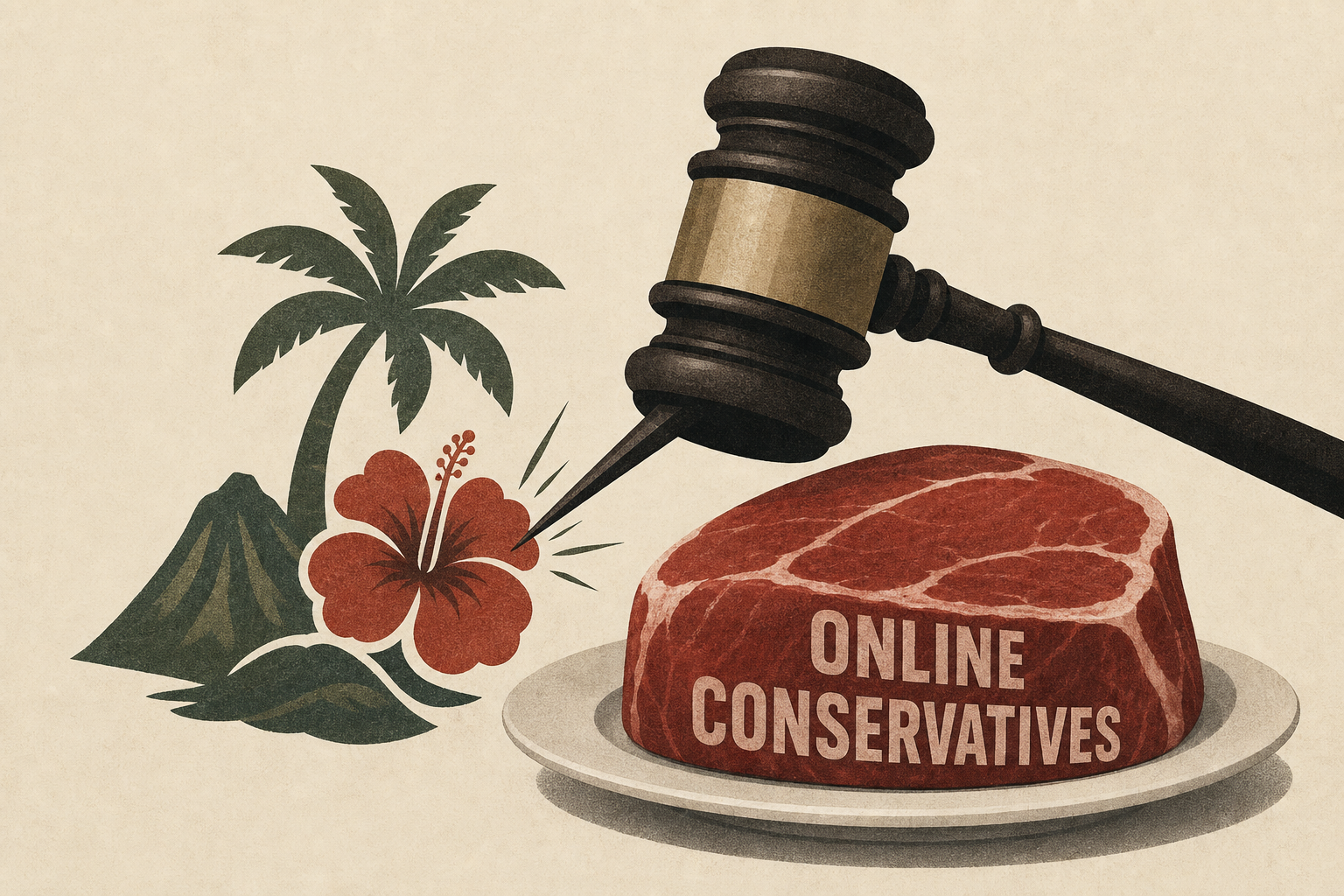
AI Generated Image
Samuel Alito’s Jab at Hawaiian Culture Is Red Meat For Online Conservatives
Balls and Strikes • • nation
Key Points:
- In Wolford v. Lopez, the U.S. Supreme Court struck down a Hawaii law prohibiting carrying guns on private property without owner consent, ruling 6-3 that the Second Amendment applies uniformly across all states, dismissing Hawaii’s unique cultural and historical context.
- Justice Alito’s majority opinion notably disparaged Hawaii’s “spirit of Aloha,” a cultural principle invoked by the Hawaii Supreme Court in a prior case (State v. Wilson) to uphold stricter gun regulations, framing it as irrelevant to constitutional interpretation.
- The Hawaii Supreme Court in Wilson had rejected Second Amendment challenges by emphasizing Hawaii’s distinct legal traditions and cultural values, including Kānāwai Māmalahoe, which prioritizes public safety and contrasts with federal gun rights interpretations.
- Conservative commentators criticized the Hawaii Supreme Court’s reliance on local culture and history, while Alito’s dismissal of the “Aloha spirit” in Wolford was seen as a deliberate provocation aimed at conservative audiences that reject state-specific constitutional interpretations.
- The Wolford decision underscores ongoing tensions between federal uniformity in Second Amendment rights and states’ efforts to incorporate local history and culture into their legal frameworks, highlighting the Supreme Court’s conservative majority’s skepticism toward such state-specific approaches.


