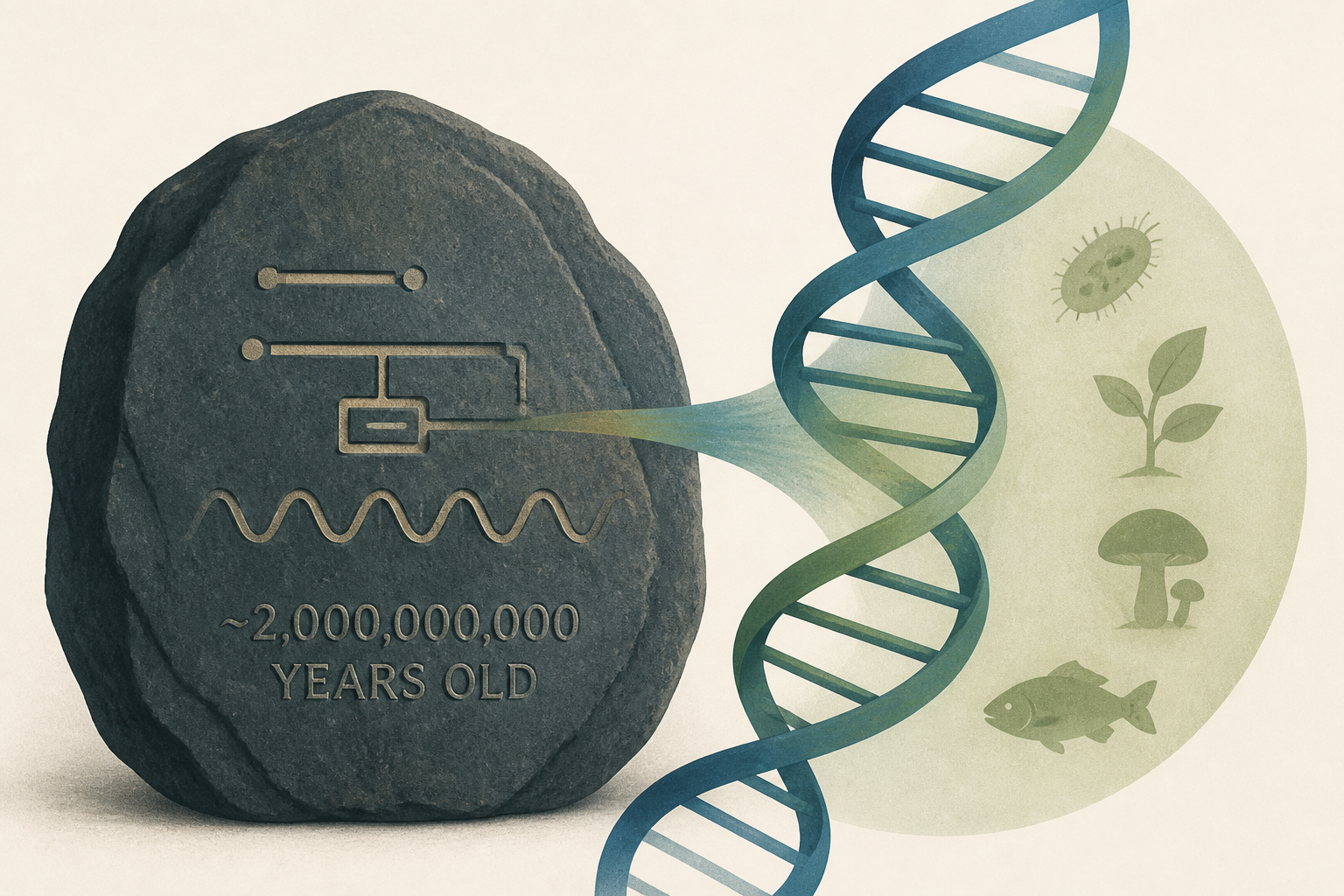
AI Generated Image
Scientists discover 2-billion-year-old rules that control genes across all life forms on Earth
Yahoo • • science
Key Points:
- Scientists discovered that the mechanisms for activating genes are remarkably conserved across diverse life forms, dating back about 2 billion years to the Last Eukaryotic Common Ancestor, indicating a shared cellular language for gene activation.
- In contrast, gene silencing evolved differently across species, with distinct combinations of chromatin modifications used to suppress genes and transposable elements, reflecting an ongoing evolutionary arms race against genomic threats.
- The study introduced iChIP2, a novel method enabling the comparison of 12 histone modifications across 12 diverse species, facilitating broad investigations into genome regulation, evolution, and diseases related to chromatin control.
- Findings highlight the importance of studying non-model organisms to uncover diverse evolutionary solutions to gene regulation, which may improve understanding of diseases like cancer and developmental disorders linked to faulty chromatin regulation.
- This research complements large-scale genome sequencing projects by providing insights into gene control mechanisms, potentially advancing evolutionary biology, biodiversity studies, and medical research targeting conserved and flexible gene regulation systems.


