AI Image
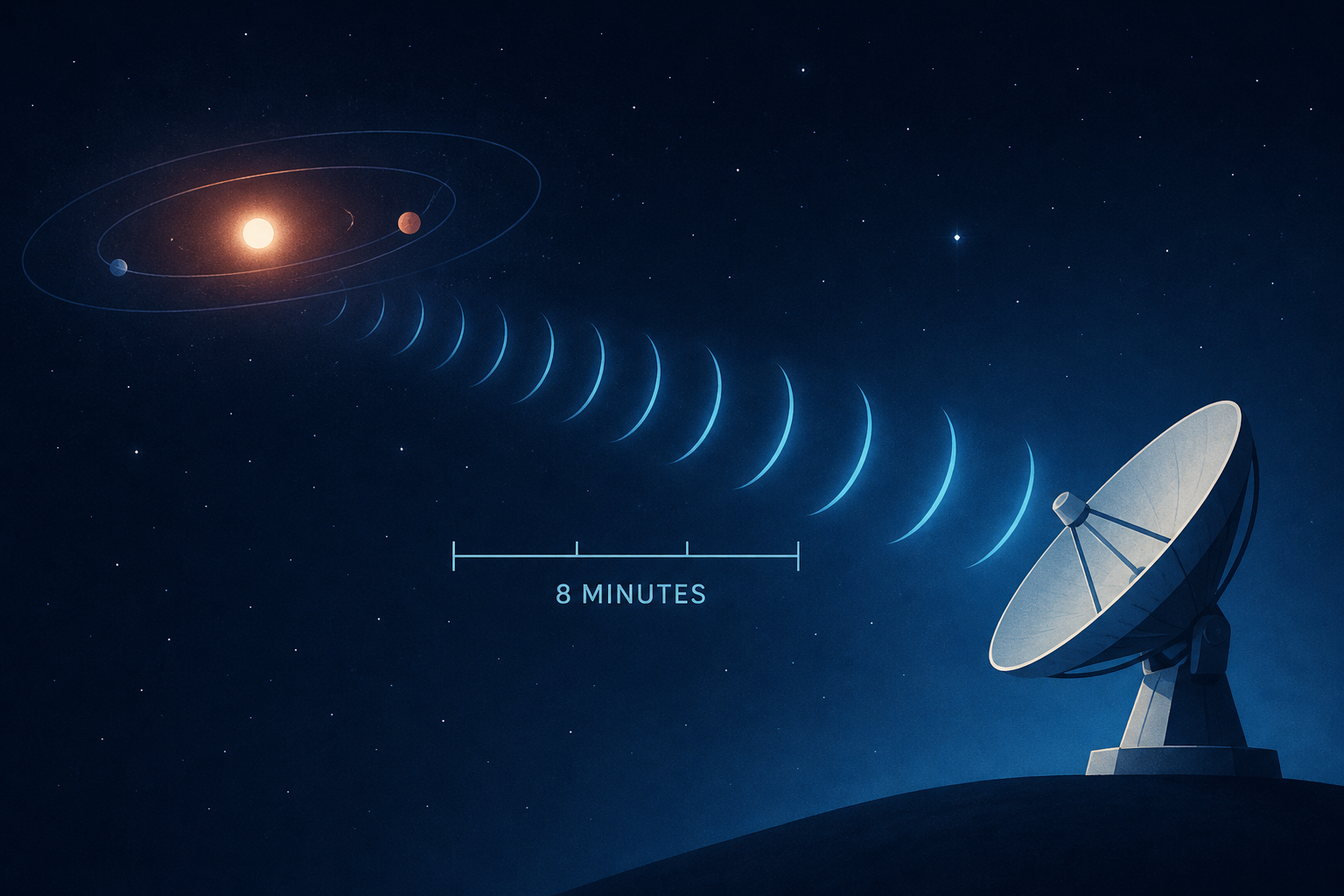
Scientists discover star system sending strange radio signals every eight minutes from deep space
Yahoo Tech • • science
Key Points:
- Researchers have discovered a star system named GPM J071507−114153, located over 5,000 light-years away, that emits radio signals every eight minutes, consisting of a white dwarf and a G-type star similar to the Sun.
- This system belongs to the rare group of long-period transients (LPTs), which produce radio signals that periodically turn on and off, with intervals ranging from minutes to hours.
- The discovery was made using the Murchison Widefield Array (MWA) and the MeerKAT radio telescope, allowing scientists to observe the white dwarf's movement in its orbit and identify the source of the radio pulses near or on the white dwarf itself.
- Unlike previous LPT systems typically involving red dwarfs, this system is unique due to the presence of a Sun-like star, making it a rare and significant find in radio astronomy.
- Astronomers anticipate that with advanced telescopes like the Square Kilometre Array, many more such star systems will be discovered in the future, enhancing understanding of these mysterious radio-emitting stars.


