AI Generated Image
Scientists Find Evidence of Lost Amazonian Civilization That May Have Been Home to Millions
Gizmodo • • world
Key Points:
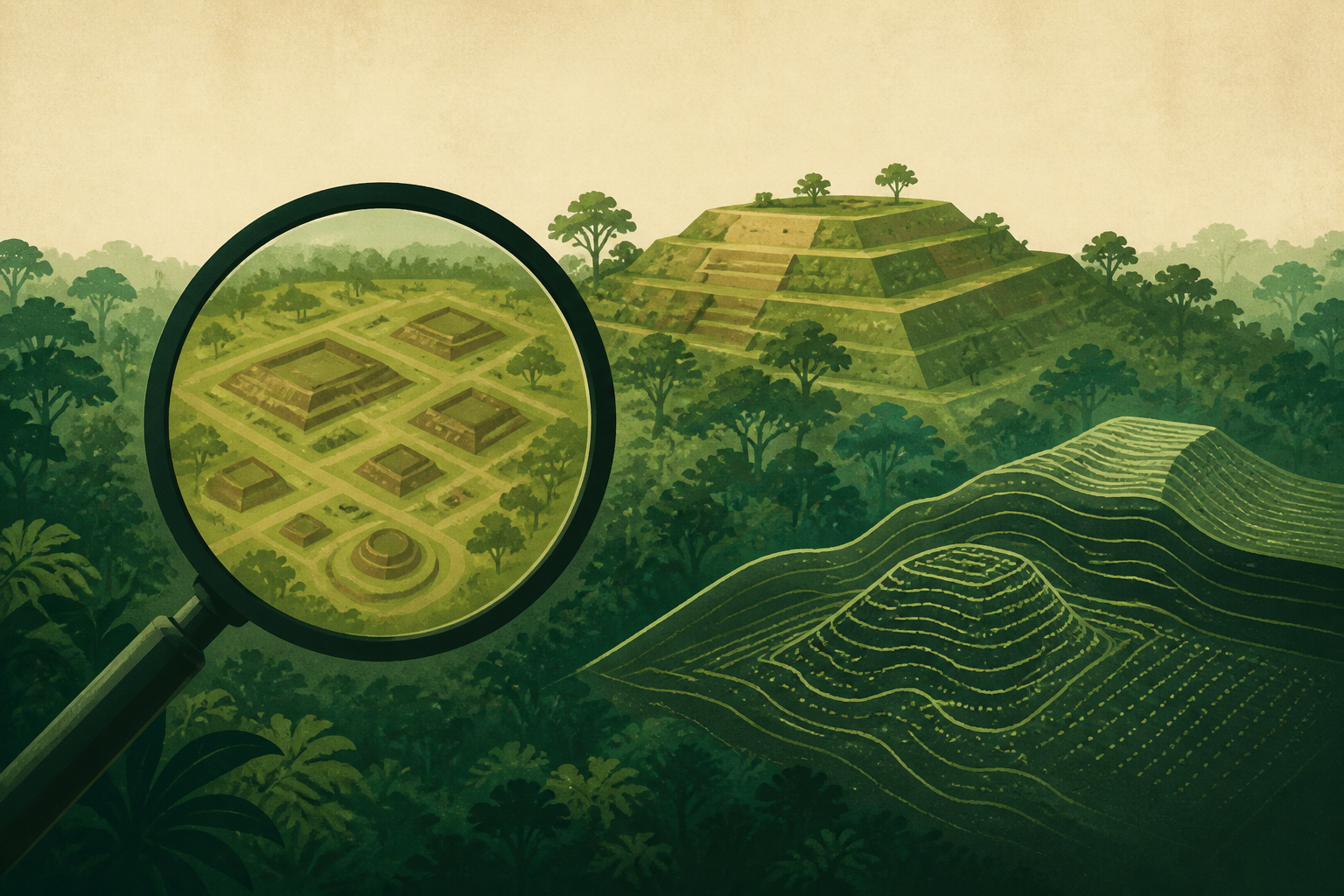
- New lidar scans of over 1,700 square miles in western Brazil have revealed more than 400 ancient earthwork monuments, ceremonial sites, and roads, suggesting a vast pre-Columbian civilization called the Aquiry inhabited the Amazon between 600 BCE and 850 CE.
- Researchers estimate there could be 20,000 to 30,000 such earthworks across the region, indicating a population of 1.25 to 3 million people who significantly altered the Amazon’s ecosystem through advanced horticulture and forest management.
- The Aquiry civilization constructed complex geometric geoglyphs and interconnected roads, demonstrating sophisticated knowledge of geometry contemporaneous with ancient Greek developments.
- These findings challenge previous beliefs that the Amazon was a pristine wilderness before European contact, showing that human activity had a profound environmental impact, including on carbon production and balance, which may influence future climate models.
- Some experts urge caution regarding population estimates, suggesting that repeated relocations might explain the widespread geoglyphs; ongoing archaeological debate is expected to further assess these claims.


