AI Image
Scientists find millions of ancient batteries under the Pacific
Yahoo • • science
Key Points:
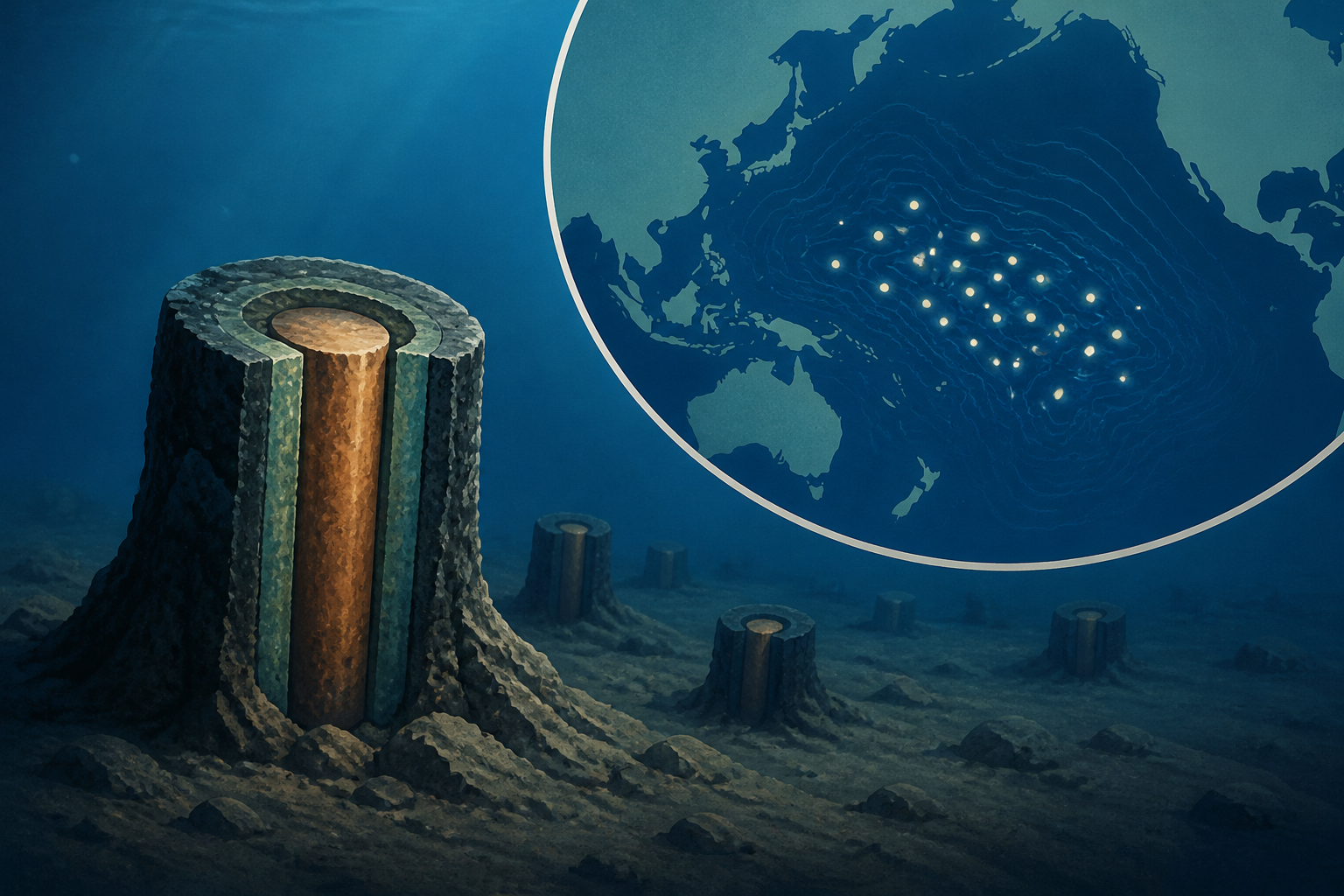
- Scientists have discovered millions of metal-rich polymetallic nodules on the Pacific Ocean floor that may generate electrical charges sufficient to produce oxygen without sunlight, challenging the long-held belief that sunlight is essential for oxygen production in oceans.
- In 2012, deep-sea ecologist Andrew Sweetman recorded unexpected oxygen increases at 4,000 meters depth where photosynthesis is impossible, leading to the hypothesis that these nodules act as natural "batteries" generating "dark oxygen."
- Electrochemical tests revealed that individual nodules produce voltages close to 0.95 volts, and clusters of nodules might combine their electrical potential to split seawater molecules and produce oxygen through electrolysis.
- These nodules grow extremely slowly over millions of years with layered metals that create varying electrical potentials, but not all nodules show this effect, raising concerns about potential ecological impacts if mining disturbs these oxygen-producing structures.
- To verify the theory, specially designed deep-sea landers capable of measuring oxygen, pH, and hydrogen simultaneously are being deployed in the Clarion-Clipperton Zone, aiming to confirm whether ancient rock batteries indeed power deep-sea oxygen production.


