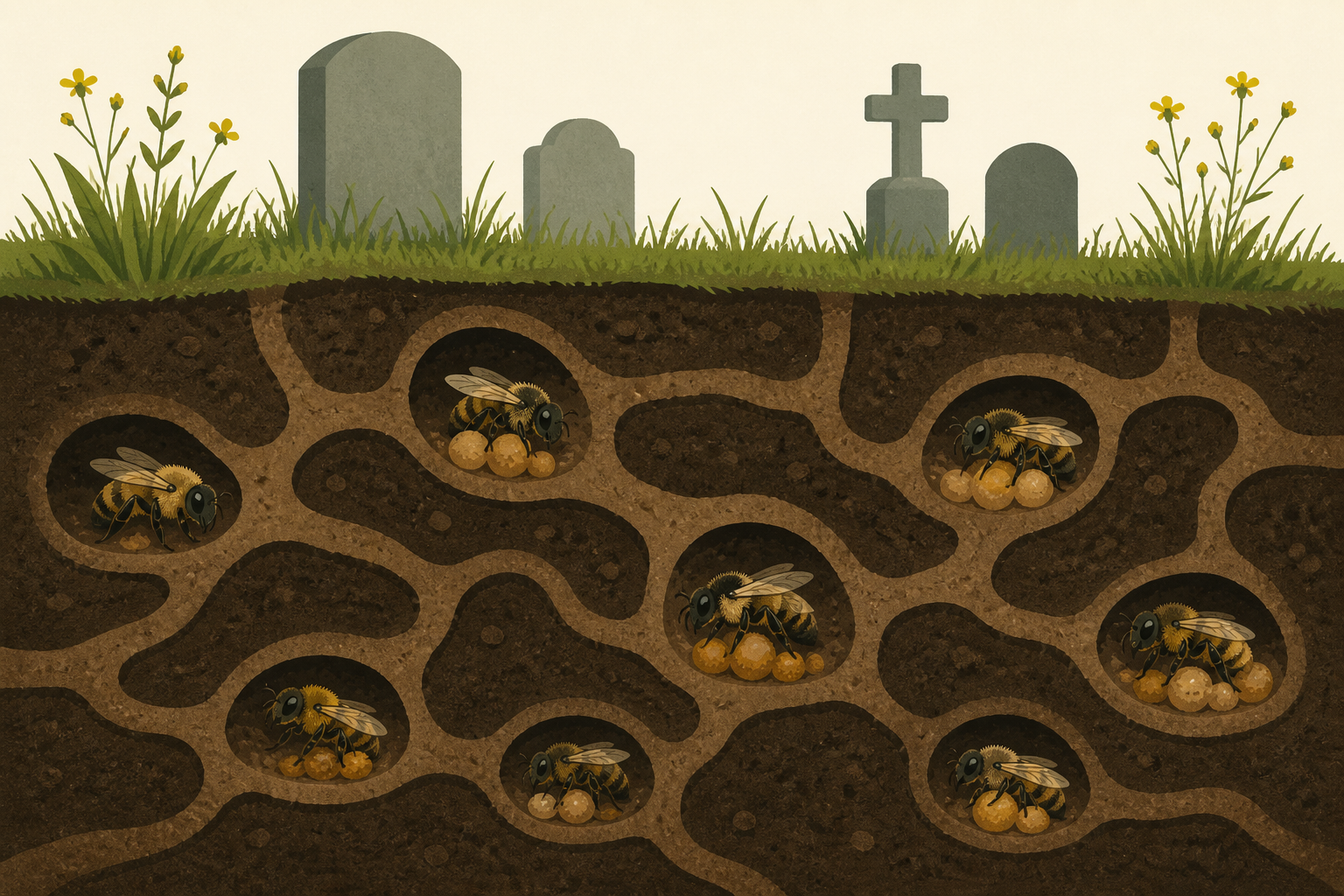
AI Generated Image
Scientists found an estimated 5.5 million wild bees living beneath a New York cemetery — millions of solitary insects packed into underground burrows across just 1.5 acres, creating one of the largest
Space Daily • • science
Key Points:
- Rachel Fordyce, a Cornell entomology technician, discovered a massive population of around 5.5 million regular mining bees (Andrena regularis) beneath East Lawn Cemetery in Ithaca, New York, after noticing bees emerging from the turf.
- Researchers used emergence traps to estimate the bee population, finding that this aggregation is among the largest documented, with bees living solitarily in underground burrows despite their dense clustering.
- The cemetery's sandy, well-drained soil, low pesticide use, and minimal disturbance have created an ideal habitat for these ground-nesting bees, which have likely thrived there for nearly a century.
- These mining bees are important pollinators for nearby Cornell orchards, especially apple trees, and are more effective than honeybees at pollinating certain crops, highlighting their ecological and agricultural significance.
- Scientists have begun surveying other cemeteries for similar bee populations and warn that development or paving over such sites could instantly destroy millions of vital pollinators hidden beneath the surface.


