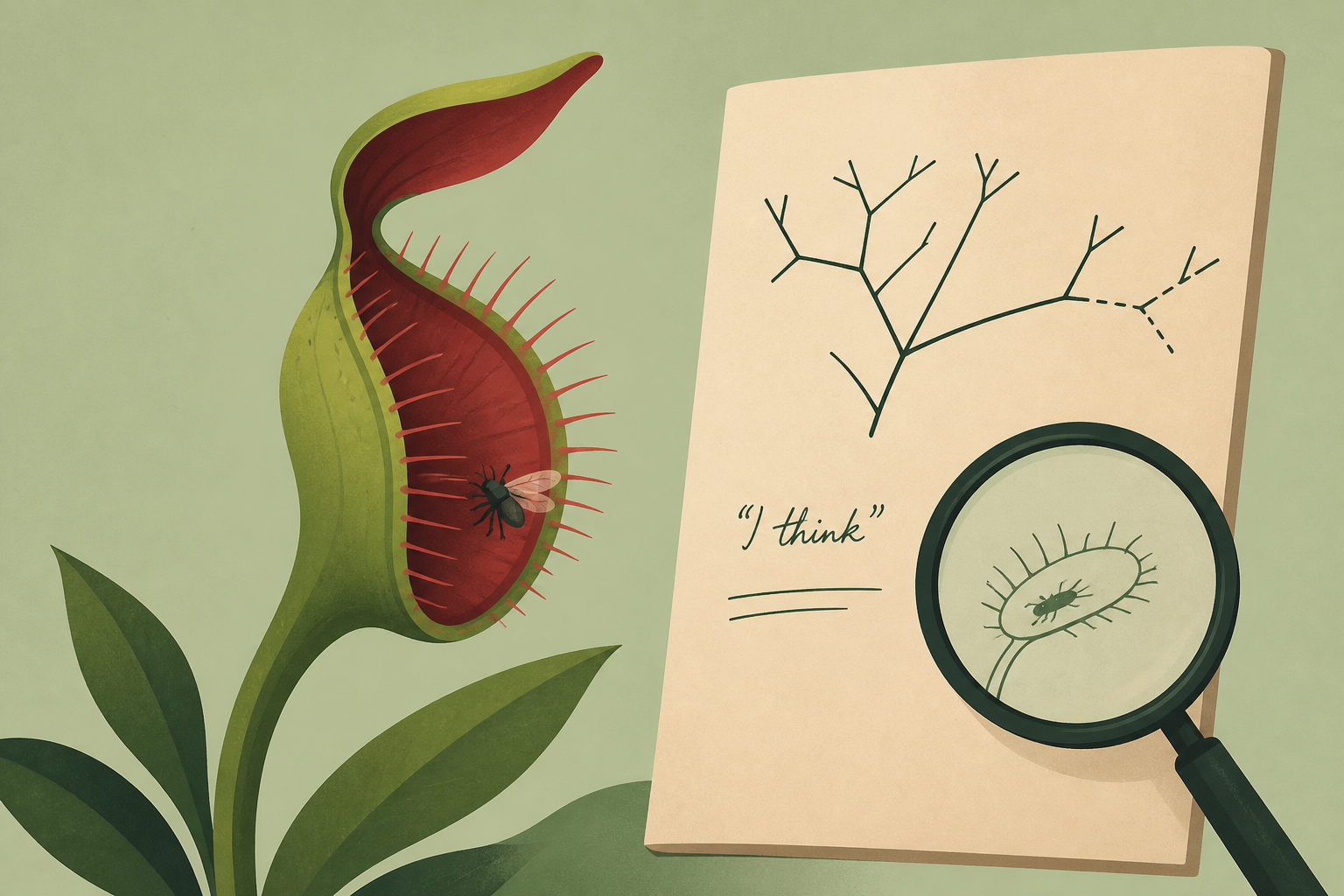
AI Generated Image
Scientists identify carnivorous plant, proving Darwin prediction
CNN • • world
Key Points:
- Scientists have confirmed Charles Darwin’s 1875 hypothesis that some Saxifraga species, specifically Saxifraga candelabrum, are carnivorous, using sticky glandular hairs to trap and digest insects.
- The study published in Nature Communications demonstrated that S. candelabrum attracts gnats with odors, traps them with sticky hairs, and digests them using the enzyme phosphatase, absorbing nutrients like nitrogen-15 from the prey.
- Genetic analysis revealed shared genes between S. candelabrum and other carnivorous plants related to prey attraction, digestion, and nutrient absorption, suggesting carnivory may be more widespread among flowering plants than previously thought.
- S. candelabrum grows in nutrient-poor, high-altitude alpine environments, where carnivory likely evolved as an adaptation to limited soil nitrates, marking the first known carnivorous plant in such habitats.
- The findings highlight ongoing scientific discovery in botany and suggest many more carnivorous plant species may remain unidentified, continuing the legacy of Darwin’s foundational research.


