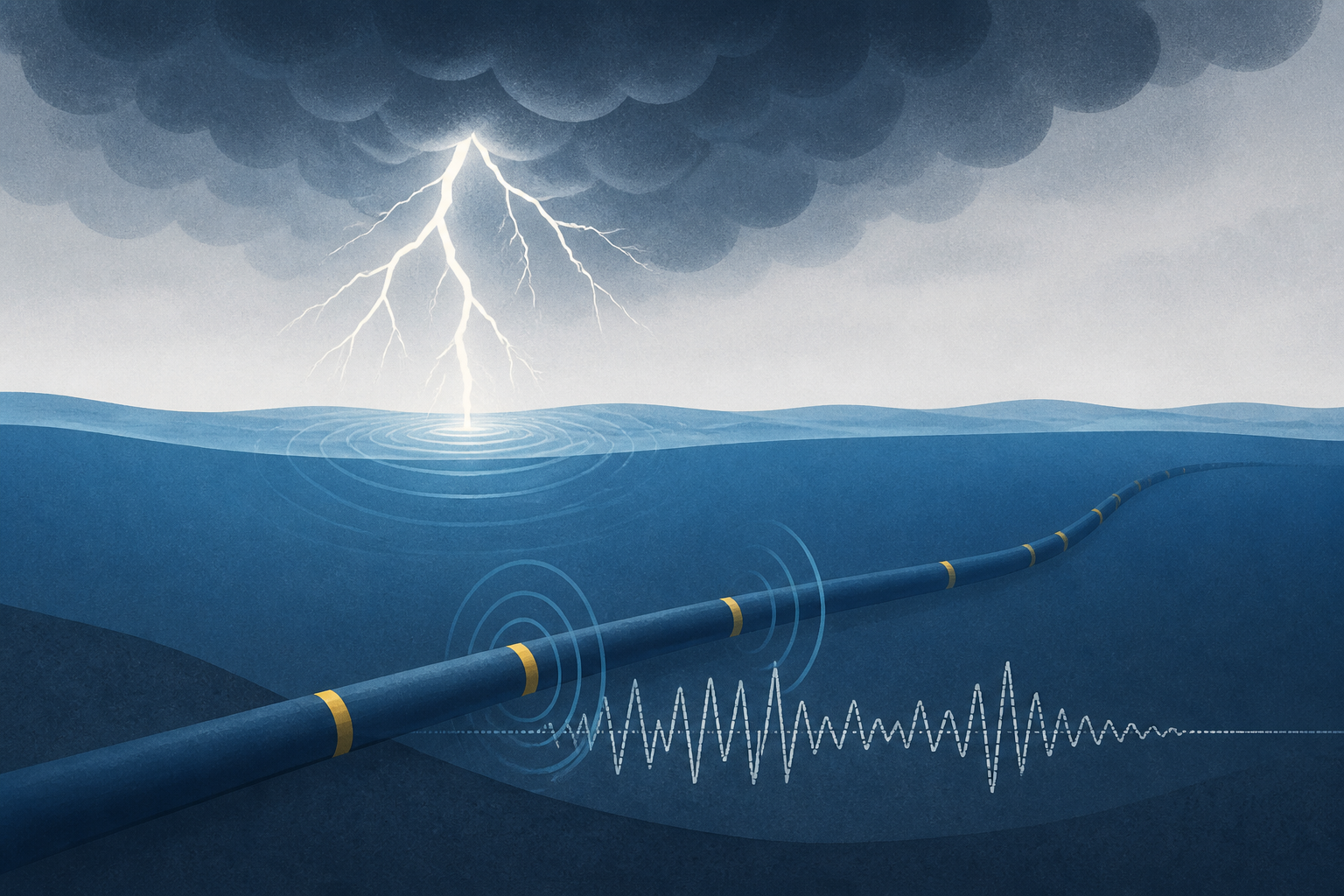
AI Generated Image
Scientists Planted Telecom Cables to Find 'Thunderquakes.' Here's What Happened
Gizmodo • • science
Key Points:
- Researchers at Pennsylvania State University used high-quality fiber-optic cables combined with acoustic sensors to detect and analyze "thunderquakes," small ground vibrations caused by lightning strikes.
- Over two years, they recorded 458 thunderquake events and successfully created detailed images of geological structures up to 328 feet underground using this data.
- The study demonstrates that seismic energy from atmospheric phenomena like thunderstorms, previously considered noise, can be harnessed as a renewable and cost-free source for probing shallow subsurface structures.
- The team employed distributed acoustic sensing technology, turning fiber-optic cables into dense seismic sensor arrays, enabling precise measurement of ground motion changes induced by thunderquakes.
- Future plans include applying this method in diverse geological environments and potentially exploring subsurfaces on other planets or moons, offering a complementary tool where traditional seismic surveys are challenging.


