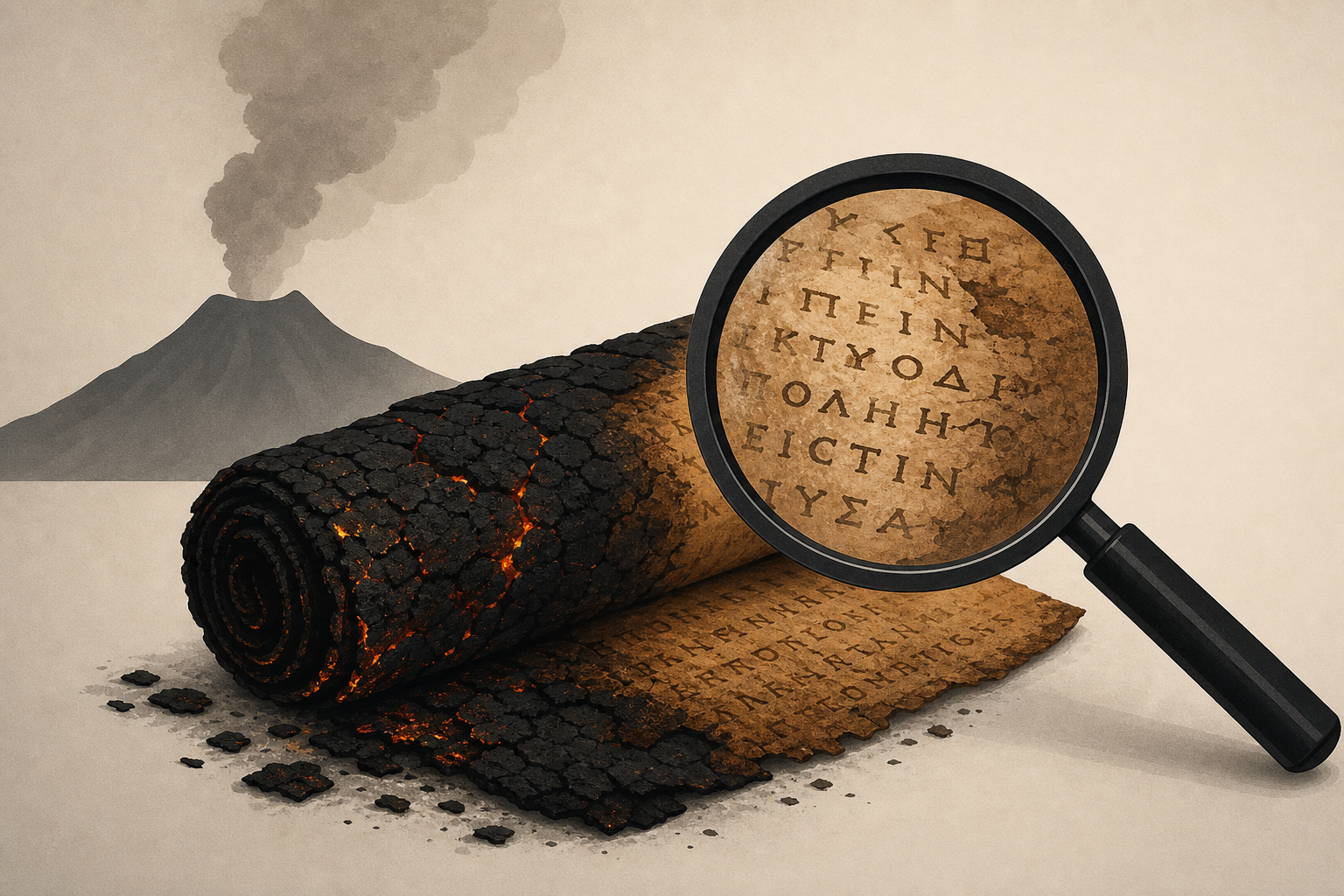
AI Generated Image
Scientists reveal secrets of ancient scrolls burned by Mount Vesuvius nearly 2,000 years ago
NBC News • • world
Key Points:
- Scientists have used AI-enabled "digital unwrapping" to reveal texts from ancient scrolls buried by Mount Vesuvius's eruption nearly 2,000 years ago, uncovering philosophical writings on ethics, arts, human behavior, and theology.
- The scrolls, carbonized and fragile, were discovered in Herculaneum and have challenged researchers for centuries due to their delicate condition and the difficulty of distinguishing ink from charred papyrus.
- A 2023 breakthrough by students using machine-learning algorithms allowed rapid extraction of ancient Greek letters from virtually unwrapped scrolls, accelerating the reading process from months to full texts.
- Researchers have so far deciphered about 10% of the scrolls, including some unexpected finds such as one scroll previously thought to have no visible ink, which may be among the oldest Roman scrolls discovered.
- The University of Kentucky has announced a $1 million prize for anyone who can fully decipher a complete scroll by June next year, aiming to further advance the study of these ancient texts.


