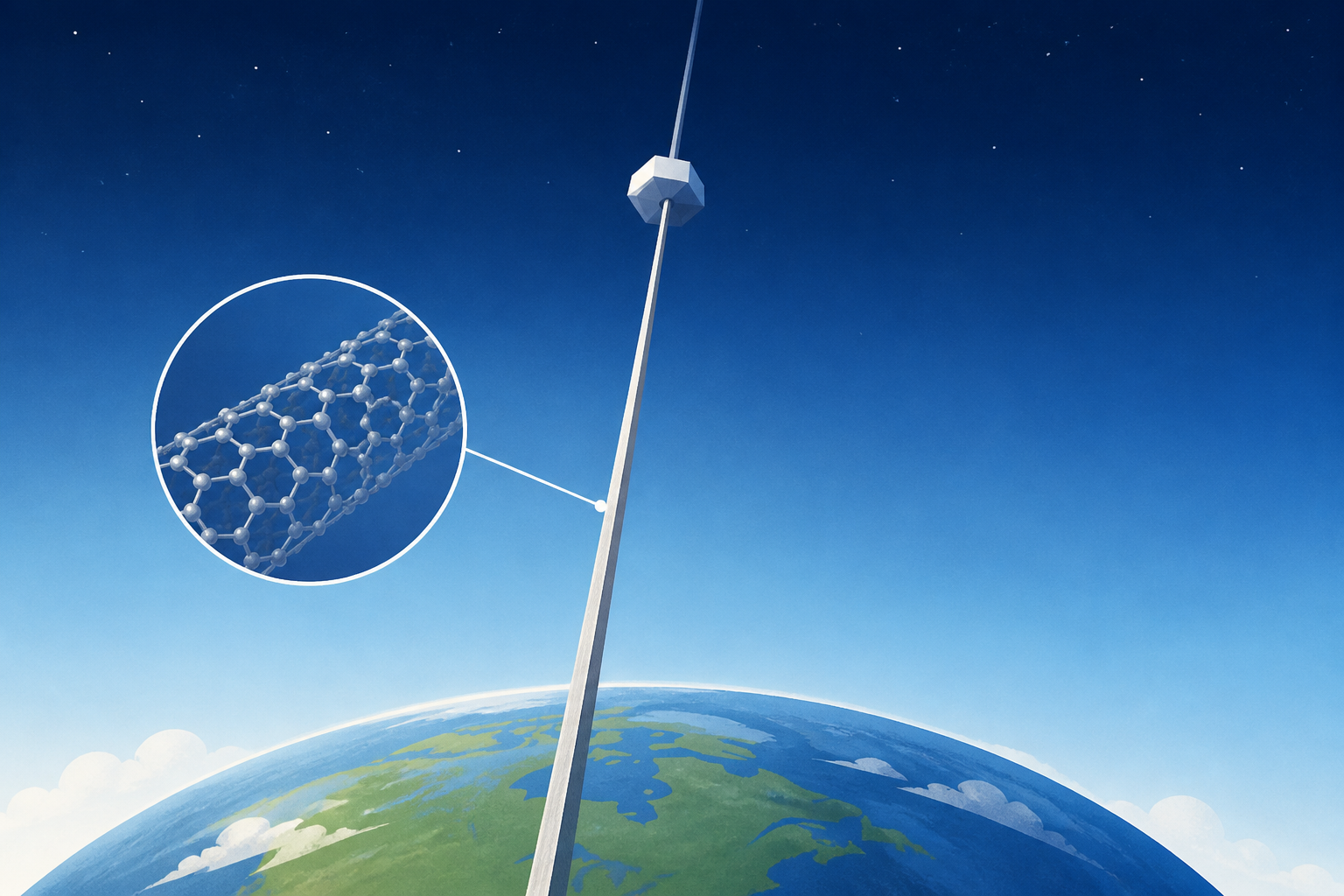
AI Generated Image
Scientists take major step toward building first elevator to space
geekspin • • science
Key Points:
- Scientists are developing a space elevator using polycrystalline graphene, a strong and lightweight material that could serve as the tether stretching 62,000 miles from Earth into space.
- Polycrystalline graphene is more scalable than traditional graphene, with engineers already producing large pieces, though still far from the full length needed for the elevator.
- The space elevator would use Earth's rotation to keep the tether taut, allowing cargo climbers to ascend to geostationary orbit and beyond, potentially reducing travel time to the Moon to 14 hours and to Mars to 61-120 days.
- Significant challenges remain, including the massive scale of construction, risks from space debris, and high costs, with estimates around $15 billion for a robotic first elevator compared to NASA's multi-billion-dollar programs.
- Experts estimate it could take 10 to 20 years to build the elevator, with initial focus on cargo transport before passenger travel becomes feasible, making it a long-term but transformative vision for space exploration.


