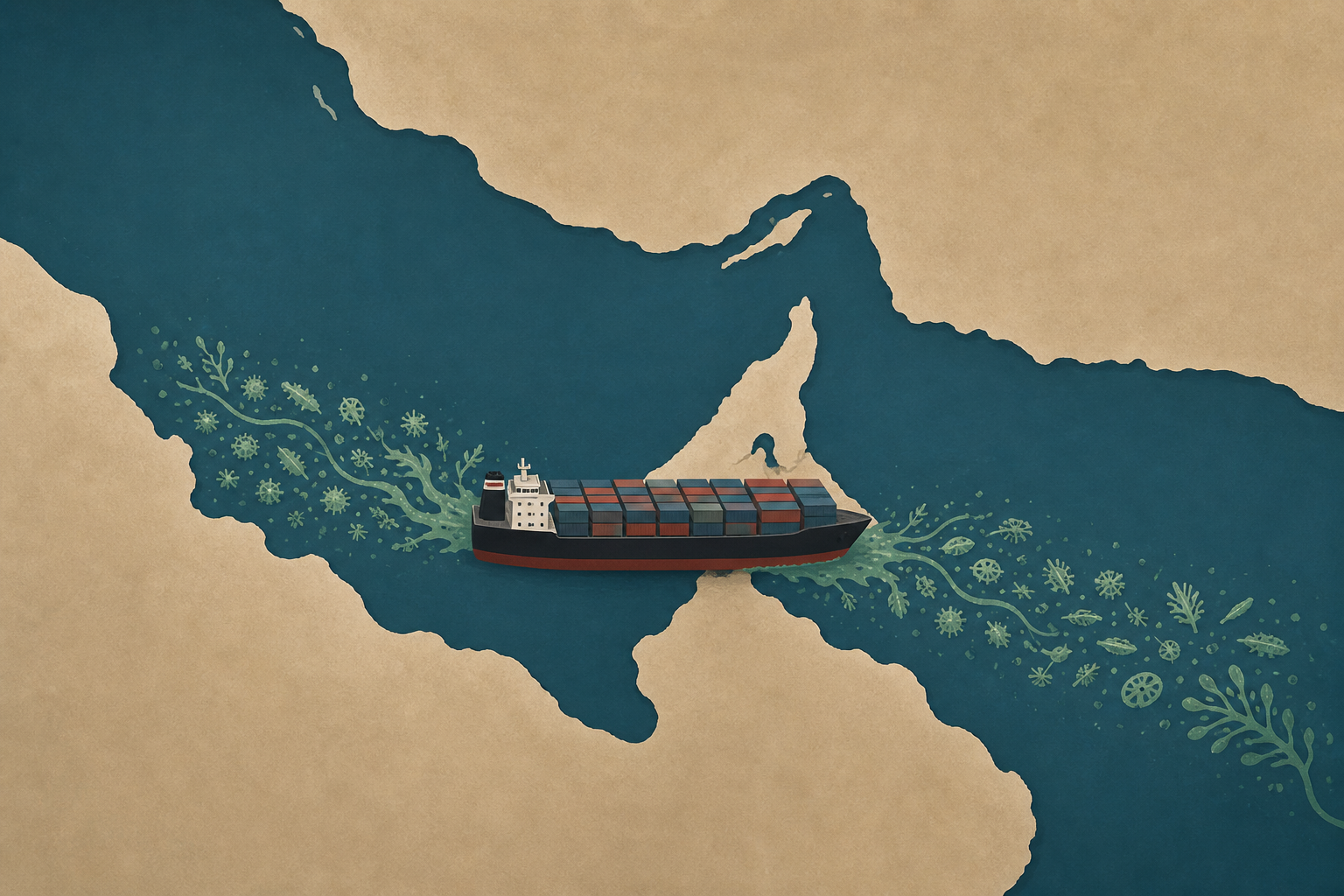
AI Generated Image
Scientists warn of possible invasive species superspreader event due to stalling near Strait of Hormuz
ABC News - Breaking News, Latest News and Videos • • nation
Key Points:
- Ongoing conflict and naval blockades in the Strait of Hormuz have stalled over 1,500 ships in the Persian Gulf and hundreds more in the Gulf of Oman, disrupting a critical passageway for about 20% of the world's oil supply.
- Prolonged idling of ships leads to biofouling, where marine organisms like algae, barnacles, and mussels attach to hulls, potentially spreading invasive species globally when ships resume travel.
- The unique, hardy marine life in the warm, high-salinity waters of the Strait of Hormuz increases the risk of invasive species surviving long voyages and establishing in new ecosystems, posing a severe ecological threat.
- Invasive species such as zebra mussels have caused millions in damages and are nearly impossible to eradicate once established, highlighting the importance of prevention and early detection efforts.
- Experts recommend hull cleaning with specialized vacuum devices before ships depart to minimize the spread of biofouling organisms and reduce the risk of ecological catastrophes linked to stalled vessels.


