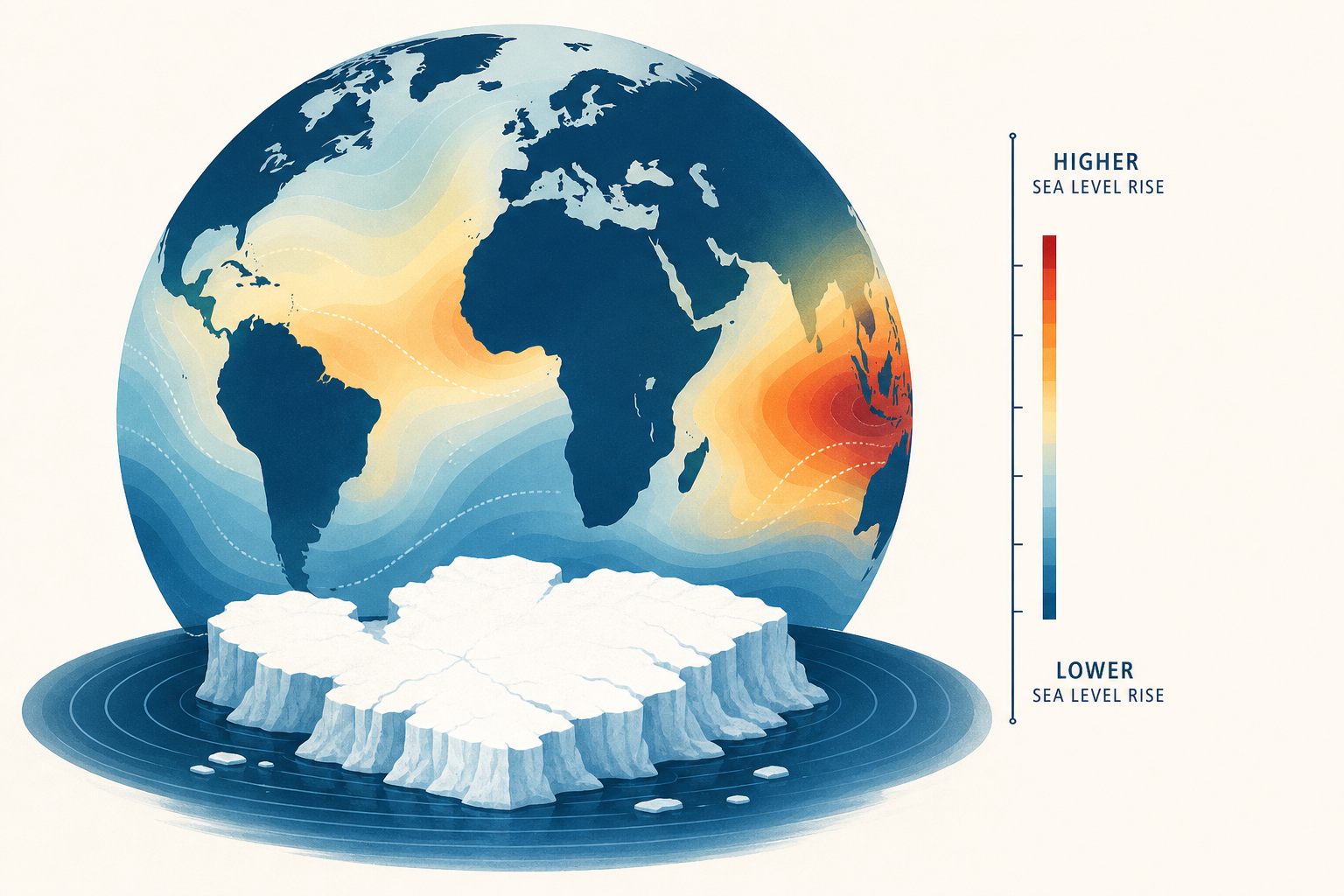
AI Generated Image
Sea level doesn’t rise at the same rate everywhere - we mapped where Antarctica’s ice melt would have the biggest impact
Yahoo News UK • • science
Key Points:
- A November 2025 study used integrated computer models to examine how melting Antarctic ice affects global climate and sea levels, highlighting that Antarctica holds enough ice to raise sea levels by about 190 feet if fully melted.
- The extent of Antarctic ice melt depends on future greenhouse gas emissions, with high emissions threatening both West and East Antarctic ice sheets, while adherence to the Paris Agreement goals could preserve much of the ice.
- Sea-level rise from Antarctic melt is uneven globally due to gravitational effects; regions far from Antarctica, such as the Indian, Pacific, and western Atlantic basins, may experience higher-than-average sea-level increases, while areas near Antarctica could see sea levels fall.
- Two natural processes may slow Antarctic ice melt: the rebound of Earth's mantle lifting parts of the ice sheet and the cooling effect of Antarctic meltwater on ocean surface temperatures, which delays atmospheric warming.
- Under moderate emission scenarios, Antarctic melt could raise sea levels by about 4 inches by 2100 and over 3 feet by 2200, with higher rises under high emission scenarios posing severe risks to low-lying island nations, emphasizing the urgent need for emission reductions to protect vulnerable communities.


