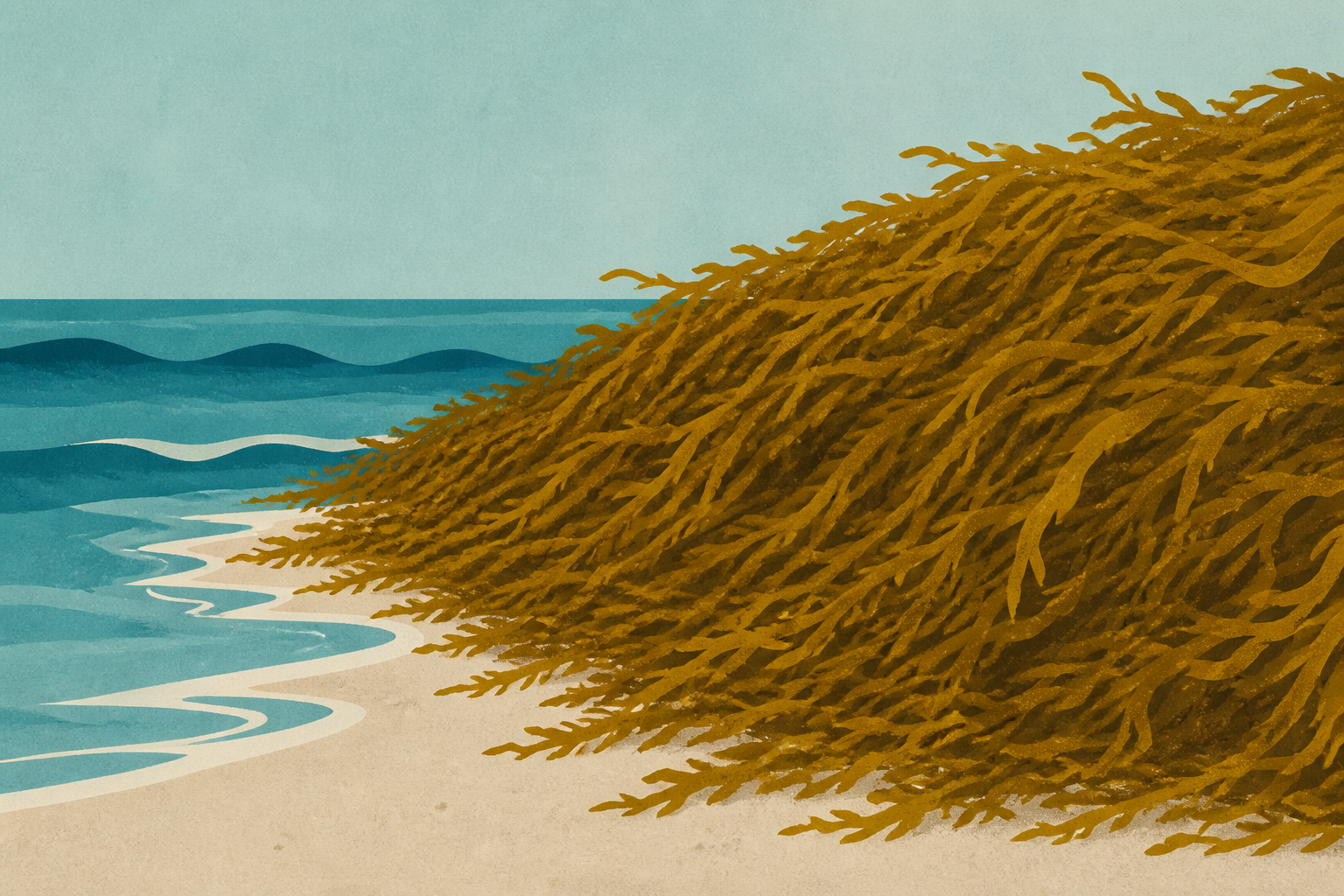
AI Generated Image
Seaweed smothers coastlines from the Caribbean to Mexico
AP News • • world
Key Points:
- Record blooms of sargassum seaweed, totaling 27 million metric tons in July, are smothering Caribbean and Gulf of Mexico coastlines, harming marine life and deterring tourists in key vacation areas.
- Scientists report that this year marks the first time sargassum is reproducing locally in the Caribbean and Gulf, fueled by last year's unprecedented 40 million metric ton bloom and environmental factors like warming waters and agricultural runoff.
- The seaweed's decay produces foul odors and toxic gases, causing health issues and prompting emergency responses, while its accumulation disrupts ecosystems by reducing oxygen, blocking sunlight, and threatening sea turtle hatchlings.
- Mexico plans to invest $115 million to combat the seaweed influx, which has already caused a 30% drop in tourism revenue in Quintana Roo, with local businesses and workers facing significant economic losses.
- Efforts in affected regions like Martinique include manual collection and repurposing sargassum for compost and bioenergy, but experts warn that macroalgae blooms are increasing globally, posing a growing environmental hazard.


