Seville, Spain's Holy Week blends faith, tradition and spectacle
NPR • • world
Key Points:
- Seville's Semana Santa, or Holy Week, is a deeply traditional and sacred event featuring elaborate processions with gilded floats, brass bands, and religious brotherhoods from Palm Sunday to Easter Sunday, drawing locals and tourists alike.
- Despite a decline in Catholic identification in Spain—from about 90% fifty years ago to 46% today—many residents, religious or not, find emotional and cultural significance in the Semana Santa celebrations.
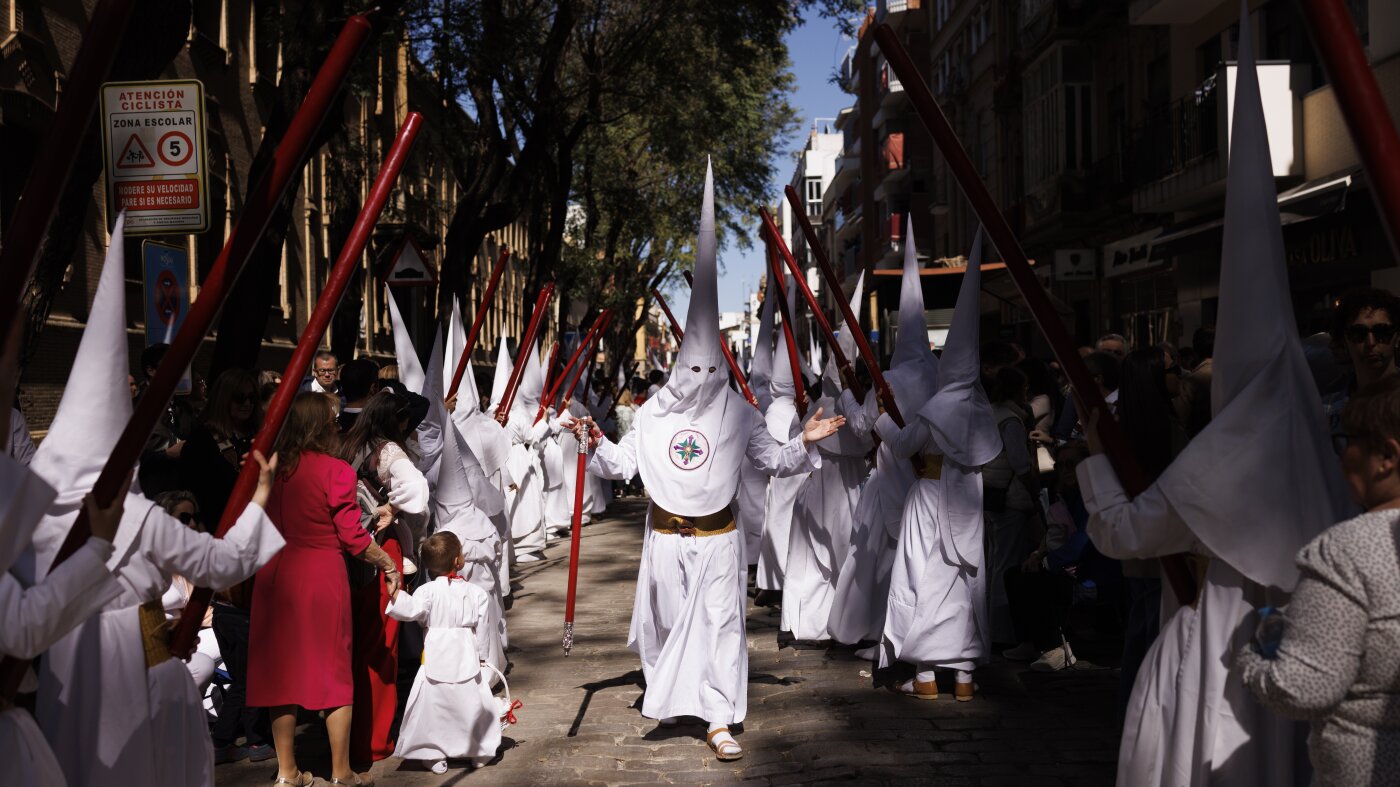
- The brotherhoods, comprising men and women dressed as nazarenos in tunics and pointed hoods, perform acts of penance such as walking barefoot and carrying wooden crosses, with each group responsible for carrying centuries-old statues depicting scenes from the Passion of Christ.
- The processions involve complex logistics, including teams of men carrying heavy floats through the streets, and are accompanied by unique traditions such as children collecting candies, devotional cards, and building wax-covered foil balls from candle drippings.
- The saeta, a passionate flamenco a cappella song dedicated to Jesus and the Virgin Mary, is a distinctive expression of faith performed during the week, embodying the intense emotions that characterize the event.


