Shifting Gulf Stream may signal an ocean current collapse is next
Earth.com • • science
Key Points:
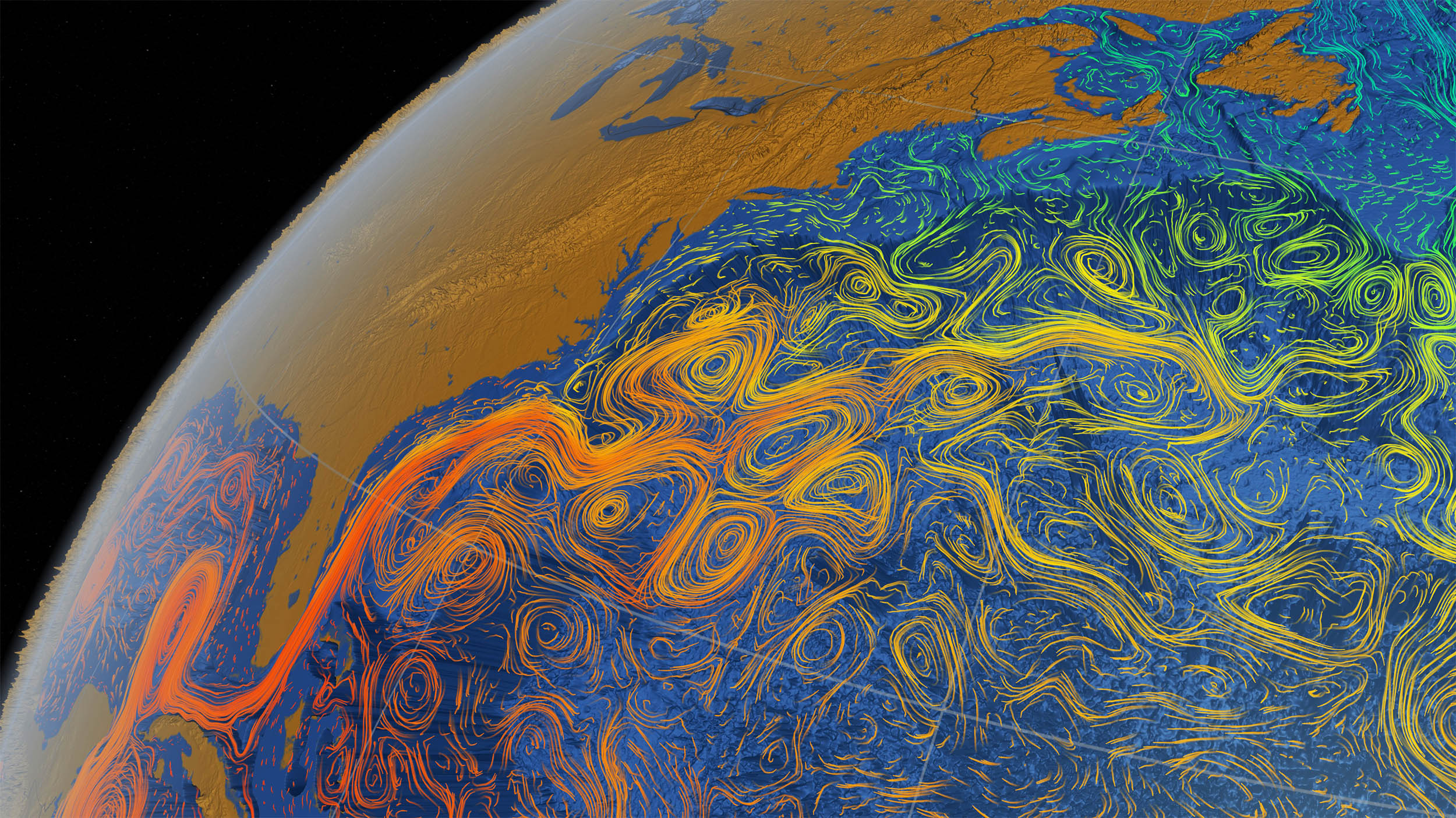
- A new modeling study from Utrecht University suggests that a weakening Atlantic Meridional Overturning Circulation (AMOC) causes the Gulf Stream to gradually shift northward along the U.S. East Coast, a phenomenon supported by satellite observations showing a 50 km northward shift over the past 30 years.
- The Gulf Stream’s northward movement is linked to a weakening Deep Western Boundary Current, which normally exerts a southward pull beneath the Gulf Stream; as this deep current weakens with AMOC decline, the Gulf Stream’s path shifts north.
- The study’s high-resolution ocean model predicts that after centuries of gradual change, the Gulf Stream could suddenly jump more than 200 km north in a short period, potentially serving as an early warning signal for a larger AMOC collapse.
- An AMOC collapse could cause significant climate disruptions, including severe cooling in parts of Europe, with extreme winter temperatures and increased volatility impacting agriculture, infrastructure, and energy demand.
- While the research does not forecast an imminent collapse, it highlights the Gulf Stream’s path as a practical, monitorable proxy for AMOC strength, emphasizing the importance of tracking sudden shifts as potential red flags for major Atlantic circulation changes.


