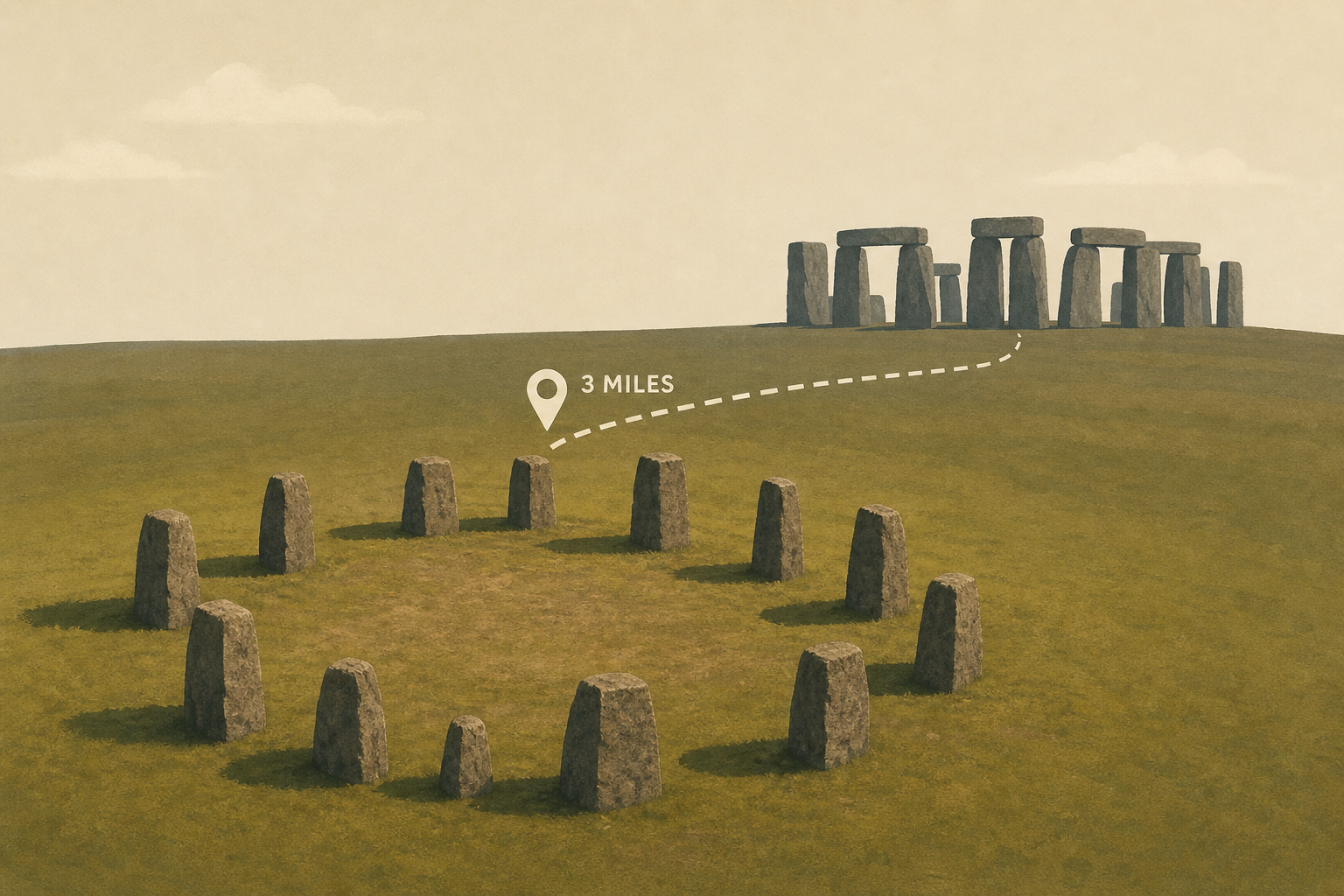
AI Generated Image
Simpler, older version of Stonehenge found three miles from famous site
BBC • • world
Key Points:
- Archaeologists have discovered an earlier, simpler version of Stonehenge about 3 miles away in Bulford, consisting of two wooden posts aligned with the Sun on the summer and winter solstices, dating back 5,000 years—500 years before Stonehenge.
- The site contained artefacts such as pottery, flint tools, animal bones, and a rare Neolithic discoidal knife, indicating prehistoric gatherings and craftsmanship, with radiocarbon dating confirming its age.
- Detailed analysis of the post alignments, aided by archaeoastronomy, showed precise solar alignment similar to Stonehenge, suggesting early communities revered celestial events.
- The Bulford monument may represent the living or seasonal gathering place of the people who built Stonehenge’s earliest earthworks, linking the two sites culturally and temporally.
- Researchers believe the solar alignments reflect the agricultural society’s dependence on seasonal cycles, particularly the importance of marking the winter solstice as a symbol of light’s return and the hope for thriving crops and animals.


