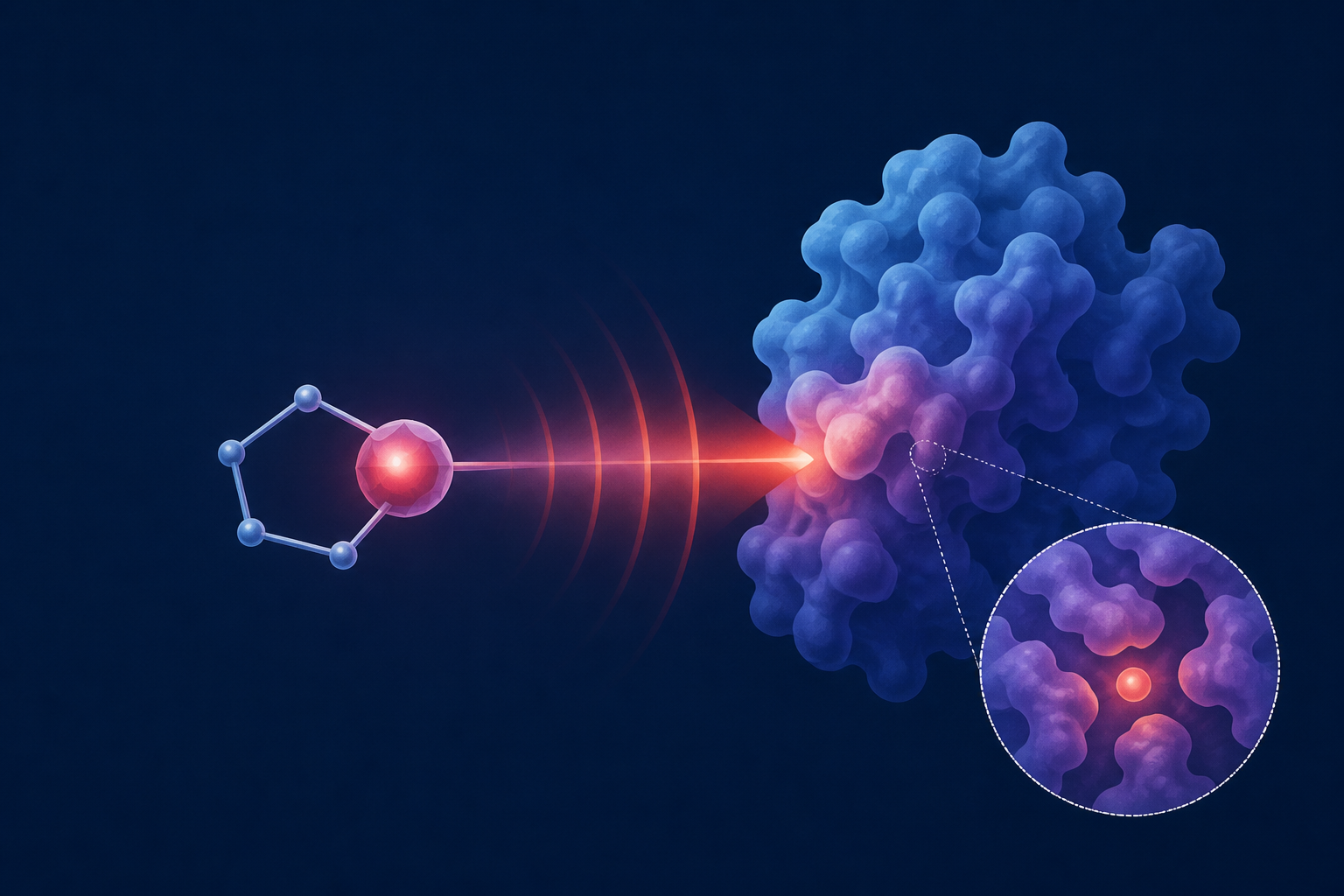
AI Generated Image
Single molecule becomes quantum sensor for imaging proteins at nanoscale
Phys.org • • science
Key Points:
- Researchers at the University of Waterloo's Institute for Quantum Computing have developed a novel quantum sensing technique using a single molecule, enabling ultra-precise measurements of single protein structures and other biomolecules with potential applications in drug discovery and structural biology.
- The method uses trityl-OX063 molecules as quantum sensors, which can be placed closer to target atoms than traditional diamond-based sensors, enhancing sensitivity by probing the local magnetic environment via electron spin changes detected mechanically with nanowire probes.
- A new control sequence extended the coherence time of the OX063 electron spin to 400 microseconds, about 60 times longer than standard techniques, allowing for more effective sensing of magnetic states.
- The sensor currently detects magnetic states of around 10 spins, with researchers confident in reaching single-spin detection, a crucial step toward mapping individual molecular structures that existing imaging methods cannot achieve.
- This advancement represents a new paradigm in nanoscale quantum sensing, opening avenues for force detection methods that may lead to detailed mapping of single protein structures and improved understanding of disease mechanisms and drug interactions.


