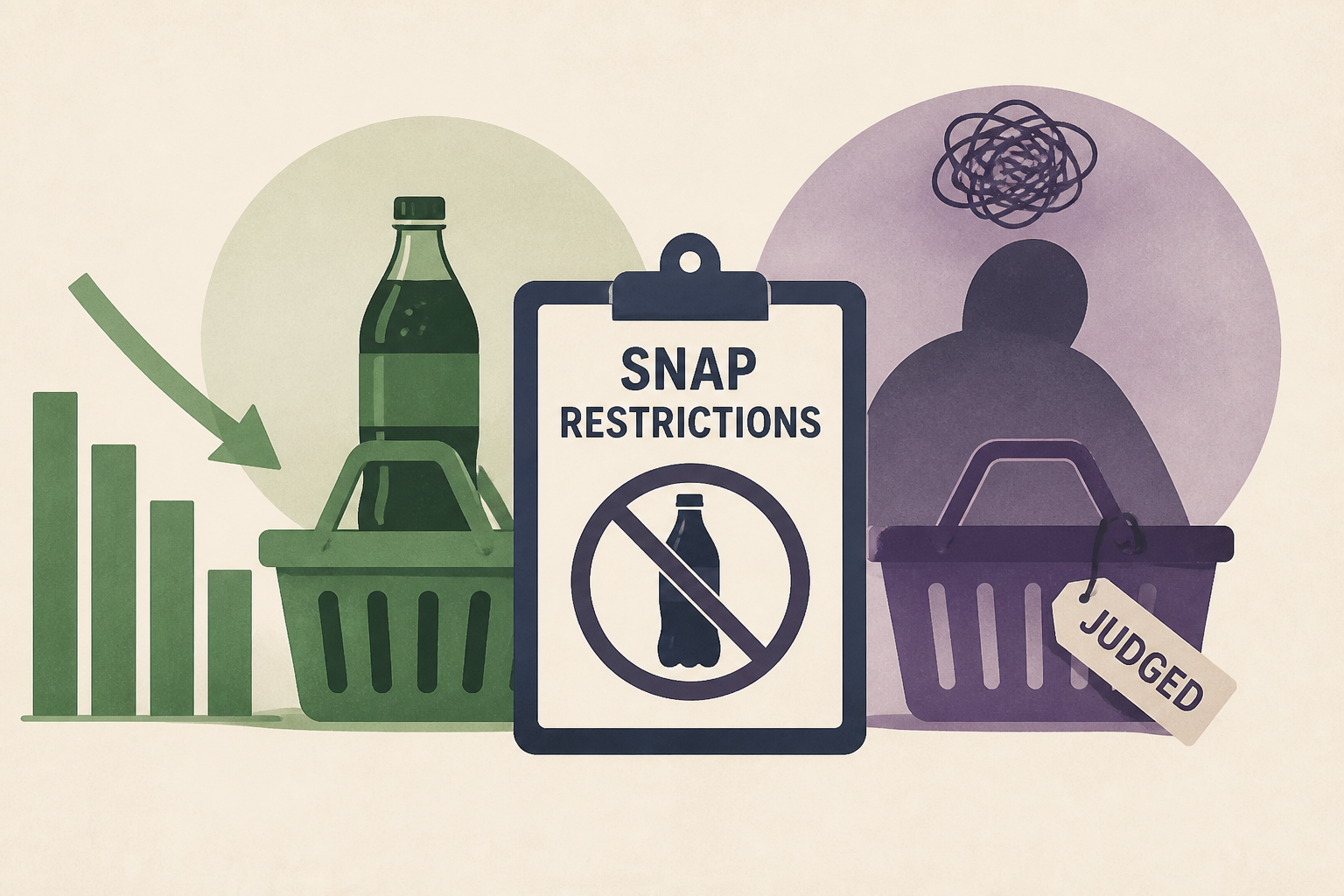
AI Generated Image
SNAP restrictions cut soda purchases but raise stigma concerns, study finds
CBS News • • business
Key Points:
- A study by researchers from the University of Chicago, MIT, and Stanford found that state-level restrictions on using SNAP benefits to buy sugary drinks led to a 12.4% reduction in soda purchases among food stamp recipients from January to June 2026, equivalent to 34 fewer 12-ounce cans per person annually.
- The Trump administration, under Health and Human Services Secretary Robert F. Kennedy Jr., has promoted these restrictions as part of the "Make America Healthy Again" initiative, issuing waivers to 23 states to limit SNAP eligibility for soda, candy, and other unhealthy foods.
- Economic modeling estimates that a nationwide ban on sugary drink purchases with SNAP benefits could save $1.2 billion annually, primarily through reduced healthcare costs related to obesity and type 2 diabetes.
- Despite the reductions in sugary drink purchases, the study found increased stigma among SNAP recipients, with many feeling judged while shopping, raising concerns that such policies might discourage benefit use and negatively impact health.
- Experts caution that while purchase reductions are significant, substitution effects (e.g., switching to other sugary drinks) and assumptions in projecting health outcomes mean the long-term benefits and consequences of these restrictions remain uncertain.


