AI Generated Image
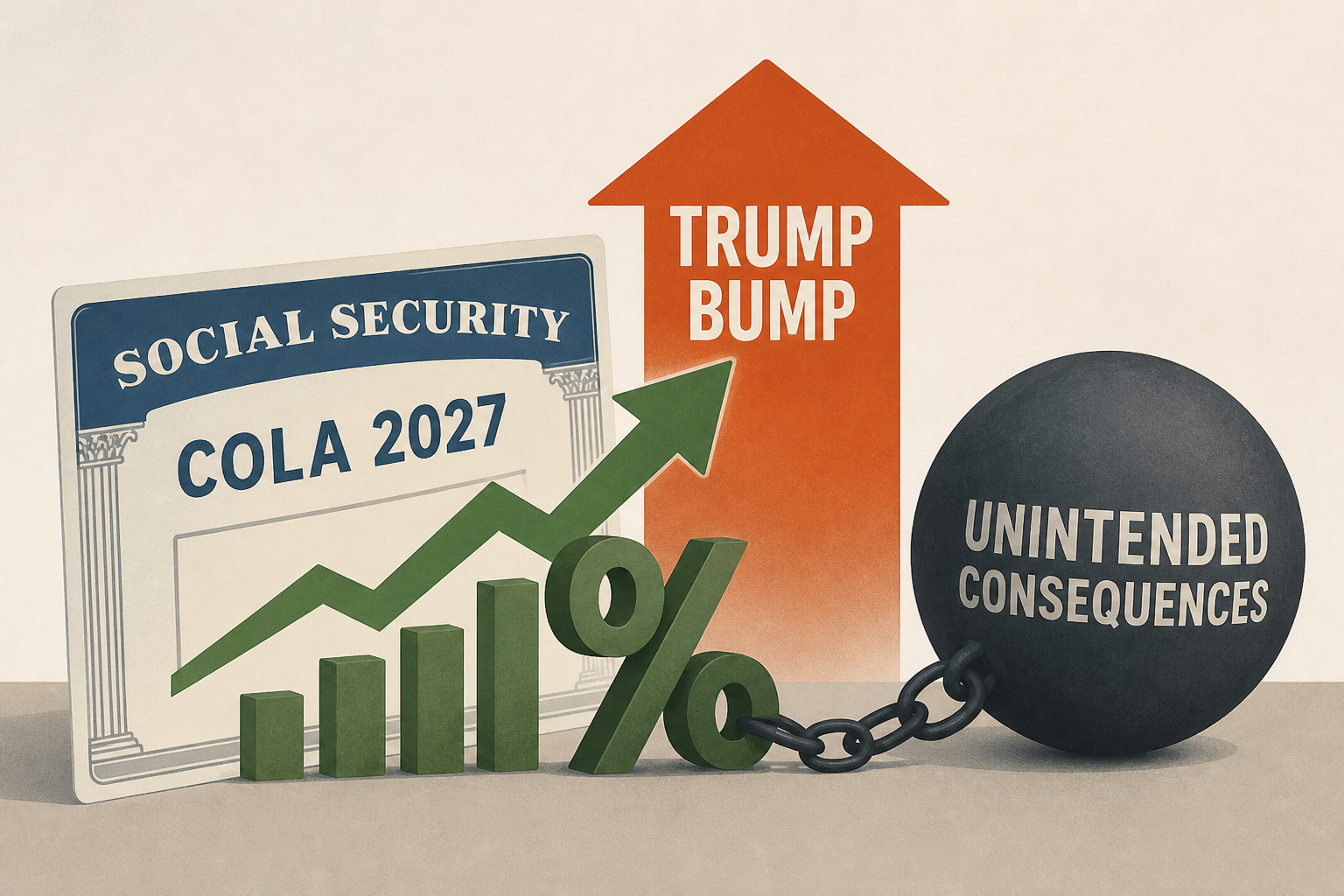
Social Security's 2027 COLA Is on Pace for a Historic "Trump Bump" -- but It Comes With Unintended Consequences
The Motley Fool • • business
Key Points:
- In 2025, Social Security celebrated its 90th anniversary and saw the average retired-worker benefit surpass $2,000 for the first time, with a 2.8% cost-of-living adjustment (COLA) marking the fifth straight year of increases above 2.5%, a trend not seen in three decades.
- President Donald Trump's policies, including global tariffs and military action against Iran, contributed to higher inflation and boosted Social Security's 2026 COLA, with projections for 2027 ranging from 3.8% to 4.7%, potentially the fourth-largest increase since 1991.
- The anticipated 4.7% COLA in 2027 could raise the average monthly benefit by nearly $98 but also risks accelerating the depletion of Social Security’s Old-Age and Survivors Insurance (OASI) trust fund reserves, currently projected to be exhausted by late 2032.
- The exhaustion of OASI reserves would not cause bankruptcy but could trigger benefit cuts of up to 22%, with higher-than-expected COLAs like the "Trump bump" potentially hastening this timeline and threatening the program’s long-term sustainability.
- While Social Security is not in immediate danger of halting payments, the combination of rising inflation-driven benefits and policy decisions underscores the urgent need to address the program’s $29.3 trillion unfunded obligation over the next 75 years.


