AI Image
Solar system houses distant planet twice the size of Earth: Study
New York Post • • science
Key Points:
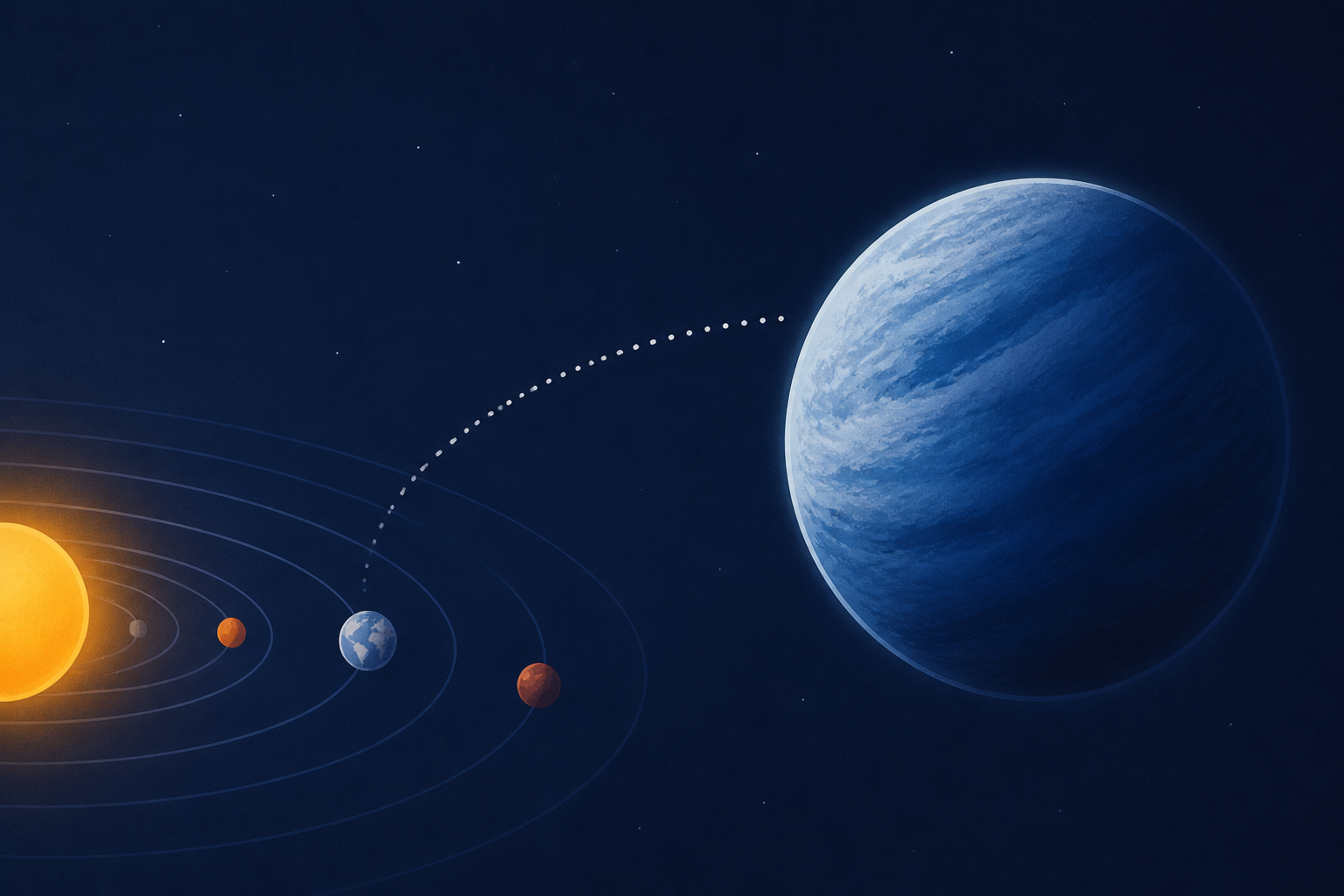
- Astronomers have proposed the existence of a hypothetical Earthlike planet, dubbed PX2, located beyond Neptune, based on anomalies in the orbits of distant trans-Neptunian objects.
- PX2 is estimated to be 1 to 2 times the mass of Earth and orbits the Sun at a distance of tens of billions of miles, potentially explaining unusual trajectories of icy objects like Sedna.
- The theory aligns with the Planet Nine hypothesis, which suggests a more massive planet influencing distant solar system objects, but PX2's existence remains unproven.
- Researchers used 4.5 billion-year computer simulations comparing models with and without additional distant planets to study the orbital patterns of these icy bodies.
- Upcoming observations from the Vera C. Rubin Observatory in Chile may provide further evidence to confirm or refute the presence of PX2, which could reshape our understanding of the Solar System's history.


