AI Image
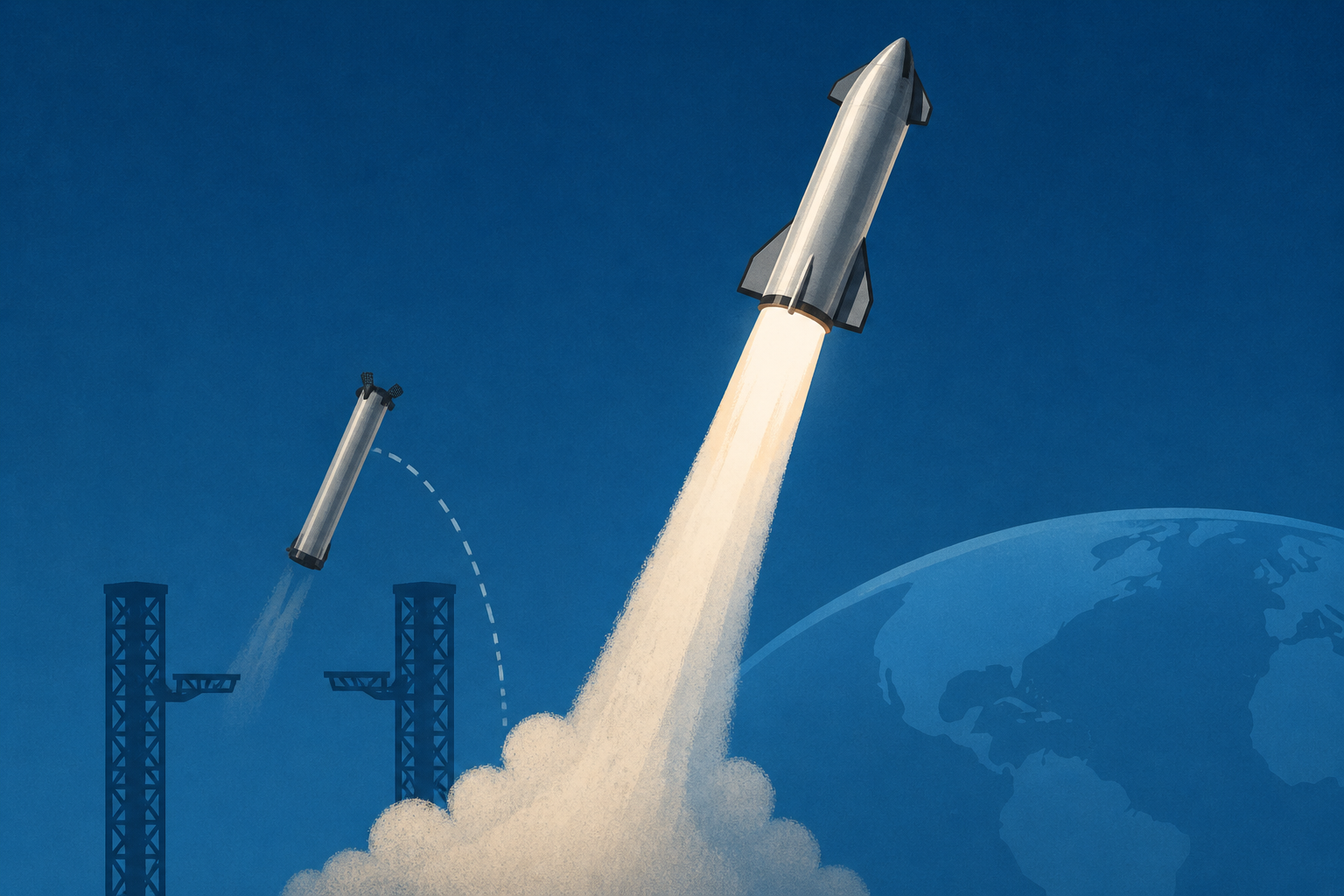
SpaceX's Starship soars into orbit after booster malfunction thwarts double catch attempt
PBS • • nation
Key Points:
- SpaceX's Starship launched into orbit for the first time, but the first-stage booster failed to return to the Texas launch pad and ended up in the Gulf of Mexico after an automatic abort.
- Despite the booster setback, the spacecraft continued its mission, carrying 26 advanced Starlink satellites and planning to orbit Earth 15 times before attempting a midair recovery at the launch site.
- This test marked the first attempt to catch both the upgraded 236-foot booster and the 171-foot spacecraft using mechanical arms, aiming for full rocket reusability to enable rapid, cost-effective space travel.
- SpaceX plans to begin launching Starships from Florida within months and expand to Louisiana in the coming years, with the goal of replacing Falcon rockets and supporting NASA's Artemis lunar missions.
- NASA is investing billions in SpaceX's Starship for moon landings, competing with Blue Origin's Blue Moon, with a decision expected before the Artemis IV mission and astronaut docking practice planned for Artemis III.


