AI Image
Strange 'Metal Potatoes' Contain a Microcosm of Life Not Seen Anywhere Else on The Seafloor, Scientists Find
ScienceAlert • • world
Key Points:
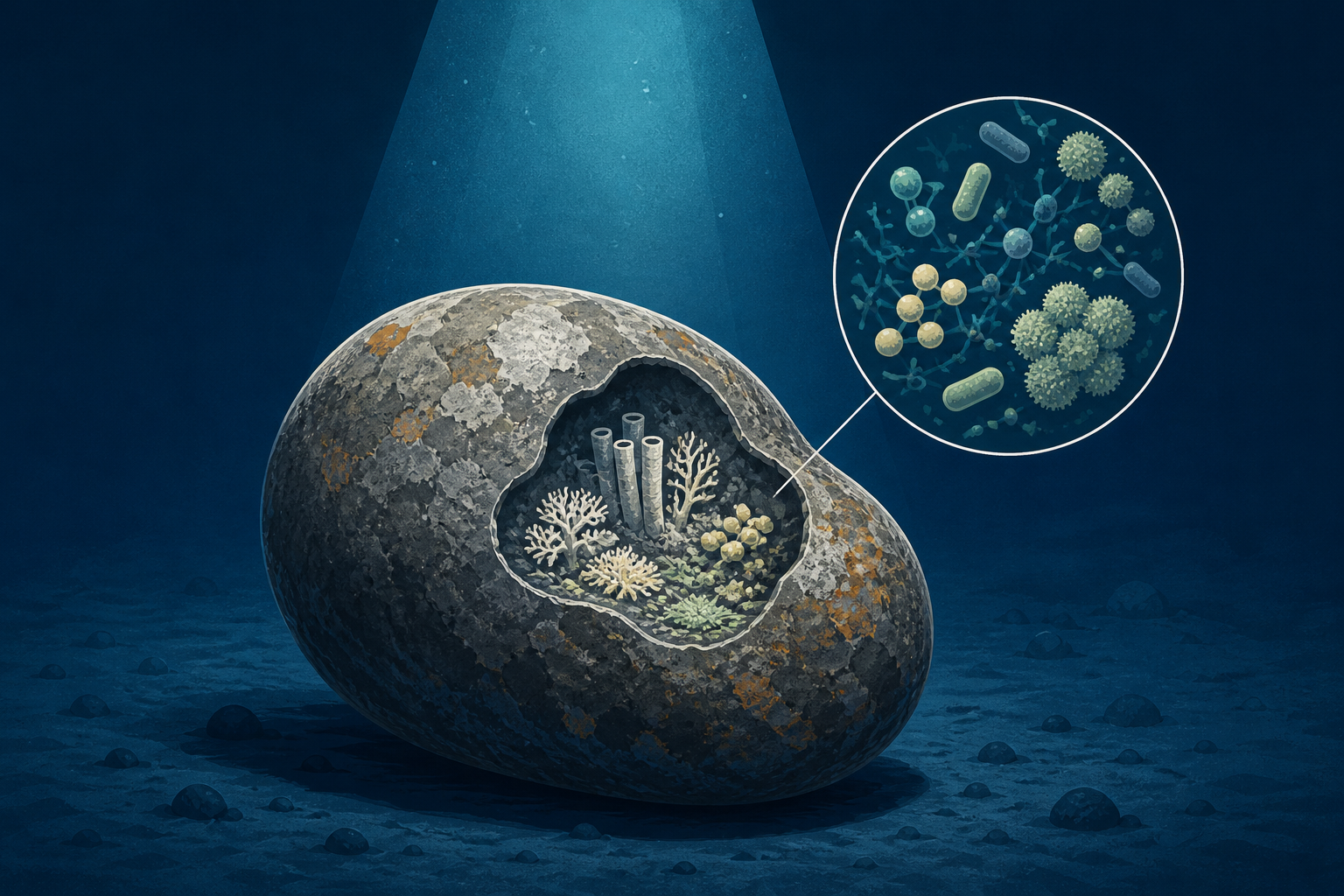
- New research reveals that polymetallic nodules on the seafloor in the Clarion-Clipperton Zone host unique microscopic ecosystems, including diverse communities of roundworms, crustaceans, and other tiny organisms living inside the nodules' cracks and pores.
- These nodules, rich in valuable metals like nickel, cobalt, and copper, take millions of years to form, raising concerns that commercial deep-sea mining could irreversibly destroy these rare and poorly understood habitats.
- The study found that nodule communities differ significantly from those in surrounding sediments and that protecting sediment alone would not preserve this unique biodiversity, emphasizing the ecological risk posed by large-scale nodule extraction.
- Fossils embedded within the nodules suggest these habitats have existed for millions of years, indicating a long-standing ecological role that could be lost if mining proceeds without adequate environmental safeguards.
- Scientists urge caution and further research to understand the ecological functions of these deep-sea ecosystems before mining activities potentially cause irreversible damage to global nutrient and carbon cycles.


