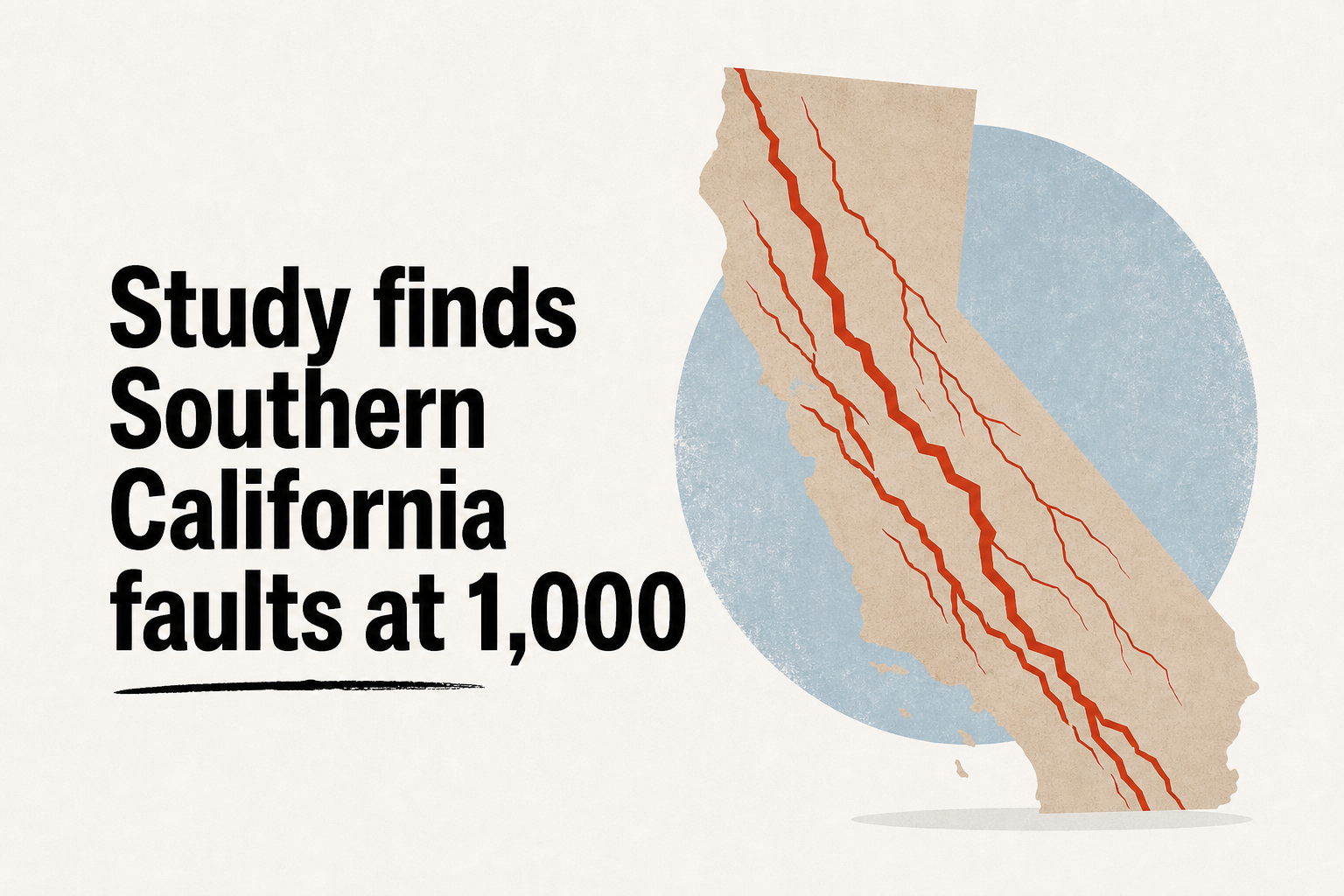
AI Generated Image
Study finds Southern California faults at 1,000
WYFF News 4 • • general
Key Points:
- A new study led by University of Hawaii scientists reveals that the San Andreas and San Jacinto faults in Southern California have reached their highest tectonic stress levels in 1,000 years, raising concerns about a potential imminent large earthquake.
- The faults have not experienced a major earthquake in over 100 years, during which tectonic stress has continued to build, increasing the likelihood of a significant future rupture.
- Researchers identified Cajon Pass, a critical junction between the two fault systems, as an "earthquake gate" that could either block or allow a joint rupture involving both faults, potentially causing more severe damage.
- The study used a physics-based computer model combined with a 1,000-year earthquake history reconstructed from geological evidence to estimate current stress levels, finding the system in a critically loaded state.
- While not predicting the exact timing of an earthquake, the research highlights the need for refined seismic hazard assessments to inform infrastructure planning, emergency preparedness, and building codes in densely populated areas like Los Angeles, San Bernardino, Riverside, and the Coachella Valley.


