AI Image
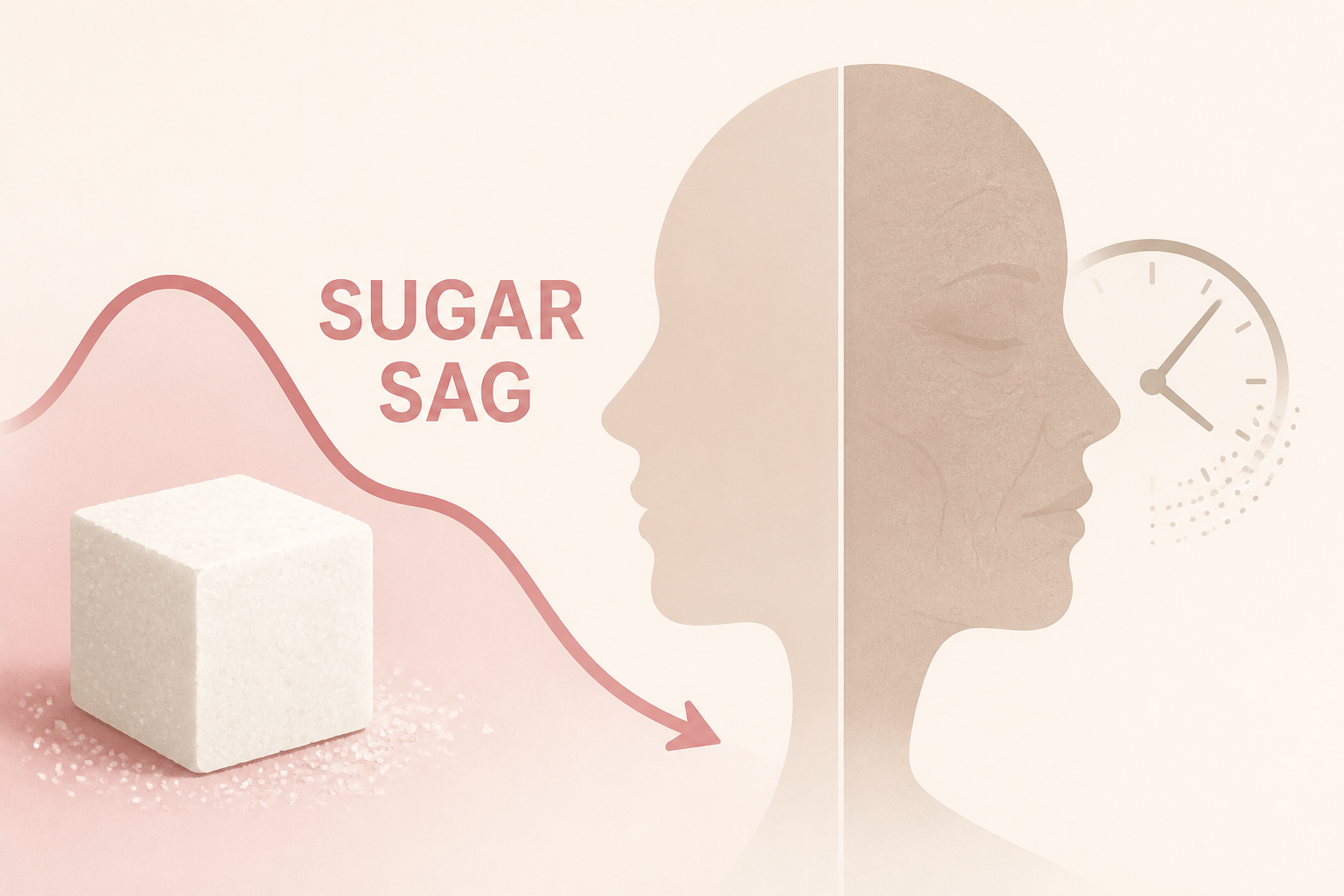
'Sugar Sag' Might Be Making Your Skin Age Faster Than You'd Like
BuzzFeed • • health
Key Points:
- Glycation is a natural process where excess sugars bind to skin proteins collagen and elastin, leading to wrinkles, sagging, and other signs of aging, often called "sugar sag."
- High-sugar diets, along with factors like UV exposure, pollution, smoking, genetics, and chronic inflammation, can accelerate glycation and skin aging.
- Glycation causes collagen and elastin fibers to become stiff and brittle, resulting in less firm, less elastic skin with wrinkles, dullness, and uneven texture.
- While glycation cannot be fully prevented or reversed, slowing its progression involves reducing sugar intake, protecting skin from sun damage, eating antioxidant-rich foods, exercising, and avoiding smoking.
- Treatments such as laser therapy, retinoids, microneedling, and antioxidant skincare can improve skin appearance by stimulating collagen production and remodeling but do not completely reverse glycation.


