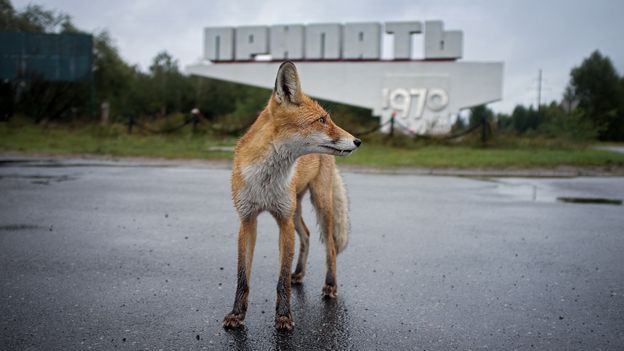
Surviving in a poisoned land: Chernobyl's wildlife is different, but not in the ways you might think
BBC • • world
Key Points:
- Forty years after the Chernobyl nuclear disaster, wildlife in the 37-mile exclusion zone has shown both resilience and change, with many species thriving despite persistent radioactive contamination.
- Research indicates some animals, like tree frogs, may have developed darker pigmentation potentially as a protective adaptation to radiation, though this remains a hypothesis and is debated among scientists.
- The withdrawal of humans has allowed large mammals such as wolves, bears, and bison to return and flourish in the area, significantly altering the ecosystem compared to pre-disaster conditions.
- Some species show signs of genetic mutations and possible evolutionary adaptations to radiation, but distinguishing these effects from other environmental factors like pollution and habitat changes is challenging.
- The Chernobyl disaster’s impact extends beyond the exclusion zone, with low levels of radionuclides detected in distant regions, and ongoing research continues to reveal complex ecological consequences four decades later.


