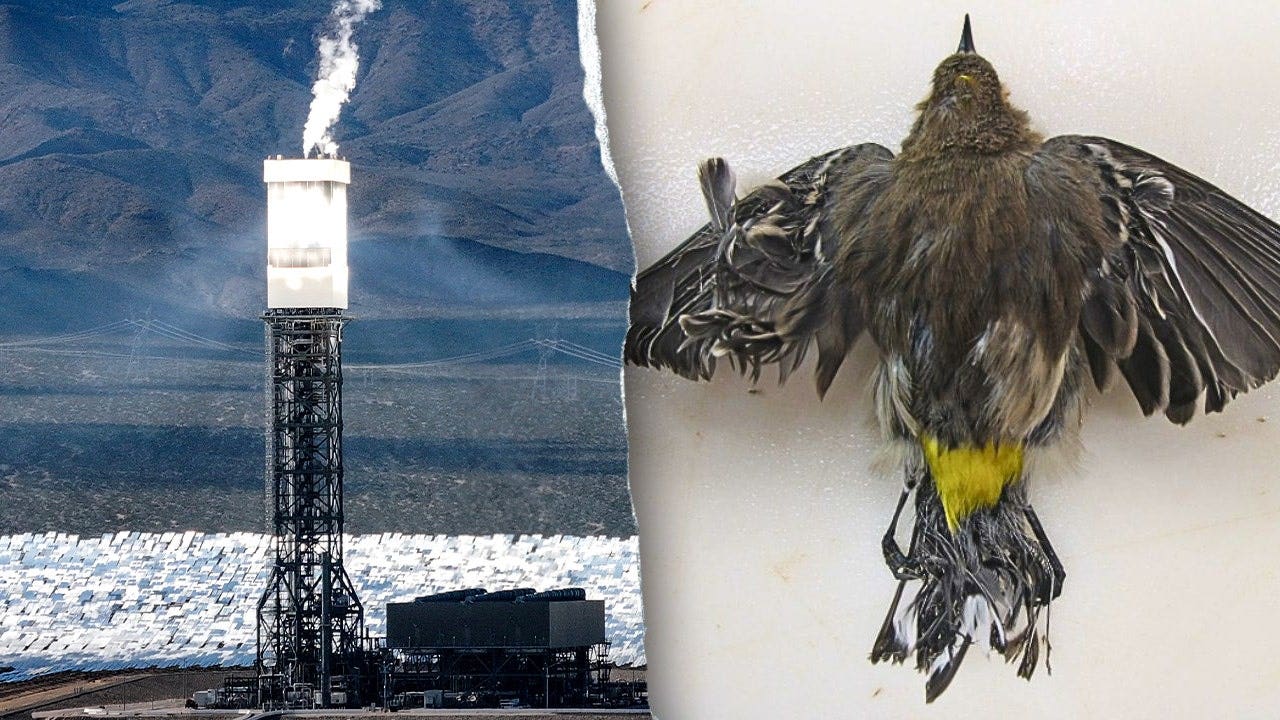
Taxpayer-backed Ivanpah solar plant kills birds and burns fossil fuels
Fox News • • business
Key Points:
- The Ivanpah Solar Power Plant in California, backed by over $2 billion in taxpayer funds during the Obama administration, still relies on natural gas for daily startup, producing tens of thousands of metric tons of CO2 annually, raising questions about its classification as "clean energy."
- The plant's concentrated solar rays have caused thousands of bird deaths each year, a phenomenon known as "solar flux," with researchers documenting birds suffering feather burns and trauma, alongside impacts on other wildlife such as desert tortoises displaced by habitat disruption.
- Despite environmental concerns and high operational costs compared to newer alternatives, California regulators continue to keep Ivanpah operational, citing its role in supporting the power grid, while the project remains financially burdened with hundreds of millions in outstanding taxpayer-backed loans and grants.
- Critics argue that Ivanpah exemplifies the environmental trade-offs and financial risks of early renewable energy projects, highlighting that newer photovoltaic solar technologies have significantly lower wildlife impacts and carbon footprints than the concentrated solar power approach used at Ivanpah.
- The plant's emissions place it under California’s cap-and-trade program, aligning its carbon footprint closer to fossil fuel plants than modern solar farms, prompting ongoing debate about the true environmental cost and future viability of such large-scale solar thermal projects.


 { path { fill: %23EEEFE9 } })