AI Image
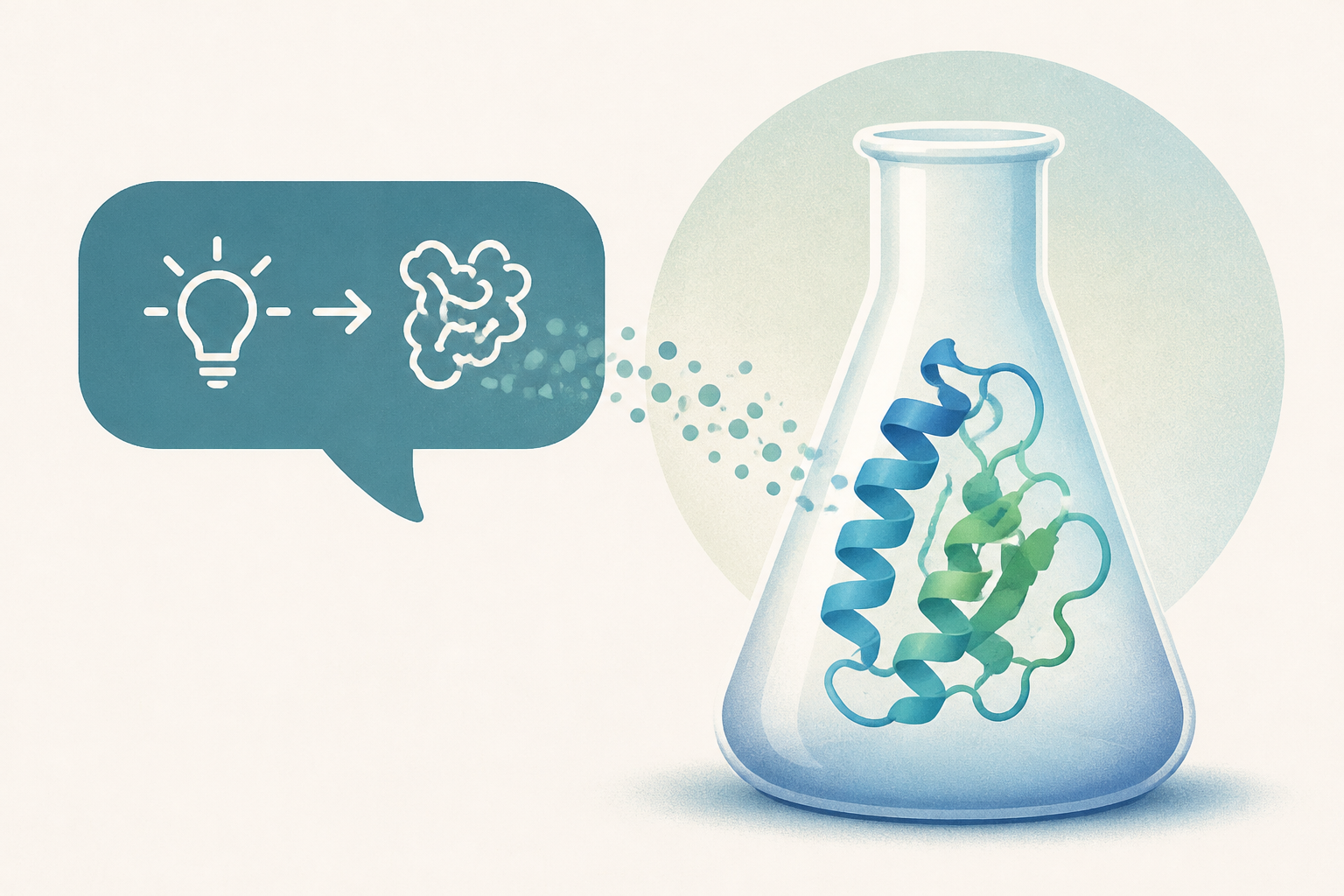
Tell this AI what you want a protein to do-and it designs one
Phys.org • • science
Key Points:
- Researchers at Westlake University in China have developed Pinal, a large-scale AI model that designs proteins based solely on natural language prompts, eliminating the need for users to understand complex molecular structures.
- Pinal operates using two modules: T2struct, which creates a 1D structural blueprint from the text description, and SaProt-T, which generates matching amino acid sequences and scores multiple designs to select the best candidate.
- The AI was trained on a vast dataset of 135 million protein sequences paired with plain-language descriptions, resulting in 1.7 billion protein-text pairs and corresponding 3D structures from the AlphaFold database.
- In testing, Pinal successfully designed functional proteins including a fluorescent protein, a plastic-degrading enzyme, an alcohol dehydrogenase, and a metabolic H-protein, though controlling specific properties like precise fluorescence wavelength remains challenging.
- While promising, Pinal still requires further development before it can be widely adopted as a routine tool in protein design laboratories.


