AI Generated Image
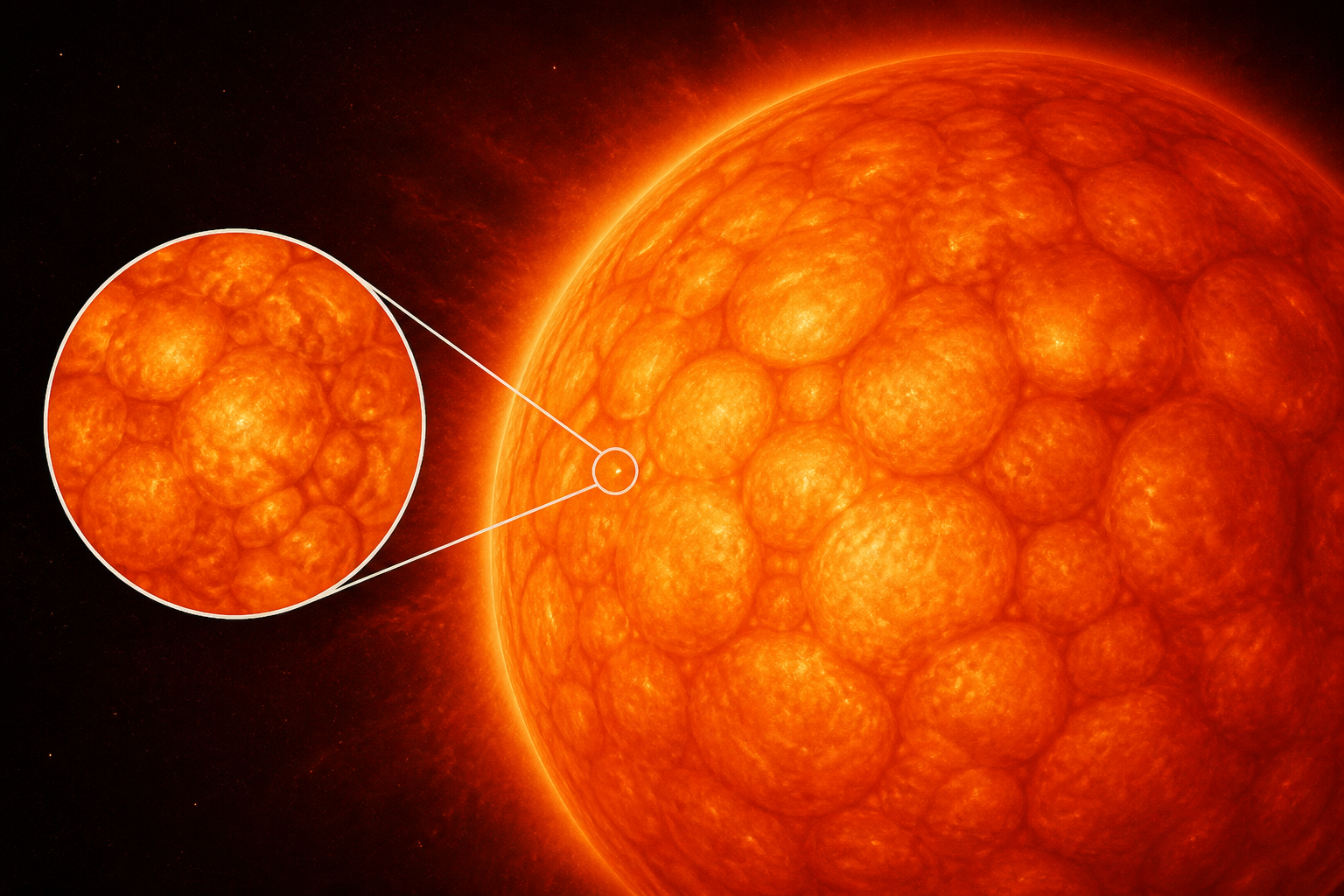
The bubbling surface of doomed supergiant star Betelgeuse has been revealed like never before
Yahoo • • science
Key Points:
- Astronomers used the Atacama Large Millimeter/submillimeter Array (ALMA) to capture highly detailed images of Betelgeuse, revealing bright hotspots and a corrugated surface caused by turbulent plasma movements.
- Betelgeuse, a red supergiant about 600 light-years away, gained attention after a dramatic dimming event years ago, sparking speculation about an imminent supernova, which has since been deemed less likely.
- The star's atmosphere was found to have temperatures around 3,680°F (2,030°C), with some regions up to 980°F (530°C) hotter, likely due to massive convective movements generating shockwaves.
- A persistent hotspot in the star's northeast has lasted at least seven years, much longer than current models predict, suggesting new complexities in Betelgeuse's behavior.
- The orientation of hotspots supports the theory that Betelgeuse may have an elusive companion star, and ongoing ALMA observations aim to study the hotspots' stability and their impact on the star's atmosphere and mass loss.


