AI Image
The contribution of salt marshes to wave attenuation during extreme storms
Nature • • world
Key Points:
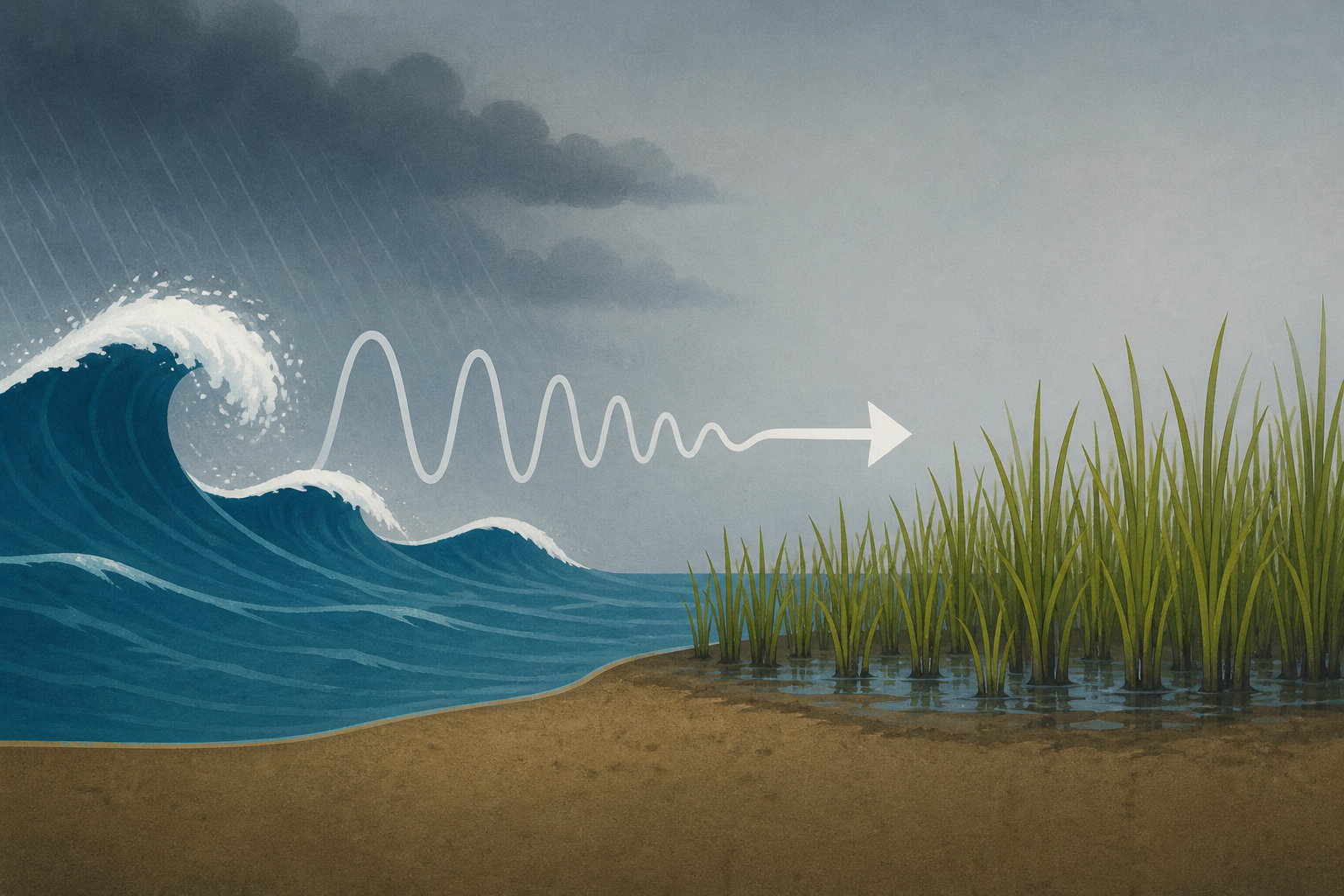
- A large-scale physical model of salt marshes was constructed in the Delta Flume using transplanted salt marsh blocks from the Wadden Sea, with detailed replication of soil, vegetation, and tidal flat conditions to study vegetation breakage and wave attenuation under extreme wave forcing.
- The experiment involved varying water levels and wave heights to simulate increasing storm severity, with measurements of vegetation damage, wave attenuation, soil stability, and biomass loss, showing that vegetation stem height is a critical proxy for wave attenuation capacity.
- Results indicate that salt marsh substrate remains largely stable even under extreme wave conditions, suggesting ecosystem services like wave attenuation and carbon storage are unlikely to be compromised by surface erosion during storms, though organic-rich and brackish marsh soils may be more vulnerable.
- A global statistical model was developed linking wave attenuation by vegetation to exposure duration and incoming wave height, demonstrating significant decreases in wave attenuation with increasing wave height and storm exposure, with implications for salt marshes widely distributed in temperate zones.
- The study provides a conservative estimate of wave attenuation by salt marsh vegetation, highlighting the importance of vegetation height and biomass, and offers a framework for global-scale assessments using remote sensing and elevation data to inform coastal protection strategies.


