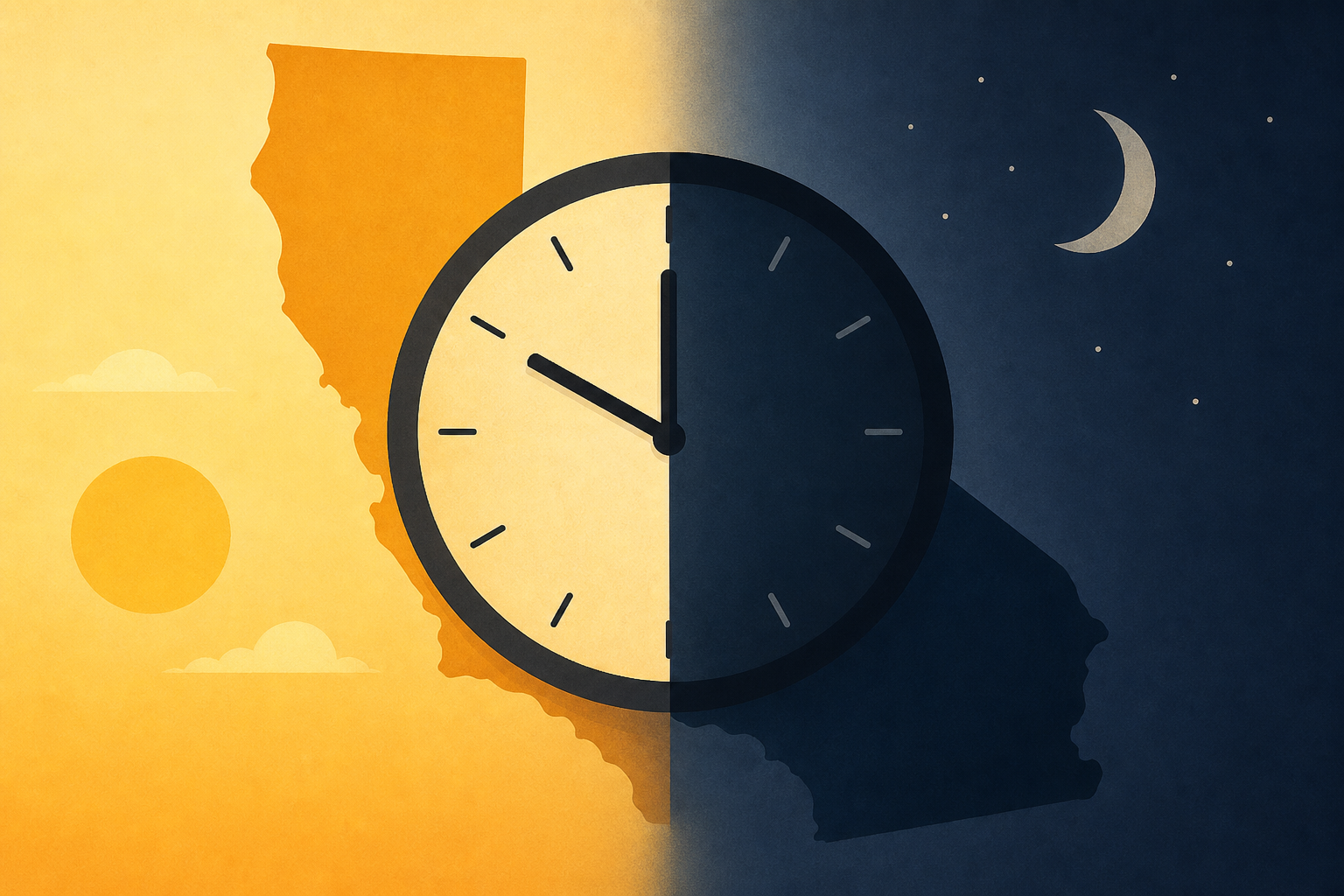
AI Generated Image
The dark side of making daylight saving time permanent in California
Los Angeles Times • • nation
Key Points:
- Lawmakers in the U.S. House of Representatives recently voted 308 to 117 to make daylight saving time (DST) permanent nationwide, eliminating the twice-yearly clock changes, though states like Hawaii and Arizona could opt out.
- If enacted, California cities would experience significantly later winter sunrises, with Los Angeles seeing sunrise as late as 8 a.m., Sacramento 8:24 a.m., and San Francisco 8:25 a.m., raising concerns about children going to school in darkness.
- The benefit of permanent DST would be later sunsets in winter, such as 5:44 p.m. in Los Angeles compared to the current 4:44 p.m., providing more evening daylight for activities and business.
- The proposal faces opposition in the Senate, with critics like Sen. Tom Cotton warning that late winter sunrises could harm safety and well-being, and previous attempts at permanent DST in 1974 were unpopular due to dark winter mornings.
- California voters approved Proposition 7 in 2018 to allow year-round DST if federally permitted, and other regions like British Columbia have already adopted permanent DST despite later sunrises; alternatively, states could choose permanent standard time, which preserves earlier sunrises but results in earlier sunsets.


