AI Image
The Disadvantages Hub Motors Have To Overcome For Widespread EV Adoption
Jalopnik • • technology
Key Points:
- Hub motors, first designed by Ferdinand Porsche in 1900 and used on lunar rovers in the early 1970s, offer benefits such as eliminating the transmission and improving efficiency by reducing driveline power loss.
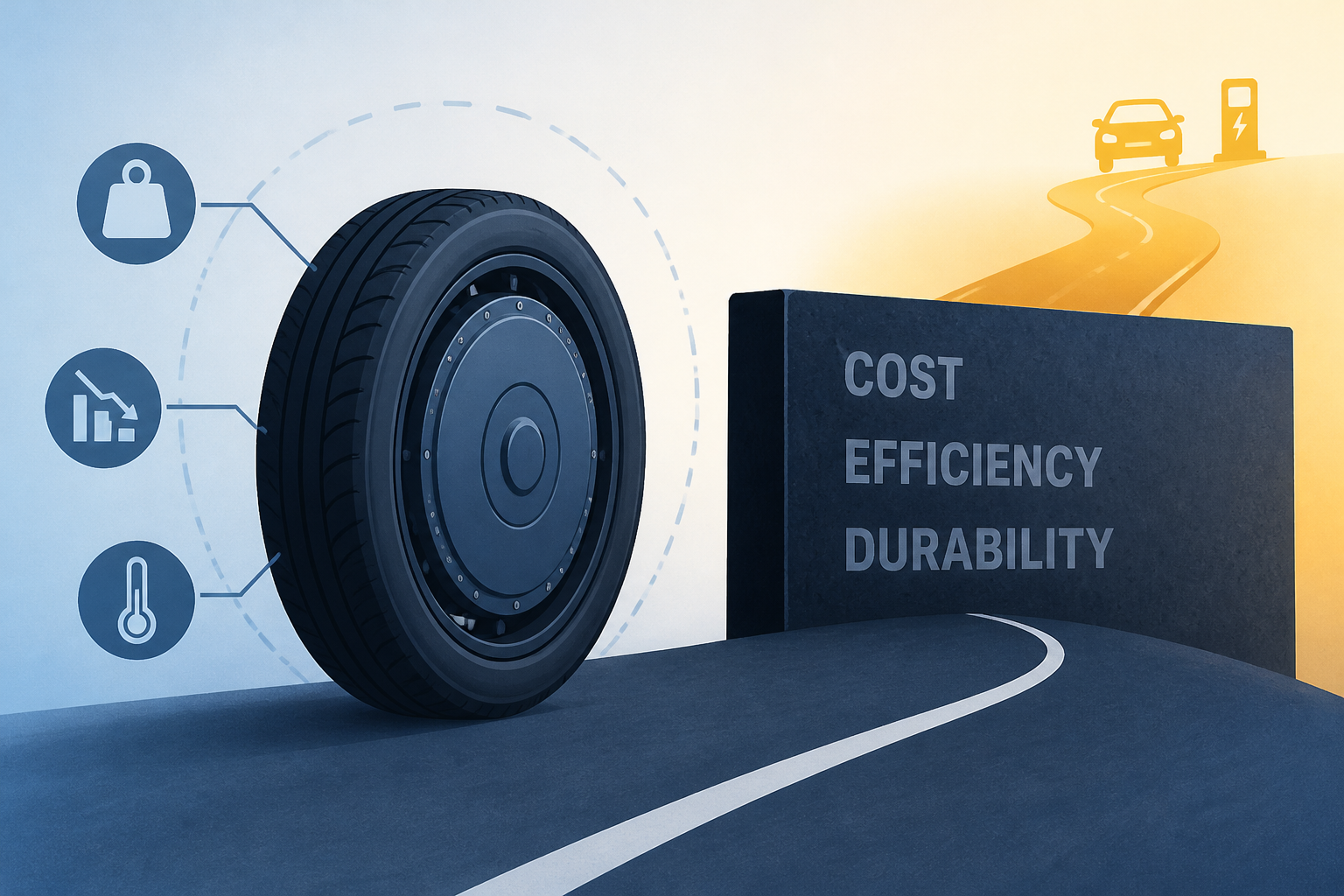
- Key challenges with hub motors include increased unsprung and rotational mass affecting suspension and handling, exposure to harsh conditions causing durability concerns, and cooling difficulties due to motor placement in the wheels.
- Despite these issues, companies like Elaphe, Protean, and Donut Lab are actively developing hub motor technology, with some limited production models emerging, such as Renault's 555-horsepower 5 Turbo 3E featuring rear hub motors.
- Hyundai's Universal Wheel Drive System presents a hybrid solution by mounting motors on the chassis with gearing in the hub, aiming to reduce weight and protect the motor while addressing traditional hub motor drawbacks.
- While mass adoption of hub motors remains elusive, ongoing engineering advances and recent limited production vehicles suggest the technology may become more viable and widespread in the near future.


