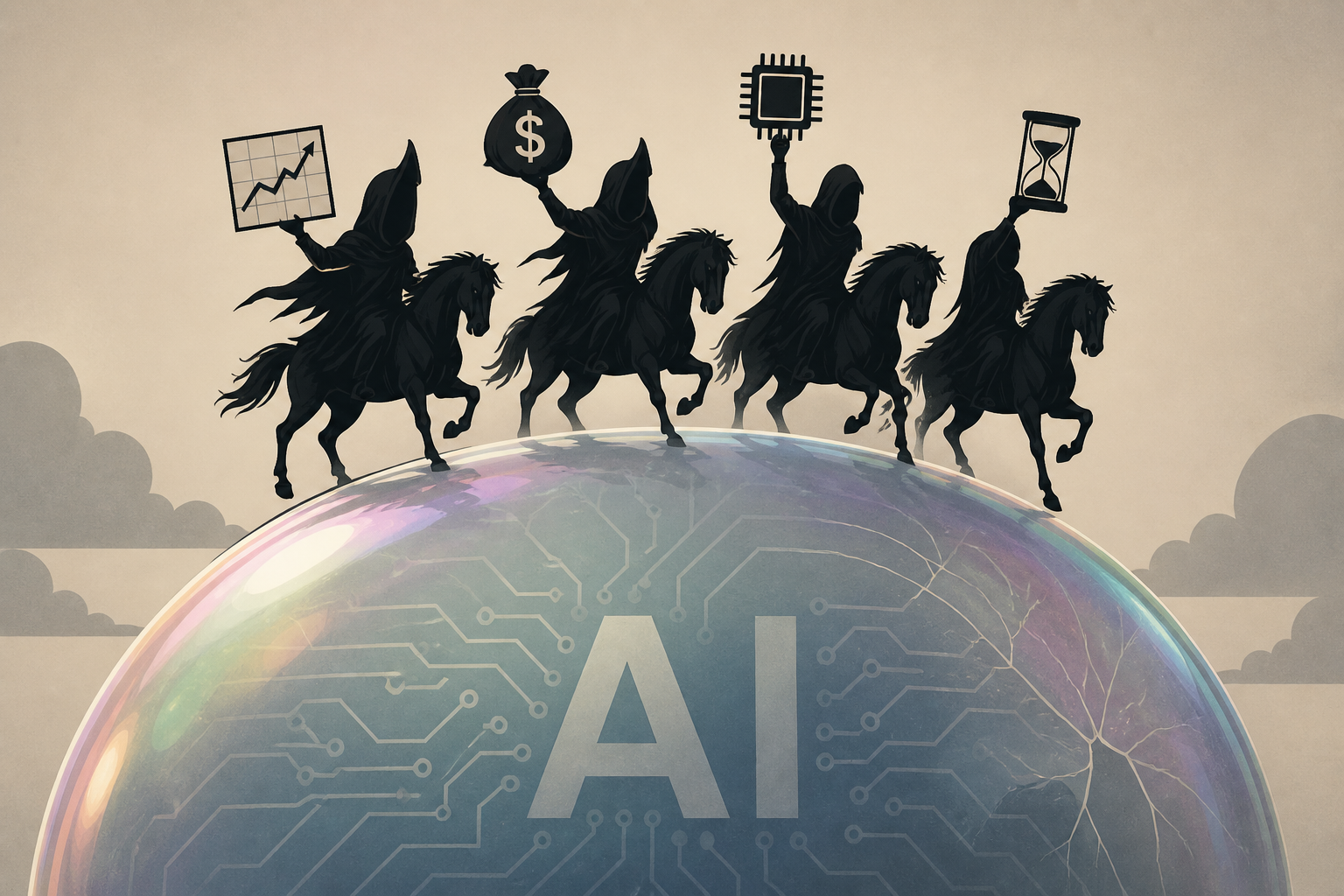
AI Generated Image
The Four Horsemen of the AI Bubble Apocalypse
derekthompson.org • • business
Key Points:
- In the past two weeks, significant AI developments include China's Moonshot AI releasing a competitive model at low cost, OpenAI and Anthropic experiencing AI-related security breaches, Alphabet reporting negative free cash flow due to AI spending, Meta's stock dropping over AI investment concerns, and a major AI fund crashing amid South Korea's AI stock plunge.
- Major tech companies, or hyperscalers, have depleted their free cash flow due to heavy AI investments, now relying increasingly on debt, with about 30% of their capital expenditures funded by borrowing, raising concerns reminiscent of the dot-com bubble era.
- Despite increased debt issuance and widening bond spreads, Big Tech companies maintain relatively strong credit quality and lower debt-to-earnings ratios compared to the average S&P 500 company, suggesting financial responsibility amid AI investments.
- Analysts highlight that Big Tech's robust core businesses, especially profitable cloud divisions, could offset borrowing needs as AI demand grows, though infrastructure challenges like power supply and data center expansion remain critical.
- Unlike the late 1990s tech bubble, current markets show strong corporate profits and lack some negative macroeconomic indicators, indicating that while risks exist, the AI investment landscape may not replicate past bubble collapses.


