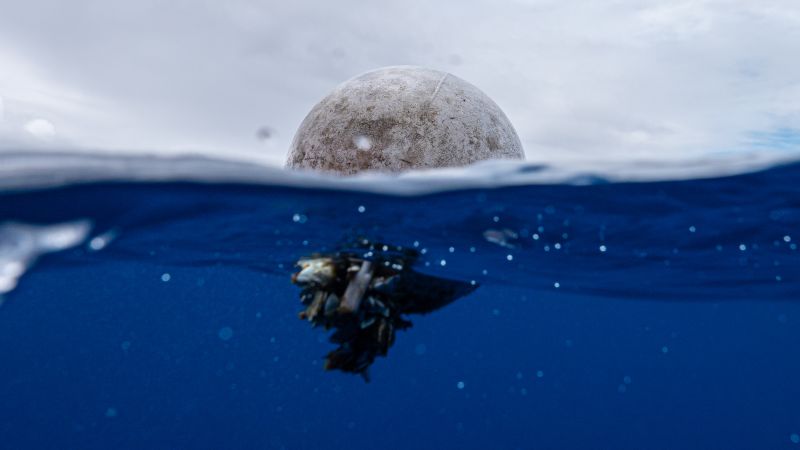
The Great Pacific Garbage Patch could be part of a hidden problem
CNN • • general
Key Points:
- New research reveals that microplastics and nanoplastics from sources like the Great Pacific Garbage Patch contribute to global warming by absorbing sunlight, challenging previous assumptions that their climate impact was negligible.
- Colored plastics, especially red, yellow, blue, and black, absorb significantly more sunlight—around 75 times more—than clear plastics, acting like a "black T-shirt" that soaks up heat, with smaller particles absorbing more light.
- The study found that as plastics age in the atmosphere, their warming or cooling effects can change, but most particles darken over time, leading to a net warming effect that is approximately 16% of the impact caused by black carbon.
- The warming impact of airborne plastics is especially pronounced in ocean gyres like the Great Pacific Garbage Patch, where plastic particles collide and become airborne in greater quantities, potentially exceeding the warming effect of black carbon locally.
- Experts acknowledge the study advances understanding by quantifying plastic particle size and pigmentation effects but caution that uncertainties remain due to limited data on atmospheric plastic concentrations, and the primary concern of microplastics remains their health impact.


